Finding out your child has a cavity is stressful enough. Finding out you don’t have dental insurance to cover the filling can feel overwhelming. You are not alone. Millions of families navigate the world of pediatric dental care without insurance every year. The good news? A lack of insurance does not have to mean a lack of quality dental care for your little one.
This guide is designed to be your roadmap. We will walk through practical, affordable, and realistic options to keep those tiny teeth healthy. From preventative routines at home to finding low-cost clinics and negotiating payments, consider this your friendly handbook for navigating children’s dentistry when you’re paying out of pocket.
Pediatric Dental Care Without Insurance
Why Baby Teeth Matter More Than You Think
It is a common misconception that because baby teeth fall out, they don’t require much attention. This is one of the most expensive myths in parenting. Baby teeth, also known as primary teeth, serve critical functions.
-
They hold space: Baby teeth act as placeholders for the permanent teeth developing beneath the gums. If a baby tooth is lost too early due to decay, neighboring teeth can shift into the empty space. This crowds the area and can cause permanent teeth to come in crooked or impacted.
-
They enable speech and chewing: Your child needs healthy teeth to learn to speak clearly and to chew food properly for good nutrition.
-
They build confidence: A healthy smile is a huge boost to a child’s self-esteem.
Ignoring dental health now almost guarantees more complex—and expensive—problems later. Think of it this way: investing in preventative care today is significantly cheaper than paying for orthodontics or surgical interventions down the road.
The Real Cost of Pediatric Dentistry (Out-of-Pocket)
To navigate the system, it helps to understand the general costs involved. Please remember that these are national averages and can vary wildly depending on where you live and the specific dentist you visit.
| Service | Average Cost Without Insurance (per visit/tooth) |
|---|---|
| Comprehensive Exam | $50 – $150 |
| Cleaning (Prophylaxis) | $75 – $200 |
| X-Rays (Set of 4 Bitewings) | $50 – $150 |
| Fluoride Treatment | $20 – $50 |
| Dental Sealants (per tooth) | $30 – $60 |
| Silver (Amalgam) Filling | $150 – $300 |
| White (Composite) Filling | $200 – $400 |
| Baby Tooth Pulpotomy (Nerve treatment) | $400 – $700+ |
| Stainless Steel Crown | $500 – $900+ |
| Emergency Exam | $100 – $200+ |
Seeing these numbers can be intimidating. However, this list is not meant to scare you, but to empower you. Knowing the landscape is the first step in finding a path forward.
Important Note: The single best way to lower your overall costs is to prevent the need for the expensive procedures at the bottom of this list. Prevention is your financial friend.
Your First Move: Exploring Public and Private Assistance
Before you start calling private dental offices, you should exhaust all possible avenues of financial assistance. You might be surprised to find you qualify for programs you didn’t know existed.
1. Medicaid and CHIP (The Children’s Health Insurance Program)
In the United States, this is the most underutilized resource. Many parents assume they make “too much” to qualify, but income limits are often higher than people think, especially for children.
-
Medicaid: This is a joint federal and state program that provides free or low-cost health coverage, including comprehensive dental benefits. By federal law, dental coverage for children under Medicaid (also known as EPSDT) is mandatory. This means if your child is on Medicaid, they are entitled to dental care.
-
CHIP: Designed for families who earn too much to qualify for Medicaid but cannot afford private insurance. CHIP provides low-cost health and dental coverage for children.
How to apply: You don’t need a broker. Simply visit the official government health insurance marketplace website (Healthcare.gov) or your state’s specific Medicaid office website. You can apply at any time of the year.
2. Local Health Departments
Your county or city health department is a hidden gem for affordable care. Most health departments have a dental clinic or can refer you to one. They typically operate on a sliding fee scale. This means the price you pay is based on your family’s income and size. You will need to provide proof of income, such as a pay stub or tax return, but the savings can be dramatic.
3. Federally Qualified Health Centers (FQHCs)
These are community-based clinics that receive federal funding to provide primary care services in underserved areas. They are required to accept all patients, regardless of their ability to pay, and they operate on a sliding fee scale. You can find a directory of FQHCs on the website of the Health Resources and Services Administration (HRSA).
Smart Strategies for Paying Out-of-Pocket at a Private Dentist
If you prefer to take your child to a private pediatric dentist (often called a “pedodontist”), there are ways to make it more manageable.
The Membership Plan (In-House Discount Plan)
Many private dental offices are moving away from the hassles of traditional insurance and offering their own “membership” or “wellness” plans. For a flat annual fee (usually between $250 and $400), you get a package of preventative care. This typically includes:
-
Two exams per year.
-
Two cleanings per year.
-
Necessary x-rays.
-
Fluoride treatments.
-
A discount (typically 10-20%) on any other treatments like fillings or crowns.
If your child just needs basic preventative care, this can be much cheaper than paying per visit. Always ask the front desk, “Do you offer an in-house membership or savings plan?”
Negotiating Payment and Asking Questions
Never be afraid to talk about money with the office manager. They deal with finances every day and are usually willing to work with you. Here is how to have that conversation:
-
Ask for an itemized estimate: Before any work is done, request a written “treatment plan” that lists every procedure and its cost.
-
Ask about a “cash discount”: Many dentists will offer a 5-10% discount if you pay on the day of service, as it saves them the cost of billing and processing claims.
-
Inquire about payment plans: Some offices offer in-house financing where you can pay off a large treatment (like a crown or pulpotomy) in installments over a few months. Others work with third-party healthcare credit cards like CareCredit.
Quote: “Dentists want to treat your child. The last thing they want is for a family to forgo necessary treatment because of cost. We are almost always willing to discuss a payment plan if it means the child gets the care they need.” — A practice manager with 15 years of experience.
Dental Schools and Hygiene Schools: A Fantastic Resource
If you live near a university with a dental school, you have access to some of the most affordable dental care available.
How it Works
Dental treatment is provided by dental students who are in their final years of training. They are closely supervised by licensed, experienced dentists (clinical faculty). Every step of the procedure is checked and double-checked.
Pros:
-
Cost: Prices are typically 50-70% less than a private practice.
-
Quality: The supervision is incredibly thorough. You are getting a “teaching hospital” level of care.
-
Comprehensive Planning: Treatment is often slower, but more comprehensive.
Cons:
-
Time: Appointments can be very long (sometimes 3-4 hours) because the student is learning.
-
Availability: There is often a waiting list to get in as a new patient.
Dental Hygiene Schools:
If your child just needs a cleaning and x-rays, a dental hygiene school is an even faster and cheaper option. Students learning to be hygienists perform the cleaning under a supervisor’s watchful eye. This is often free or costs less than $25.
How to Find and Evaluate Discount Dental Plans
Discount dental plans are not insurance. They are a separate product sold by companies. You pay a monthly or annual membership fee, and in return, you get access to a network of dentists who have agreed to charge discounted rates to plan members.
How they differ from insurance:
-
No deductibles.
-
No annual maximums.
-
No waiting periods.
-
No claim forms.
-
You simply show your card at the dentist and receive the discounted rate.
Are they worth it?
They can be, especially for families who need a lot of work done. You must do the math. Look at the list of participating dentists in your area and compare their discounted rates (which the plan will provide) to the average rates in the table above. For a family needing two cleanings, x-rays, and a few fillings, the savings from the discount can easily outweigh the cost of the plan.
Top Preventative Tips to Keep Costs Near Zero
Let’s circle back to the most powerful tool in your wallet: prevention. By establishing rock-solid habits at home, you can dramatically reduce the chances of needing expensive restorative work.
The Daily Routine
-
Start Early: Even before the first tooth appears, wipe your baby’s gums with a soft, damp cloth after feedings. This clears away bacteria.
-
Brushing: As soon as that first tooth pops through, start brushing with a tiny smear (grain of rice size) of fluoride toothpaste twice a day. For children aged 3-6, use a pea-sized amount.
-
Supervise, Don’t Just Instruct: Kids don’t have the manual dexterity to brush their teeth effectively until they are about 7 or 8 years old. You need to brush for them or do a “check and re-brush” until then.
-
Flossing: As soon as two teeth touch, they need to be flossed. Floss picks can make this much easier for little hands (and parents).
The Diet Factor
-
The “Sip All Day” Decay: This is the biggest culprit. Putting anything other than water in a sippy cup or bottle and letting a child walk around sipping it all day bathes their teeth in sugar (or acid) constantly. Milk, juice, and sports drinks should be consumed with meals only. Between meals and at bedtime, the bottle or cup should contain only water.
-
Sticky Sugars: Be mindful of “sticky” snacks like fruit snacks, gummy candies, dried fruit, and even some granola bars. They cling to the grooves of teeth, feeding cavity-causing bacteria for hours.
-
Cheese is Your Friend: Ending a meal with a piece of cheese can help neutralize the acids produced by bacteria in the mouth.
What to Do in a Dental Emergency
Dental emergencies happen. A fall on the playground, a sudden toothache on a Friday night. Knowing what to do can save a tooth and save you money on unnecessary emergency room visits.
-
Knocked-Out Permanent Tooth: This is a true emergency. Find the tooth. Hold it by the crown (the white part), not the root. If it’s dirty, gently rinse it with milk or saline. Do not scrub it. Try to gently reinsert it into the socket. If you can’t, place it in a container of milk or the child’s own saliva (spit) and get to a dentist immediately. Time is critical.
-
Knocked-Out Baby Tooth: Do not try to reinsert it. This can damage the permanent tooth bud underneath. Contact your dentist for an appointment to ensure no fragments remain.
-
Toothache: Rinse the mouth vigorously with warm water and gently floss around the tooth to remove any food particles. Do not place aspirin on the gum or tooth, as this can burn the tissue. Apply a cold compress to the outside of the cheek if there is swelling. See a dentist as soon as possible.
-
Chipped/Broken Tooth: Rinse the mouth with warm water. If you can find the broken piece, put it in milk and bring it with you. The dentist may be able to bond it back on.
ER vs. Dentist: Hospital emergency rooms can handle trauma and infections, but they generally do not have a dentist on staff. They might give antibiotics for an infection or treat a laceration, but they cannot fix a tooth. For dental-specific problems, you want a dentist. Many dentists have an after-hours number on their voicemail for emergencies.
FAQ: Your Questions Answered
Q: At what age should I first take my child to the dentist?
A: The American Academy of Pediatric Dentistry (AAPD) recommends that a child see a dentist by their first birthday or within six months of their first tooth erupting. This “well-baby” visit helps establish a “dental home” and focuses on prevention.
Q: My child is scared of the dentist. How can I help?
A: This is normal! Stay positive. Read books about going to the dentist. Play “dentist” at home where you count each other’s teeth. When you go, avoid using scary words like “pain,” “shot,” or “drill.” Let the dentist and their staff, who are trained in child psychology, guide the conversation.
Q: Are there any free dental days?
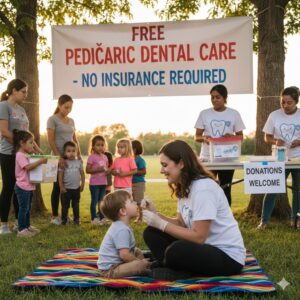
A: Yes! The “Give Kids A Smile” program, organized by the American Dental Association, provides free oral health care to children from low-income families across the country. These events typically happen in February. Many local dentists also host their own free care days. Keep an eye on local news and community bulletin boards.
Q: What if my child needs braces? That is so expensive.
A: Orthodontics is a major expense. If you don’t have insurance, look into dental schools with orthodontic programs. Treatment is much cheaper, though it may take longer. Also, many orthodontists offer their own interest-free payment plans spread over the length of the treatment (usually 18-24 months).
Conclusion: A Healthy Smile is Achievable
Navigating pediatric dental care without insurance requires a bit of research and proactive planning, but it is absolutely achievable. By combining a strong preventative routine at home, utilizing community resources like health centers and dental schools, and communicating openly with dental offices about payment options, you can ensure your child receives the care they need for a lifetime of healthy smiles.