If you’re shopping for car insurance on a budget, you’ve likely come across the term “PLPD” insurance. It stands for Personal Liability and Property Damage, and it represents the most basic, legally compliant form of auto insurance you can buy. Unlike full coverage policies, PLPD doesn’t protect your own vehicle. Instead, it’s designed to cover the costs you might owe to others if you cause an accident. Understanding PLPD insurance cost is key to making an informed, financially savvy decision for your auto insurance needs.
In this comprehensive guide, we’ll break down everything that influences the price of PLPD insurance. We’ll move beyond simple averages and explore the real factors that determine your premium, provide state-by-state insights, and offer actionable strategies to secure the best possible rate. Whether you’re driving an older car, tightening your budget, or simply seeking to understand your insurance options, this article will serve as your essential reference.
PLPD Insurance Cost
What Exactly is PLPD Insurance?
Let’s start with a clear definition. PLPD insurance is a colloquial term for a liability-only auto insurance policy. It fulfills your state’s mandatory financial responsibility laws but provides no coverage for damage to your own vehicle.
The “PL” and “PD” break down into two core components that make up your state’s minimum required limits, often expressed as three numbers (e.g., 25/50/25):
-
Bodily Injury Liability (BI) – The “Personal Liability” (PL): This covers the medical expenses, lost wages, and legal fees for other people injured or killed in an accident you cause. The limits are per person and per accident (e.g., $25,000 per person, up to $50,000 per accident).
-
Property Damage Liability (PD): This covers the cost to repair or replace another person’s property that you damage in an at-fault accident. This primarily means other vehicles, but can also include fences, buildings, or lampposts. The limit is per accident (e.g., $25,000).
Key Quote: “PLPD insurance isn’t about protecting your assets on the road; it’s about protecting your assets from the road. It shields your savings, your home, and your future earnings from the potentially devastating costs of causing a serious accident.” – Industry Risk Analyst.
What PLPD Insurance Does NOT Cover:
It’s crucial to understand the limitations. A PLPD policy will not pay for:
-
Repairs to your own car after an accident, regardless of fault.
-
Theft of your vehicle or parts of it.
-
Damage to your car from vandalism, fire, hail, or falling objects.
-
Your own medical bills after an accident (unless you add optional coverages like Medical Payments or PIP).
-
Rental car costs while your car is being repaired.
Who is PLPD Insurance Best For?
This type of policy is a strategic choice for specific drivers:
-
Owners of Older, Low-Value Vehicles: If your car’s market value is less than a few thousand dollars, paying for collision and comprehensive coverage may not be cost-effective over time.
-
Drivers on a Strict Budget: It offers the legally required protection at the lowest possible premium.
-
Seasonal or Rarely Driven Vehicles: For a classic car or a second car used infrequently, minimizing coverage can save money.
Breaking Down the Average Cost of PLPD Insurance
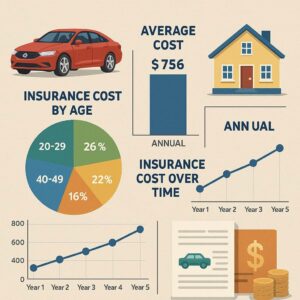
Providing a single “average cost” is tricky because premiums are highly individual. However, we can look at national and state-level data for minimum liability coverage to establish a baseline. According to industry data, the national average annual premium for minimum liability insurance typically ranges from $500 to $800 per year.
However, this is just a starting point. Your actual quote could be significantly lower or higher based on the multitude of personal factors we will detail in the next section.
State Minimum Requirements and Cost Influence Table
Your state’s mandated minimum liability limits are the single biggest legal factor in your PLPD cost. States with higher minimums generally see higher base premiums. The table below illustrates how requirements and estimated average costs can vary.
| State | Minimum Liability Limits (BI/PD) | Estimated Avg. Annual PLPD Premium* | Notes |
|---|---|---|---|
| Florida | $10,000 PD, $10,000 PIP** | $800 – $1,200 | Unique no-fault system; high rates due to risk factors. |
| Michigan | $50,000/$100,000/$10,000* | $1,000 – $1,500 | Has unique unlimited PIP medical coverage; high premiums. |
| California | $15,000/$30,000/$5,000 | $600 – $900 | Lower limits keep base costs down, but dense urban areas are expensive. |
| Ohio | $25,000/$50,000/$25,000 | $450 – $700 | Midwestern states often have more affordable average rates. |
| Maine | $50,000/$100,000/$25,000 | $350 – $550 | Lower population density and risk profile lead to lower costs. |
**Estimated premiums are for illustration based on a generic driver profile and can vary wildly. *Florida does not require BI liability, but requires PIP for your own injuries.
Important Note: Choosing only your state’s minimum limits is often a false economy. If you cause a serious accident, costs can easily exceed these low limits. If you have personal assets (a home, savings, investments), you would then be personally responsible for the difference. Most financial advisors recommend carrying liability limits of at least 100/300/100.
The 8 Key Factors That Determine Your PLPD Quote
Insurance companies use complex algorithms to assess risk. For PLPD insurance, since they are only paying for damage you cause to others, they are intensely focused on your likelihood of causing an accident. Here are the primary rating factors:
-
Your Driving Record: This is paramount. A clean record with no accidents or violations is the surest path to low PLPD costs. A single at-fault accident or speeding ticket can increase your premium by 20-40%. DUIs or reckless driving convictions can double or triple your rate.
-
Your Age and Experience: Statistically, young, inexperienced drivers (especially teens and those under 25) are involved in more accidents. Their premiums are the highest. Rates generally decline with experience and a clean record, stabilizing around age 30-55, and may rise slightly again for senior drivers.
-
Your Location: Where you live and garage your car matters immensely. Urban areas with higher traffic density, accident rates, and vehicle theft see higher premiums than rural areas. Your specific ZIP code can impact your rate.
-
Your Credit-Based Insurance Score (in most states): In many states, insurers use a credit-based insurance score as a statistically significant predictor of future claim risk. Maintaining good credit can lead to substantially lower premiums.
-
Your Vehicle Type: While PLPD doesn’t cover your car, the vehicle you drive still matters. Insurers consider:
-
Repair Costs: Cars with expensive parts can cost more to repair for the other driver in an accident you cause.
-
Safety Ratings: Safer cars may be less likely to cause severe injuries.
-
Theft Rates: A commonly stolen car might be associated with higher risk profiles.
-
-
Your Annual Mileage: The less you drive, the lower your chance of an accident. If you drive significantly fewer miles than the average driver (e.g., under 7,500 per year), you may qualify for a low-mileage discount.
-
Your Claims History: Even claims where you weren’t at fault can sometimes affect your premium, as they indicate you drive in a higher-risk environment.
-
Your Gender and Marital Status (State-Dependent): In some states, gender is a rating factor (young men often pay more than young women). Married individuals statistically file fewer claims and may receive lower rates.
How to Get the Cheapest PLPD Insurance Rate: A Tactical Guide
Finding an affordable PLPD policy requires proactive shopping and strategy. Follow this checklist:
-
Shop Around Extensively. Rates for the same driver can vary by hundreds of dollars between companies. Get quotes from at least 3-5 insurers, including direct writers (Geico, Progressive), captive agents (State Farm), and independent agents who can quote multiple companies.
-
Ask About Every Possible Discount. Don’t wait for them to be offered. Inquire about:
-
Bundling (auto + renters/homeowners)
-
Paid-in-full discount
-
Paperless/auto-pay discounts
-
Defensive driving course discount (especially for seniors or those with a violation)
-
Good student discount
-
Affiliation discounts (alumni, employer, professional groups)
-
-
Consider a Higher Deductible on Optional Coverages. If you add any physical damage coverage (e.g., for a newer car), opting for a higher deductible ($1,000 vs. $500) lowers your premium.
-
Maintain a Clean Driving Record. This is the most powerful long-term cost control strategy.
-
Improve Your Credit Score. Pay bills on time, reduce debt, and check your credit report for errors.
-
Re-evaluate Your Coverage Annually. Before your policy renews, shop again. Your risk profile changes, and new discounts may apply.
-
Choose Your Car Wisely. When buying a car, consider insurance costs. A safe, moderately-priced sedan will almost always be cheaper to insure than a high-performance sports car.
Comparison of Insurer Types for PLPD Shopping
| Insurer Type | How It Works | Pros for PLPD Shoppers | Cons for PLPD Shoppers |
|---|---|---|---|
| Direct Online/Phone (Geico, Progressive, Direct General) | You buy directly from the company via website or phone. | Often very competitive rates for standard-risk drivers. Fast, DIY quoting. | Less personalized service. May not find the best rate for high-risk drivers. |
| Captive Agent (State Farm, Allstate, Farmers) | You work with an agent who sells policies for only one company. | Personalized advice and service. Agent can help explain coverage. | Can only quote you from one company. May have less competitive rates for some profiles. |
| Independent Agent | You work with an agent/broker who can quote policies from multiple insurance companies. | Shops the market for you. Can find niche insurers for high-risk drivers (DUIs, SR-22). Great for complex situations. | May have less brand recognition. Service quality varies by agency. |
The Critical Risks of Choosing Only Minimum PLPD Coverage
Opting for the cheapest possible policy by selecting state minimum limits carries significant financial danger.
The Gap Risk: Imagine you cause an accident in a state with a 25/50/25 minimum.
-
One injured driver has $60,000 in medical bills.
-
Your policy pays up to its $25,000 per person limit.
-
You are personally liable for the remaining $35,000, plus any legal fees.
The other driver’s insurance company will sue you to recover their costs. If you lose, your wages could be garnished, and your personal assets (savings accounts, investments, even your home in some cases) could be seized to satisfy the judgment.
Recommendation: If you have any assets to protect, strongly consider increasing your liability limits. The cost to increase from state minimums to 100/300/100 is often surprisingly modest—sometimes only $100-$200 more per year—and provides exponentially better protection.
Key Quote: “The purpose of liability insurance isn’t to meet a legal checkbox; it’s to prevent a single mistake from bankrupting you. Adequate limits are the cornerstone of responsible financial planning.” – Consumer Financial Protection Advocate.
Conclusion
Understanding PLPD insurance cost requires looking beyond a simple price tag. It’s a function of your personal risk profile, your state’s laws, and the vehicle you drive. While it offers the most affordable path to legal driving, it provides no protection for your own car and may leave you exposed if your liability limits are too low. By shopping strategically, leveraging discounts, and carefully considering your liability limits, you can secure a PLPD policy that is both budget-friendly and financially responsible. Remember, the goal is to find the right balance between premium cost and peace of mind.
Frequently Asked Questions (FAQ)
Q1: Is PLPD insurance the same as “liability-only” insurance?
A: Yes, absolutely. PLPD is just a common shorthand term for a policy that includes Personal Liability (Bodily Injury) and Property Damage liability coverages, and nothing else.
Q2: Can I get PLPD insurance on a car that I’m still financing or leasing?
A: Almost never. Lenders and leasing companies have a financial interest in the vehicle and will require you to carry full coverage (including collision and comprehensive) until the loan is paid off or the lease term ends. They will be listed as a “loss payee” on the policy.
Q3: My car is only worth $2,000. Should I switch to PLPD?
A: It’s a strong candidate for consideration. Calculate the annual cost of your collision and comprehensive coverage (plus their deductibles). If that cost is a significant percentage of your car’s value (e.g., paying $400 a year to insure a $2,000 car), dropping those coverages and going to PLPD could be a smart financial move. Be sure you can afford to repair or replace the car out-of-pocket if needed.
Q4: Does PLPD insurance cover me if I’m hit by an uninsured driver?
A: No, standard PLPD does not. To be protected in that scenario, you must purchase an optional add-on called Uninsured/Underinsured Motorist (UM/UIM) coverage. This is highly recommended, as it covers your injuries (and sometimes vehicle damage, depending on state) if the at-fault driver has no insurance or insufficient limits.
Q5: How can I get proof of PLPD insurance quickly (like an SR-22)?
A: If you need an SR-22 filing (a certificate of financial responsibility often required after serious violations), you must inform your insurance company. They will file the form with your state’s DMV for a fee. Not all companies offer SR-22 filings, so you may need to shop for non-standard or high-risk insurers.
Additional Resource: Your PLPD Insurance Shopping Checklist
Before you start getting quotes, gather this information to make the process fast and accurate:
-
Driver Information: Full names, dates of birth, driver’s license numbers, and details of any accidents or violations in the last 3-5 years for all household drivers.
-
Vehicle Information: Year, make, model, trim level, Vehicle Identification Number (VIN), and current odometer reading for each car. Note if you have any anti-theft or safety features.
-
Current Coverage: Have your current insurance declarations page handy to compare coverages and limits apples-to-apples.
-
Driving Habits: Estimate annual mileage for each vehicle and primary use (commute, business, pleasure).
-
Desired Coverage: Decide on the liability limits you want (e.g., 100/300/100) and which optional coverages (like UM/UIM) you wish to include in your quote.
Final Disclaimer: This article is for informational purposes only and does not constitute professional insurance or financial advice. Insurance policy terms, conditions, and regulations vary by state and carrier. Please consult with a licensed insurance agent or professional to discuss your specific situation and coverage needs.