Navigating the world of dental insurance can sometimes feel like trying to decipher a complex code. You pay your premiums, you know you need a crown or an implant, and then you hear a term that stops you in your tracks: the “missing tooth clause.” It sounds ominous, like a loophole designed to leave you with a gap in your smile and a hole in your wallet.
But what if you didn’t lose the tooth yesterday? What if it’s been missing for years? Does insurance just leave you hanging?
Here’s the honest truth: dental insurance is designed primarily for maintenance and unexpected issues, not for reconstructing long-standing dental problems. The missing tooth clause is a perfect example of this philosophy in action.
In this guide, we’re going to pull back the curtain on this often-misunderstood policy provision. We’ll explore why it exists, how it impacts your treatment plans, and—most importantly—what you can do about it. Whether you’re considering an implant for a tooth lost a decade ago or you’re just shopping for a new plan, understanding this clause is essential. Let’s dive in and make sure you have all the information you need to make confident decisions about your smile.
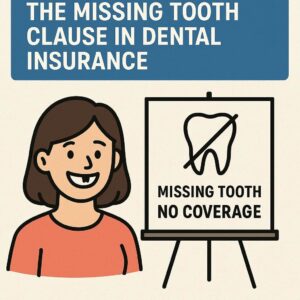
the missing tooth clause in dental insurance
What Exactly Is a Missing Tooth Clause?
Let’s start with a clear, simple definition. A missing tooth clause is a specific provision found in many dental insurance policies. It states that the insurance company will not provide benefits for a prosthetic tooth (like a bridge, implant, or partial denture) that replaces a tooth that was missing before the policy’s effective date.
Think of it this way: your insurance policy is a contract for future care. When you sign up, the insurer assesses the current state of your mouth. If a tooth is already gone on day one of your coverage, the insurer considers that a “pre-existing condition.”
The clause essentially says, “We will help you keep the teeth you have healthy, and we’ll cover you if you lose a tooth while covered by us. However, we won’t pay to fix a problem that already existed before you joined our plan.”
This is a crucial distinction. It doesn’t mean you can never get the tooth replaced. It simply means you shouldn’t expect your insurance plan to foot the bill for it. You would be responsible for 100% of the cost of replacing that specific tooth.
A Simple Analogy: Homeowner’s Insurance
To make this easier to understand, let’s compare it to homeowner’s insurance. Imagine you buy a new homeowner’s insurance policy for a house. On the very first day, you look at the roof and notice a large, gaping hole where a tree branch crashed through six months ago.
Would you expect your new insurance company to pay for a brand-new roof to fix that hole?
Probably not. The damage happened before you were covered. The new policy is designed to protect you from future disasters, like a new storm or a fire. It’s not meant to fix pre-existing damage.
Your dental insurance views a missing tooth the exact same way. The “damage” (the missing tooth) occurred before the coverage started. The plan is there to prevent future loss, not to reconstruct the past.
Why Do Insurance Companies Include This Clause?
It’s easy to feel frustrated by this clause. It can seem unfair or overly restrictive. However, from the perspective of an insurance company, the missing tooth clause serves two very practical and necessary purposes.
1. Preventing “Adverse Selection”
This is a fancy term for a simple concept. Imagine if people only bought car insurance after they got into a fender bender. Or if they only bought health insurance the day before a scheduled surgery. The system would collapse because everyone would be collecting far more than they ever paid in.
The missing tooth clause prevents this exact scenario in dentistry. Without it, someone with multiple missing teeth could sign up for a single month of high-tier dental insurance, get an expensive bridge or implant procedure done, and then cancel their policy. The insurance company would pay out thousands of dollars for just a few dollars in premium payments. It’s simply not a sustainable business model.
By including this clause, insurers ensure that people are joining their plans for ongoing care and preventive maintenance, not just as a one-time discount on major restorative work.
2. Separating “Insurable Events” from “Maintenance”
Insurance, at its core, is about managing risk for unexpected events. Dental insurance is a bit of a hybrid. It covers preventive care (cleanings, exams) predictably, and it helps with restorative care for new problems (like a cavity that turns into a need for a crown).
A tooth that is already missing isn’t an “event.” It’s a condition. It’s a fact of your dental anatomy on the day you sign the contract. The insurer views the replacement of that tooth as a planned, elective reconstruction, not as an unexpected emergency. They are in the business of covering the unexpected, not funding planned reconstruction.
How the Missing Tooth Clause Affects Your Treatment
The impact of this clause is most strongly felt when you start discussing major restorative work with your dentist. Let’s look at how it plays out with different treatment options.
Implants and Bridges: The Primary Targets
The missing tooth clause most frequently applies to procedures that replace one or more missing teeth.
-
Dental Implants: This is the most common procedure affected. If you lost a tooth five years ago, and you get a dental implant next month, your insurance will almost certainly deny the claim for the implant, the abutment, and the crown. They will classify the entire procedure as replacing a tooth that was missing before your coverage began.
-
Fixed Bridges: Similarly, a bridge used to fill a gap created by a missing tooth will likely be denied. The insurance company views the bridge as directly addressing a pre-existing gap.
-
Partial Dentures: If you are missing several teeth and need a removable partial denture to fill those spaces, you may run into the same issue, especially if those teeth have been missing for a long time.
Crowns on Existing Teeth: Usually Safe
Here’s where it gets a little less scary. If you have a tooth that is present but broken down and needs a crown to save it, the missing tooth clause does not apply. The tooth is not missing. The problem (the decay or fracture) may have started before your policy, but the tooth is still there, and you are seeking treatment to prevent it from being lost in the future. This is generally a covered expense, subject to your plan’s waiting periods and annual maximums.
Extractions: Always Covered (for Present Teeth)
If you have a tooth that is currently in your mouth but needs to be pulled because of infection or decay, the extraction itself is almost always a covered benefit (often under basic restorative services). The loss of the tooth happens while you are insured, making it a valid claim. However, remember that replacing it later with an implant or bridge would then be subject to the rules of your current policy, which might consider the tooth now missing, but it happened under coverage, so it’s generally covered.
Navigating the Fine Print: Exceptions and Nuances
Like every rule, the missing tooth clause has exceptions. Insurance policies are legal contracts, and the language can vary significantly from one plan to another. It is vital to read your specific policy’s “Evidence of Coverage” (EOC) document. Here are some nuances to look for.
1. The “Continuous Coverage” Loophole
This is the most common and most important exception. Many policies with a missing tooth clause will waive it if you have had continuous dental coverage for a specific period, often 12 or 24 months, without a lapse.
Here’s how it works:
-
You join a new plan. They see a tooth missing from your x-rays. The clause is active.
-
You maintain your coverage diligently for 24 months, paying your premiums on time.
-
After that 24-month period, the insurance company may consider the condition “no longer pre-existing.” They might then allow you to claim benefits for replacing that tooth, as if you had lost it under their watch.
This is a powerful incentive to stay insured. If you are considering a major case, check if your plan has this provision. It might be worth waiting a year or two to get thousands of dollars in benefits.
2. Grandfathered Treatment Plans
In some rare cases, if you were undergoing a long-term treatment plan with a previous insurer and you switch companies, the new insurer might make an exception. You would need to provide extensive documentation, including treatment records, x-rays, and claims history from your previous dentist and insurance company. It’s not guaranteed, but it’s worth asking.
3. State Mandates and Regulations
Insurance is heavily regulated at the state level. A few states have taken steps to limit or regulate the use of missing tooth clauses. For example, some states mandate that if you had prior insurance that would have covered the tooth replacement, a new insurer cannot use the clause to deny you. Regulations are constantly changing, so it’s wise to check with your state’s Department of Insurance to see if any consumer protections are in place.
4. Employer Plan Variations
If you get your insurance through an employer, the plan is often “fully insured” (the employer buys a policy from an insurance company) or “self-funded” (the employer pays claims directly and hires an insurance company only to administer the plan). Self-funded plans have more flexibility to customize their benefits. It’s possible your employer has negotiated to have the missing tooth clause removed or modified. Check with your HR department for the specifics of your plan.
A Realistic Look at Costs: What to Expect Without Coverage
If your claim is denied due to a missing tooth clause, you are looking at paying the full, out-of-network, or in-network negotiated rate yourself. Let’s look at a realistic cost comparison. These are estimated averages and will vary wildly based on your location and dentist.
| Procedure | Estimated Cost (Without Insurance) | Estimated Insurance Coverage (If Approved) | Your Cost (If Denied by Clause) |
|---|---|---|---|
| Dental Implant (Surgery + Crown) | $3,000 – $6,000 | Plan pays 50% after deductible | $3,000 – $6,000 |
| 3-Unit Fixed Bridge | $2,500 – $5,000 | Plan pays 50% after deductible | $2,500 – $5,000 |
| Partial Denture | $1,200 – $3,000 | Plan pays 50% after deductible | $1,200 – $3,000 |
| Tooth Extraction | $150 – $300 | Plan pays 80% after deductible | (Tooth is present, so claim not related) |
| Crown on Existing Tooth | $800 – $1,800 | Plan pays 50% after deductible | (Tooth is present, so claim not related) |
As you can see, we are talking about a significant out-of-pocket expense. This is why understanding your policy before you start treatment is so critical.
Strategies to Pay for Your Tooth Replacement
Okay, so the insurance company has denied your claim. You need the tooth replaced. Now what? Don’t lose hope. There are several realistic paths forward.
1. The Discounted In-Network Rate
Even if your insurance won’t pay for the implant or bridge, you can still benefit from being “in-network.” Your dentist has a contract with the insurance company that sets maximum fees for procedures. When you are an in-network patient, your dentist agrees to accept these lower rates as payment in full.
Let’s say a dentist’s normal fee for an implant crown is $1,800. Their in-network rate with your PPO might be $1,400. If insurance denies the claim, you are still only responsible for the in-network rate of $1,400, not the full $1,800. This is a built-in discount that is often overlooked. Always ask your dentist’s billing coordinator for the “insurance allowed amount” or the “negotiated rate.”
2. Dental Savings Plans (Discount Plans)
This is a completely different animal from insurance. A dental savings plan (also called a discount plan) is not insurance. You pay a low annual membership fee, and in return, you get access to a network of dentists who have agreed to provide services at a discounted rate (usually 10-60% off).
These plans typically have no waiting periods, no annual maximums, and no exclusions for pre-existing conditions like missing teeth. If you know you need a costly implant, this can be an incredibly effective way to save money. You sign up for the plan, wait a few days for it to activate, and then book your appointment. You pay the discounted rate directly to the dentist. No claims, no denials.
3. In-House Membership Plans
Many independent dental offices are moving away from insurance headaches altogether. They create their own “in-house membership plans.” For a monthly or annual fee (often quite reasonable), you become a “member” of that practice. As a member, you get free cleanings, discounted x-rays, and, most importantly, significant discounts on major procedures like implants, often between 15% and 30%.
Like discount plans, these in-house plans don’t care about missing tooth clauses. The price they quote you is the price you pay. It’s a direct relationship between you and your dentist.
4. Third-Party Financing (CareCredit)
If you need to spread the cost out over time, healthcare credit cards like CareCredit are a popular option. They offer promotional financing, such as 6, 12, or 18 months, with no interest if you pay the full balance by the end of the term.
Important Note: These are real credit products with deferred interest. If you do not pay the full amount within the promotional period, you can be charged interest retroactively from the original purchase date, often at a very high rate. It’s a useful tool, but you must have a clear and realistic repayment plan.
5. Dental Schools
This is one of the most cost-effective options available. Dental schools train future dentists, and they need real patients for their students to learn on. Every procedure is supervised by experienced, licensed instructors.
The trade-off is time. Appointments are much longer (sometimes hours) because the student is learning and being checked at every step. You may need to come in for more visits than you would at a private practice. But the savings can be dramatic—often 50-70% less than a private dentist. It’s a fantastic way to get high-quality work at a fraction of the cost.
The Pre-Treatment Estimate: Your Best Friend
Before you let anyone drill, before you sign any paperwork, take these steps. They can save you from a massive financial shock.
-
Discuss Your Treatment Plan: Have a frank conversation with your dentist about exactly what you need and why. Tell them about your missing tooth and your concerns about coverage.
-
Get a Written Treatment Plan: Ask for a detailed, written estimate that includes all the procedure codes (CDT codes). For a tooth replacement, this could be multiple codes for the surgery, the abutment, and the crown.
-
Submit a Pre-Determination of Benefits: Your dentist’s office will send this treatment plan to your insurance company before any work is done. The insurance company will review it and send you and your dentist a letter stating exactly what they will pay for, what they won’t pay for, and why.
-
Review the Predetermination: This is your crystal ball. If the letter says “Denied: Missing Tooth Clause,” you know exactly where you stand. You now have the power to make an informed decision about whether to proceed with treatment and how to pay for it, without any nasty surprises later.
Important Note from the Author:
Never rely on a verbal estimate from a front desk staff member, no matter how well-meaning they are. Insurance contracts are complex, and only an official pre-determination from the insurance company itself is a reliable guarantee of your benefits. Always get it in writing.
Shopping for a New Plan: Questions to Ask
If you are currently shopping for dental insurance—perhaps during open enrollment at work or on the individual market—you have the power to ask questions upfront. Don’t just look at the monthly premium. Dig deeper.
-
Is there a missing tooth clause? This should be your first question. The answer is often “yes,” but you need to know.
-
If so, is there a “continuous coverage” waiver? Ask how long you need to be on the plan (e.g., 12 months, 24 months) before the clause is lifted for pre-existing missing teeth.
-
What is the definition of “missing”? This sounds silly, but policies define it. Is it simply a tooth that is not present? Does a tooth that is broken down to the gum line but still has a root count? (Spoiler: usually, that tooth is considered present until it’s extracted).
-
Is there a rider available to remove the clause? A “rider” is an add-on to a policy. Some insurers may offer a rider for an additional cost that waives the missing tooth clause from day one. This can be worth it if you have a major reconstruction planned.
-
Does the plan cover implants at all? Many older plans still do not cover implants as a standard benefit, even for newly lost teeth. If implants are your goal, you need a plan that explicitly includes them.
Frequently Asked Questions (FAQ)
Q: My tooth was extracted while I was on my previous insurance, but I just switched to a new plan. Will they cover the implant?
A: Probably not. The new insurer will look at the date you lost the tooth. Since you lost it before their coverage started, their missing tooth clause will likely apply. However, if you had continuous coverage, check if your new plan has a provision to waive the clause after 12-24 months on their plan.
Q: I have a tooth that is completely broken off at the gum line. Is it considered “missing”?
A: In most cases, no. If the root is still in your jawbone, it is considered a “present” but non-restorable tooth. Your insurance will likely cover the extraction (to remove the root) because that is a new procedure. However, replacing it afterward with an implant or bridge would then be filling the space left by an extracted tooth, which may still be subject to a clause if it’s considered a pre-existing gap. It’s a gray area, so a pre-determination is essential.
Q: Does the missing tooth clause apply to children?
A: It can, but it’s less common. If a child is congenitally missing a tooth (meaning they were born without it), some plans will consider this a pre-existing condition. Others may have specific provisions for congenital anomalies. If a child loses a tooth to an accident after the policy is in effect, it is covered. If they lost it the week before the policy started, the clause would likely apply.
Q: My dentist says I need a bridge, but I have two missing teeth on opposite sides of my mouth. Does the clause apply to both?
A: Yes, the clause applies on a tooth-by-tooth basis. It looks at each edentulous space (each gap where a tooth is missing). If both teeth were missing before your coverage began, the replacement for both would be denied.
Q: Can I appeal a denial based on the missing tooth clause?
A: Yes, you always have the right to appeal. Your best chance is to provide evidence that the tooth was not missing before the policy started. This would require dental records or x-rays from a previous dentist dated before your policy’s effective date, showing the tooth was present. If you have a continuous coverage history, that is also strong evidence to include in your appeal.
Additional Resources
For more information on understanding your dental benefits and finding affordable care, here are some reliable, unbiased resources:
-
National Association of Dental Plans (NADP): This is the trade association for the dental benefits industry. Their website has useful consumer information for understanding different types of plans. (Visit: www.nadp.org)
-
Healthcare.gov: If you are shopping for insurance on the individual market, the official health insurance marketplace provides detailed information about what dental coverage entails. (Visit: www.healthcare.gov)
-
Your State’s Department of Insurance: Your state government website (search for “[Your State] Department of Insurance”) is an invaluable resource for understanding your rights as a consumer and for filing complaints if you feel an insurance company has acted in bad faith.
Conclusion: Knowledge Is Your Best Coverage
Dealing with a missing tooth clause can be frustrating, but it doesn’t have to be a mystery. By understanding that this clause exists to prevent insurance from being used as a catch-up fund for old problems, you can set realistic expectations for your coverage. Remember, the key is to be proactive. Before you commit to expensive treatment, get a pre-determination from your insurer to understand exactly what, if anything, will be paid for. If the news isn’t good, explore the many other avenues available to you, from in-network discounts and dental savings plans to dental schools. With a little research and a clear understanding of the rules, you can navigate the fine print and find a path to the healthy, complete smile you deserve.