Buying a home in Florida is an exciting venture, but the closing process can feel like navigating a maze of unfamiliar terms and fees. Among these, “title insurance” often stands out as a significant yet misunderstood line item. Unlike property or auto insurance that protects against future events, title insurance is a unique safeguard against past issues with the property’s ownership. Understanding title insurance cost in Florida is crucial for any realistic homebuying or refinancing budget. This guide will demystify the costs, explain the why behind them, and provide you with the knowledge to approach closing with confidence.
Title insurance is a one-time premium paid at closing that protects you and your lender from financial loss due to defects in the property’s title. These defects can include unknown liens, forged documents, undisclosed heirs, recording errors, or other encumbrances that could threaten your legal ownership. In Florida, these costs are regulated, but several variables influence the final price.
Understanding the Two Main Types of Title Insurance
To understand the cost, you must first understand what you’re paying for. There are two primary policies involved in most real estate transactions.
Owner’s Title Insurance
This policy protects you, the homeowner, for as long as you or your heirs have an interest in the property. It’s a one-time premium that provides a safety net against covered title defects. While not legally mandatory in Florida, it is highly recommended. It ensures that you don’t lose your investment due to a hidden claim from the past.
Lender’s Title Insurance (Loan Policy)
This policy is almost always required by the mortgage company. It protects the lender’s financial interest in the property up to the loan amount. Its cost is typically based on the loan amount. It does not protect the homeowner. As the loan is paid down or refinanced, this policy diminishes and a new one is usually required with a refinance.
A Key Quote from a Florida Real Estate Attorney: “View owner’s title insurance not as an optional closing cost, but as foundational risk management for what is likely your largest asset. The history of a Florida parcel can be long and complex, from swamp land grants to modern subdivisions, and hidden issues are more common than buyers realize.”
How Much Does Title Insurance Cost in Florida? Breaking Down the Premiums
Florida operates under a “promulgated rate” system for title insurance, meaning the Florida Department of Financial Services sets the base rates. This provides consistency across the state. The premium is non-negotiable and is based on the property’s sale price or, for a refinance, the new loan amount.
Here is a comparative table showing the standard rates for Owner’s Title Insurance in Florida:
| Property Sale Price | Premium for Owner’s Policy |
|---|---|
| $100,000 | $5.75 per $1,000 = $575 |
| $250,000 | $5.75 per $1,000 (first $100k) + $5.00 per $1,000 (next $900k) = $1,355 |
| $500,000 | $5.75/$1k (first $100k) + $5.00/$1k (next $900k) = $2,605 |
| $750,000 | $5.75/$1k (first $100k) + $5.00/$1k (next $900k) = $3,855 |
| $1,000,000 | $5.75/$1k (first $100k) + $5.00/$1k (next $900k) = $5,105 |
Note: For properties over $1,000,000, the rate is $2.50 per $1,000 for the amount exceeding $1 million. These rates are current as of our last update and are subject to change by the state.
The Lender’s Policy is typically less expensive. In a simultaneous issuance (when both owner and lender policies are issued at the same time), the lender’s policy premium is often a significantly reduced rate, sometimes as low as $100-$250, because the bulk of the underwriting work is covered by the owner’s policy.
The “Simultaneous Issue” Rate Advantage
This is a critical cost-saving element. When you purchase both an Owner’s Policy and a Lender’s Policy at the same time for the same transaction, the title agent performs one search and underwriting process. The insurer therefore charges a much lower rate for the Lender’s Policy. This makes the combined cost of both policies far less than purchasing them separately.
What’s Included in the Total “Title Insurance” Fee on Your Closing Disclosure?
On your closing statement, you might see several line items grouped under “Title Services.” It’s important to distinguish the state-regulated insurance premium from other associated fees.
-
Title Insurance Premium (Owner’s): The state-set rate for your policy, as shown in the table above.
-
Title Insurance Premium (Lender’s): The reduced simultaneous issue rate.
-
Title Search Fee: This pays for a professional to examine public records to uncover any title defects before issuing the policy. This is a separate service fee.
-
Title Examination Fee: The cost for an agent or attorney to review the search results.
-
Closing/Escrow/Settlement Fee: The administrative charge for facilitating the closing.
-
Endorsements: Additional coverages for specific situations (e.g., condo, survey, or environmental protection endorsements).
Important Note for Readers: Always request your Closing Disclosure (CD) or ALTA statement early. Review each line item under the title charges. Ask your title agent or closing attorney to explain any fee you don’t understand. The premium itself is fixed, but some associated service fees may have a degree of variability.
Key Factors That Influence Your Final Title Insurance Cost in Florida
While the premium rate is fixed, these elements determine the base value it’s applied to:
-
Purchase Price or Loan Amount: This is the primary driver. The higher the price/loan, the higher the premium.
-
Type of Transaction (Purchase vs. Refinance):
-
Purchase: You will likely pay for both an Owner’s Policy (based on sale price) and a Lender’s Policy (based on loan amount) at the simultaneous issue rate.
-
Refinance: You are only obtaining a new Lender’s Policy to protect the new loan. The premium is based on the new loan amount. Your original Owner’s Policy remains in effect.
-
-
Property Value: Directly correlates to the purchase price.
-
Policy Endorsements: Adding specific coverages will increase the total cost.
-
Reissue Rate: If you can provide a prior title insurance policy (often from a recent sale), you may qualify for a “reissue rate” or “refinance rate,” which can save you up to 40-50% on the new lender’s policy premium. Always ask!
How to Estimate Your Costs: A Practical Guide
For Homebuyers:
-
Identify your anticipated purchase price.
-
Use the rate table above to calculate the approximate Owner’s Policy premium.
-
Add an estimated $150-$300 for the simultaneous-issue Lender’s Policy.
-
Add estimated third-party fees: Title Search ($200-$400), Closing Fee ($300-$600).
-
Total Estimate: For a $400,000 purchase, plan for approximately: Owner’s Premium (~$2,105) + Lender’s Premium (~$200) + Search & Fees (~$800) = ~$3,105 in total title-related closing costs.
For Those Refinancing:
-
Know your new loan amount.
-
Ask your title company for the discounted “reissue rate” if you have your old policy. The lender’s policy premium might be in the range of 0.5% to 0.7% of the loan amount at standard rates, but significantly less with a reissue discount.
-
Add standard closing/settlement fees.
Helpful List: Questions to Ask Your Title Agent or Closing Attorney
-
Can you provide a detailed fee breakdown (itemized estimate)?
-
Do I qualify for a reissue or refinance discount?
-
What endorsements are you including, and are they all necessary?
-
What is the exact coverage amount of the owner’s policy? (It should be the purchase price.)
-
Are there any potential issues from the title search that could affect the cost or insurability?
Conclusion
Navigating title insurance cost in Florida is straightforward once you understand the state-regulated premium structure, the difference between owner’s and lender’s policies, and the impact of simultaneous issue rates. While the premium itself is non-negotiable, being an informed consumer allows you to budget accurately, ask the right questions, and potentially unlock savings through reissue rates. View this one-time cost as a critical investment in securing your peaceful and undisputed ownership of your Florida property.
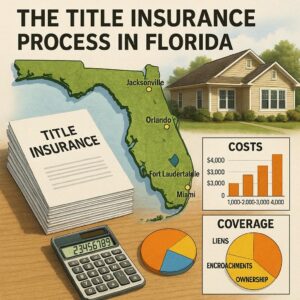
Title Insurance Cost in Florida
Frequently Asked Questions (FAQ)
Q: Is owner’s title insurance mandatory in Florida?
A: No, it is optional. However, given the protection it offers against potentially catastrophic loss, it is considered an essential purchase by virtually all real estate professionals.
Q: Can I shop around for title insurance in Florida?
A: Yes, you can and should. While the insurance premium is fixed by the state, the other service fees (search, closing, etc.) can vary between title companies and attorneys. Obtaining multiple quotes can save you money on the overall closing package.
Q: Who typically chooses the title company in Florida?
A: In most Florida counties, the seller has the contractual right to choose the title agent or closing attorney, as stipulated in the standard FR/Bar contract. However, this is sometimes a point of negotiation. The buyer usually pays for the owner’s title insurance policy.
Q: How long does my owner’s title insurance last?
A: Your owner’s policy lasts for as long as you or your heirs have an interest in the property—potentially forever. It is a one-time premium with continuous coverage.