Facing a tonsillectomy without the safety net of health insurance can feel overwhelming, especially when trying to navigate the complex world of medical pricing. The cost is not a single, flat fee but a puzzle made up of surgeon fees, facility charges, anesthesia, and more. This guide will walk you through every aspect of what to expect financially, how to manage the expenses, and where to find help. Our goal is to provide you with clear, actionable information to make this process as manageable as possible.
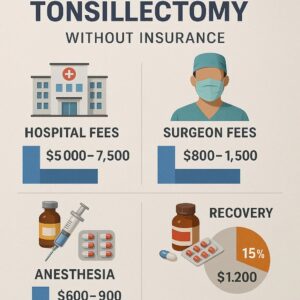
Tonsillectomy Cost Without Insurance
What is a Tonsillectomy and Why is it Needed?
A tonsillectomy is a surgical procedure to remove the palatine tonsils, two oval-shaped pads of tissue at the back of your throat. While commonly performed on children, adults undergo this surgery as well, often with a slightly more challenging recovery.
Doctors typically recommend a tonsillectomy for a few key reasons:
-
Recurrent Infections: Frequent tonsillitis (like 7+ episodes in one year).
-
Sleep Disruption: Enlarged tonsils causing obstructive sleep apnea (paused breathing during sleep).
-
Other Medical Issues: Chronic tonsil stones, abscesses, or suspected tumors.
Understanding why you need the surgery is the first step, as the medical necessity can sometimes influence payment options and financial aid eligibility.
Breaking Down the Total Tonsillectomy Cost Without Insurance
The total price tag is not one bill but a sum of several major components. On average, in the United States, an uninsured tonsillectomy can range from $3,000 to over $8,000, and sometimes more depending on location and complexity.
Component 1: Surgeon’s Fee
This is the payment for the ENT (Ear, Nose, and Throat) surgeon’s expertise and time performing the operation. This fee can vary widely based on the surgeon’s experience, reputation, and geographic region.
-
Typical Range: $800 – $2,500
Component 2: Hospital or Surgical Facility Fee
This is often the largest portion of the cost. It covers the use of the operating room, recovery area, nursing staff, and standard surgical supplies. An outpatient surgery center is generally less expensive than a hospital.
-
Hospital Outpatient: $2,000 – $5,000
-
Ambulatory Surgery Center: $1,500 – $3,500
Component 3: Anesthesia Fees
You will be billed separately by the anesthesia provider or group for administering and monitoring your sedation during the procedure.
-
Typical Range: $500 – $1,200
Component 4: Pathology Fees
If your tonsils are sent to a lab for analysis (a standard practice), there will be an additional fee.
-
Typical Range: $100 – $300
Component 5: Pre-Operative and Post-Operative Care
This includes the initial consultation, any required blood work, and follow-up visits after surgery.
-
Typical Range: $200 – $600 for visits and labs
Comparative Cost Table
| Cost Component | Low-End Estimate | High-End Estimate | Notes |
|---|---|---|---|
| Surgeon’s Fee | $800 | $2,500 | Varies by experience & region. |
| Facility Fee | $1,500 | $5,000 | Surgery centers are often cheaper. |
| Anesthesia Fee | $500 | $1,200 | Based on procedure length. |
| Pathology Fee | $100 | $300 | Standard for tissue analysis. |
| Pre/Post-Op Care | $200 | $600 | Consultation & follow-ups. |
| TOTAL ESTIMATE | $3,100 | $9,600 | Final cost highly location-dependent. |
Key Factors That Influence Your Final Bill
-
Geographic Location: Costs in urban areas (e.g., New York City, San Francisco) are significantly higher than in rural or midwestern regions.
-
Type of Facility: As noted, a freestanding ambulatory surgery center (ASC) is almost always less expensive than a hospital outpatient department for the same procedure.
-
Patient Age: An adult tonsillectomy can be more technically complex than a pediatric one, potentially leading to higher fees.
-
Surgical Complexity: Are the tonsils exceptionally large or scarred from past infections? This can extend surgery time and cost.
-
Complications: Although rare, unexpected bleeding or a prolonged recovery requiring extra care will increase costs.
How to Manage and Reduce the Financial Burden
Paying out-of-pocket doesn’t mean you have to accept the first price quoted. You can be an empowered healthcare consumer.
Strategy 1: Shop Around and Ask for Cash Prices
This is your most powerful tool. Call multiple ENT offices and surgical facilities. Be direct:
“I am an uninsured patient paying out-of-pocket. Can you provide a detailed, all-inclusive estimated price for a tonsillectomy, including surgeon, facility, and anesthesia fees?”
Many providers offer a substantial discount (often 20-40%) for upfront cash payment, as it saves them billing and collection costs.
Strategy 2: Negotiate a Payment Plan
Most hospitals and large practices have billing departments willing to set up an interest-free monthly payment plan. Always negotiate the bill before the procedure, not after it arrives. Get any payment agreement in writing.
Strategy 3: Inquire About Charity Care or Financial Assistance
Non-profit hospitals are legally required to have financial assistance programs for low-income patients. These are often called “Charity Care” or “Sliding Scale” programs. You will need to apply and provide documentation of your income and assets, but they can reduce your bill dramatically or even to zero.
Strategy 4: Consider a Medical Loan or Care Credit
Specialized medical credit cards like CareCredit offer promotional no-interest periods if paid in full within a set time (e.g., 6, 12, or 18 months). Crucial Note: If you do not pay the balance in full by the end of the promotional period, you will be charged deferred interest on the original amount, which can be very high. Use this tool with caution and a solid repayment plan.
Helpful Checklist Before Your Surgery
-
Obtained written cost estimates from at least 2 providers.
-
Asked explicitly about “cash-pay discounts.”
-
Confirmed what the estimate includes (anesthesia, pathology, follow-up?).
-
Spoken to the billing department about payment plan options.
-
Applied for hospital financial assistance if eligible.
-
Secured financing (if needed) and understand all terms.
Important Notes for Uninsured Patients
-
Get It In Writing: A verbal quote is not enough. Request a detailed, written “Good Faith Estimate” (GFE). Under federal law, healthcare providers must provide this upon request for uninsured patients.
-
Beware of Surprise Bills: Even with an estimate, you could get a separate bill from an out-of-network anesthesiologist or assistant surgeon. Ask upfront if all providers involved will be in-network for the cash package or if they can guarantee in-network participation.
-
Tax Deductions: Medical expenses that exceed 7.5% of your Adjusted Gross Income (AGI) in a tax year may be deductible. Keep all receipts and bills.
Frequently Asked Questions (FAQ)
Q: What is the absolute cheapest way to get a tonsillectomy without insurance?
A: The most affordable route is typically to 1) choose a freestanding ambulatory surgery center, 2) find a surgeon who offers a significant cash-pay discount, and 3) apply for charity care if you meet income qualifications.
Q: Can I get a tonsillectomy at a county or public hospital for less?
A: Yes. Public hospitals and community health centers often have lower fee schedules and robust financial assistance programs. Wait times may be longer, but costs can be substantially reduced.
Q: Is it safe to travel abroad for a cheaper tonsillectomy?
A: While prices in some countries can be lower (a practice known as “medical tourism”), it introduces risks like varying medical standards, follow-up care challenges, and travel-related complications. Thorough research is essential.
Q: How long do I have to pay a medical bill before it goes to collections?
A: This varies, but typically bills go to collections after 90-180 days of non-payment. Communication is key. If you can’t pay, contact the billing office immediately to discuss options—this often prevents collection action.
Q: Will not having insurance delay my surgery?
A: It shouldn’t delay the surgery for urgent medical reasons, but for elective cases, facilities will require a financial agreement to be in place before scheduling.
Conclusion
Navigating tonsillectomy costs without insurance requires research, negotiation, and proactive planning. By understanding the cost components, shopping around for cash prices, and exploring financial assistance, you can manage this significant expense. The key is to communicate openly with providers and secure all financial agreements in writing before the procedure.
Additional Resource
For more information on patient financial assistance and your rights, visit the Patient Advocate Foundation: https://www.patientadvocate.org/. This non-profit organization provides case management and financial aid resources for patients with high medical costs.