Opening a trampoline park is an exciting venture, blending fun with business. However, the exhilarating atmosphere comes with inherent risks. From a twisted ankle on a foam pit landing to more serious incidents, the potential for injury is a fundamental part of the industry’s landscape. This makes securing the right insurance not just a wise business move—it’s an absolute necessity. For many park owners, navigating the world of liability and understanding trampoline park insurance costs can feel like its own high-stakes jump.
This guide is designed to be your spotter. We’ll walk you through every factor that influences your premium, break down the types of coverage you absolutely need, and provide you with realistic cost frameworks. Our goal is to empower you with knowledge, so you can make informed decisions that protect your investment, your customers, and your future.
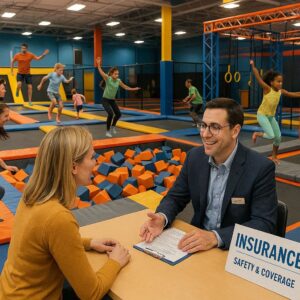
Trampoline Park Insurance Costs
Why Trampoline Park Insurance is Non-Negotiable
Before we dive into costs, it’s crucial to understand the “why.” Trampoline parks are classified as a high-liability business. Unlike a retail store where the primary risk might be a slip-and-fall, your business model involves patrons engaging in strenuous physical activity, often at heights.
A single serious injury can lead to a lawsuit seeking millions of dollars in damages. Without adequate insurance, your business assets—and even your personal assets—could be on the line. Insurance is your financial safety net. It covers legal fees, medical expenses for injured parties, and settlement costs, allowing your business to survive an incident that would otherwise be catastrophic.
“View insurance not as a grudge purchase, but as the foundation of your park’s risk management strategy. It’s the single most important contract you’ll sign to ensure long-term viability.” — Industry Risk Consultant.
Key Factors That Determine Your Insurance Premium
Your trampoline park insurance costs are not a one-size-fits-all number. Insurers perform a detailed risk assessment of your specific operation. Understanding these levers helps you see where you can potentially influence your premium.
1. Park Size and Attendance
Larger parks with higher guest capacity naturally face a greater exposure to incidents. More jumpers per hour equals a higher statistical probability of a claim. Insurers will want to know your square footage, court layout, and projected annual attendance.
2. Location and Local Regulations
Where your park is located significantly impacts cost. Areas with a history of high litigation or large lawsuit settlements (often urban centers) will see higher premiums. State laws governing liability waivers and negligence also play a major role.
3. Safety Protocols and Staff Training
This is your biggest opportunity to demonstrate risk management. Insurers will scrutinize:
-
Waiver Systems: Are you using robust, legally-reviewed digital waivers for every jumper?
-
Training Programs: Do you have certified, ongoing training for court monitors and managers?
-
Safety Equipment: Is your equipment from reputable manufacturers and under a strict maintenance schedule?
-
Operational Rules: How do you manage capacity, enforce rules, and handle incidents?
A well-documented safety culture can lead to substantial premium discounts.
4. Claims History
A park with a clean claims history is a much more attractive risk than one with multiple past incidents. If you’re a new owner purchasing an existing park, its claims history will follow the business.
5. Coverage Limits and Deductibles
This is a direct trade-off. Higher coverage limits (e.g., $2 million vs. $1 million per occurrence) mean higher premiums. Conversely, opting for a higher deductible (the amount you pay out-of-pocket before insurance kicks in) can lower your annual premium.
6. Additional Attractions and Services
Does your park have a ninja warrior course, a climbing wall, a dedicated toddler zone, or a café serving food? Each addition introduces new risks and must be specifically covered, affecting the overall cost.
Essential Types of Coverage for Trampoline Parks
Your insurance policy is a package of different coverages. Here’s what a comprehensive plan should include:
Commercial General Liability (CGL): The cornerstone of your policy. It covers third-party bodily injury (like a customer getting hurt) and property damage (like a guest damaging a nearby car). This is the core of trampoline park liability insurance.
Participants Legal Liability (PLL): Often embedded within or added to the CGL, this is critical. It provides coverage for claims arising from active participants (your jumpers) who have signed waivers. It defends the waiver’s enforceability.
Property Insurance: Covers your physical assets—the building, trampoline beds, foam cubes, padding, computers, and office equipment—against fire, theft, vandalism, and certain weather events.
Workers’ Compensation: Legally required in almost every state if you have employees. It covers medical costs and lost wages for employees injured on the job.
Umbrella/Excess Liability Insurance: This provides an extra layer of protection above the limits of your CGL and other core policies. If a lawsuit exceeds your primary policy limit, the umbrella coverage activates. Given the potential severity of injuries, this is highly recommended.
Additional Coverages to Consider:
-
Non-Owned and Hired Auto: Covers liability if an employee runs an errand for the park in their own car and gets in an accident.
-
Cyber Liability: If you store customer data (from waivers or memberships), this protects against data breaches.
-
Business Interruption: Helps replace lost income and covers fixed expenses if your park is temporarily closed due to a covered property loss (like a fire).
Realistic Cost Ranges: What to Expect
Providing exact figures is impossible due to the factors above, but we can outline realistic annual premium ranges for a typical, well-run trampoline park in the United States.
Important Note: These are ballpark estimates for educational purposes. Your actual quote will vary. Always consult with a specialist broker.
| Park Profile | Estimated Annual Premium Range | Key Influencing Factors |
|---|---|---|
| Small Park / Startup (~10,000 sq ft, basic courts) |
$25,000 – $50,000 | New business with no history, lower limits, basic safety protocols. Highest risk in insurers’ eyes. |
| Medium Standard Park (~15,000-25,000 sq ft, mixed attractions) |
$50,000 – $100,000 | Established operations, solid safety records, moderate attendance. The most common range. |
| Large/Complex Park (30,000+ sq ft, high-attendance, added features) |
$100,000 – $200,000+ | High annual attendance, multiple high-risk attractions (e.g., complex obstacle courses), location in high-litigation area. |
Breaking Down the Cost Components
To understand where your premium goes, here’s a typical percentage breakdown for a medium-sized park:
-
Commercial General & Participants Liability: 60-75%
-
Property Insurance: 15-25%
-
Workers’ Compensation: 10-20%
-
Umbrella Policy & Other Coverages: 5-10%
How to Get the Best Insurance Quote: A Step-by-Step Checklist
Don’t just accept the first quote. Be a prepared and proactive buyer.
-
Work with a Specialist Broker: Find an insurance agent or broker who has specific experience with family entertainment centers (FECs) or trampoline parks. They understand the unique risks and know which carriers are best.
-
Document Your Safety Program: Create a presentation or packet that includes:
-
Copies of your digital waiver.
-
Court monitor training manuals and certification logs.
-
Daily equipment inspection checklists.
-
Maintenance schedules and vendor contracts.
-
Photos/videos showcasing your safety signage and park layout.
-
-
Get Multiple Quotes: Approach at least 3-5 specialized insurers through your broker. Compare not just price, but the coverage details and exclusions.
-
Consider a Deductible Strategy: Analyze your cash flow. Could you handle a $5,000 or $10,000 deductible to lower your annual premium? This can be a smart financial trade-off.
-
Ask About Loss Control Services: Many insurers offer free or discounted services, like safety audits or additional training resources. Utilize them!
-
Review and Update Annually: Don’t auto-renew. Before each renewal, meet with your broker. Discuss any changes in your operations, review your claims history, and re-shop the market if necessary.
Reader Note: The cheapest policy is rarely the best value. A policy with critical exclusions or poor claim service will cost you far more in the long run. Focus on comprehensive coverage from a reputable, A-rated carrier.
Conclusion
Managing trampoline park insurance costs is a fundamental part of your business strategy, deeply intertwined with your commitment to safety. By understanding the risk factors, investing in rigorous training and protocols, and partnering with an experienced insurance professional, you can secure the protection your park needs at the most sustainable cost. View this not as an expense, but as the essential investment that safeguards every jump, laugh, and memory made in your facility.
Frequently Asked Questions (FAQ)
Q: Can I operate a trampoline park without insurance?
A: It is virtually impossible and highly illegal to operate without insurance. Most landlords require proof of insurance in your lease, and state laws mandate Workers’ Compensation. Operating without it exposes you to financial ruin from a single lawsuit.
Q: How much does a $1 million liability insurance policy cost?
A: This is a common misconception. Liability insurance is priced as a whole package based on your park’s risk, not a simple “per-million” rate. The cost to increase your limit from $1 million to $2 million is often less than you might think, making higher limits a wise investment.
Q: Do customer waivers make insurance cheaper?
A: Waivers are a critical layer of protection and are required by insurers, but they don’t necessarily make insurance “cheaper.” They are a key part of your risk defense. A strong, well-executed waiver program demonstrates to insurers that you are a responsible operator, which can positively influence your risk assessment and premium.
Q: What’s the single biggest thing I can do to lower my premium?
A: Implement and meticulously document an industry-leading safety and training program. Preventing claims is the most powerful way to control long-term costs.
Additional Resources
For further guidance on industry best practices and safety standards, we recommend visiting the International Association of Trampoline Parks (IATP) website. They offer valuable resources on safety guidelines, operator training, and industry trends: https://www.indoortrampolineparks.org/