Navigating the world of insurance can feel like trying to cut down a large oak in a strong wind—complicated and risky without the right knowledge. For tree service professionals, having the right insurance isn’t just a good idea; it’s a critical foundation for a sustainable business. The cost of this protection is a key operational expense, but it’s one that safeguards your livelihood, your employees, and your clients.
This guide will walk you through every factor that influences tree cutting insurance cost, helping you understand what you’re paying for and how to make smart, cost-effective decisions for your company.
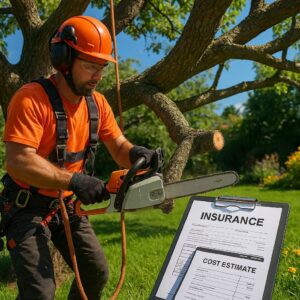
Tree Cutting Insurance Cost
What is Tree Cutting Insurance?
Tree cutting insurance, often called arborist insurance or tree service insurance, is a specialized package of policies designed to protect businesses that work with trees from the unique and significant risks they face daily. It’s not a single policy but a combination of coverages that work together.
At its core, this insurance exists to manage the substantial liabilities inherent in tree work. From property damage to a client’s home or garden, to a severe injury of an employee or bystander, the potential financial consequences of an accident can be devastating. The right insurance transfers that financial risk from your business to the insurance provider.
“In tree care, the margin for error is small, but the potential financial impact of an error is enormous. Insurance isn’t an expense; it’s the cost of staying in business.” – Industry Risk Management Consultant.
Core Insurance Policies for Arborists
A robust insurance package for a tree service typically includes several key policies:
-
General Liability Insurance: The cornerstone of your protection. It covers third-party bodily injury (e.g., a falling branch hits a neighbor) and property damage (e.g., you drop a tree limb on a client’s roof, fence, or car).
-
Workers’ Compensation Insurance: Legally required in almost every state if you have employees. It covers medical expenses and lost wages for employees injured on the job, which is crucial in a high-risk field like tree cutting.
-
Commercial Auto Insurance: Covers your work vehicles (chippers, bucket trucks, stump grinders on trailers) for accidents, liability, and physical damage. Personal auto policies explicitly exclude business use.
-
Inland Marine (Equipment) Insurance: Protects your valuable, mobile tools and equipment—like chainsaws, chippers, and stump grinders—from theft, damage, or loss, whether at your shop, on a job site, or in transit.
Breaking Down the Cost: What Drives Your Premium?
The tree cutting insurance cost for your business is not a random number. Insurers use a detailed risk assessment to determine your premium. Understanding these factors puts you in control.
Primary Factors Influencing Your Insurance Premium
| Factor | Why It Matters | Impact on Cost |
|---|---|---|
| Services Offered | Risk levels vary drastically between jobs. Pruning a small ornamental tree is low-risk; removing a large, dead tree over a house is high-risk. | High. A business only doing pruning will pay far less than one specializing in large, technical removals. |
| Annual Revenue & Payroll | These are direct multipliers for liability and workers’ comp premiums, respectively. They are proxies for the scale of your operations. | Direct. Higher revenue/payroll = higher premium, as it assumes more work and more exposure. |
| Claims History | Your past is the best predictor of your future. A history of claims signals higher risk to an insurer. | Very High. Even one major claim can increase your premiums by 20-50% or more for several years. |
| Experience & Safety Record | Certified, trained arborists with documented safety programs (like OSHA compliance) are seen as lower risk. | Moderate to High. Proven experience and safety can lead to significant discounts. |
| Location (State/Region) | Insurance is state-regulated. Costs for workers’ comp and liability vary based on local laws, litigation rates, and even weather risks. | Moderate. Operating in a state with high medical costs or a litigious environment will cost more. |
| Coverage Limits & Deductibles | The amount of coverage you buy (e.g., $1M vs. $2M liability limit) and the deductible you choose (your out-of-pocket cost per claim) directly change the price. | Direct. Higher limits = higher premium. Higher deductible = lower premium. |
Note for Readers: The single most effective way to control your long-term tree cutting insurance cost is to operate a safe, claims-free business. Investing in training and safety equipment has a direct return on investment through lower insurance premiums.
Secondary Cost Influencers
-
Number of Employees: More employees increase the statistical chance of a workers’ comp claim.
-
Equipment Value: More valuable equipment will increase the cost of your inland marine policy.
-
Subcontractor Use: If you use uninsured subcontractors, you may be liable for their work, increasing your risk.
-
Certifications: Holding ISA (International Society of Arboriculture) Certification or TCIA (Tree Care Industry Association) Accreditation can sometimes qualify you for discounts.
Realistic Cost Ranges for Tree Service Insurance
It’s crucial to approach online “average cost” figures with caution. Your price will be uniquely yours. However, these ranges provide a realistic benchmark for small to mid-sized tree care businesses.
Typical Annual Premium Ranges
-
General Liability Insurance: $2,500 to $7,000+ per year. A small, low-risk operation might be at the lower end, while a larger company doing complex removals will be at the higher end. This is often priced per $1,000 of revenue.
-
Workers’ Compensation Insurance: $5,000 to $15,000+ per year. This is highly dependent on your payroll and your company’s experience modification rate (a number that reflects your claims history). Arborists are in a high-risk class code, so rates are substantial.
-
Commercial Auto Insurance: $2,000 to $5,000+ per year per vehicle. The cost skyrockets for heavy vehicles like bucket trucks due to their value and risk.
-
Inland Marine (Equipment) Insurance: $500 to $2,000+ per year, depending on the total value of your tools and equipment.
A typical small tree service with 2-3 employees, one bucket truck, and moderate revenue might expect a total annual insurance cost between $10,000 and $30,000. This underscores why understanding and managing this cost is essential for pricing your services profitably.
The Bundle vs. Piecemeal Approach
You can purchase policies separately from different carriers, but this is often more expensive and administratively messy. A Business Owner’s Policy (BOP) bundles general liability and business property insurance (for your office/warehouse) at a discounted rate. For tree services, a specially tailored package from an insurer familiar with the industry is almost always the best value, as it can seamlessly include auto, equipment, and liability in one coherent plan.
How to Get & Compare Quotes: A Step-by-Step Process
-
Gather Your Documents: Before you call, have this ready: business revenue/payroll estimates, list of services, vehicle information (VINs, values), equipment list with values, and any loss history (claims from past years).
-
Work with a Specialist: Seek an independent insurance agent or broker who specializes in commercial landscaping, contracting, or tree services. They understand the risks and know which carriers offer the best programs.
-
Provide Consistent Information: When getting multiple quotes, ensure you provide the exact same coverage limits, deductibles, and business information to each agent for an apples-to-apples comparison.
-
Look Beyond Price: The cheapest quote may have critical exclusions (like “tree removal over 50 feet”) or a poor claims service reputation. Evaluate the carrier’s financial strength (A.M. Best rating) and the agent’s responsiveness.
-
Review the Details: Read the policy declarations page and any endorsements. Ensure it clearly covers all the services you advertise (pruning, removal, cabling, stump grinding, etc.).
Helpful Checklist When Evaluating a Quote:
-
Are all my stated services (pruning, removal, etc.) explicitly covered?
-
What is the per-claim deductible and the aggregate limit?
-
Are my subcontractors required to have their own insurance, and am I covered if they don’t?
-
Does the commercial auto policy cover my trailers and loaded equipment?
-
What is the process for filing a claim?
Pro Tips to Manage and Reduce Your Insurance Costs
-
Prioritize Safety: Implement a formal safety program, hold weekly tailgate meetings, and document all training. This can lead to workers’ comp discounts and prevent costly claims.
-
Raise Your Deductibles: Opting for a higher deductible (e.g., $2,500 instead of $500) can significantly lower your annual premium. Just ensure you have the cash reserves to cover it if needed.
-
Pay Annually: Most insurers offer a discount if you pay the full annual premium upfront rather than in monthly installments, which often include fees.
-
Review and Update Annually: Don’t auto-renew without review. Before renewal, talk to your agent. Update your revenue/payroll figures accurately—overestimating costs you money; underestimating can cause a nasty audit bill.
-
Consider Association Memberships: Joining professional groups like the TCIA or your state arborist association can sometimes give you access to group insurance programs with competitive rates.
Important Note: Never, ever operate without adequate insurance to save money. The cost of a single uninsured lawsuit or major injury can instantly bankrupt your business and put your personal assets at risk. Insurance is a non-negotiable pillar of professional tree care.
Conclusion
Understanding tree cutting insurance cost is fundamental to running a responsible and profitable tree service business. Your premium is a direct reflection of your business’s specific risk profile, shaped by your services, experience, safety practices, and claims history. By investing in safety, working with a specialist agent, and proactively managing your policies, you can secure the vital protection your business needs at the most reasonable cost possible. View this not as an expense, but as the essential foundation that allows your business to grow and thrive for years to come.
Frequently Asked Questions (FAQ)
Q: Is tree cutting insurance legally required?
A: While general liability insurance is not always mandated by law, it is almost universally required by clients, municipalities, and for obtaining business licenses. Workers’ compensation insurance is legally required in nearly every state if you have employees. Operating without it can result in severe fines and personal liability.
Q: Can I use my homeowners insurance for small tree jobs?
A: Absolutely not. Homeowners policies explicitly exclude business or commercial activities. If you cause damage while working, even on a friend’s property, the claim will almost certainly be denied, leaving you personally liable for all costs.
Q: How quickly can I get insured?
A: With a specialist agent and your information ready, you can often get a quote within a day and have a policy bound (made active) within 24-48 hours, sometimes even the same day.
Q: What’s the difference between “occurrence” and “claims-made” liability policies?
A: This is critical. An occurrence policy covers any incident that occurs during the policy period, no matter when the claim is filed. A claims-made policy only covers claims filed while the policy is active. For tree services, an occurrence policy is strongly preferred for its long-term protection.
Additional Resources
For further reading on industry best practices and safety standards, which directly influence your insurability and cost, we recommend visiting the Tree Care Industry Association (TCIA) website at https://www.tcia.org. Their resources on safety, accreditation, and business practices are invaluable for professional arborists.