If you are starting a tree care business or already running a crew, you know the job is dangerous. You are high off the ground, using heavy equipment like chainsaws and woodchippers, and you are often working near people’s homes and vehicles. One mistake can lead to a serious injury or thousands of dollars in property damage.
This is where insurance comes in. But asking, “How much does tree service insurance cost?” is like asking, “How much does a truck cost?” It depends entirely on what you need.
In this guide, we are going to break down the real costs of tree service insurance. We will look at the different types of coverage, the factors that influence your premiums, and how you can get the best price without sacrificing the protection you need.
Whether you are a solo climber with a pickup truck or a company with multiple crews, this article will give you the honest, realistic numbers you need to budget effectively.
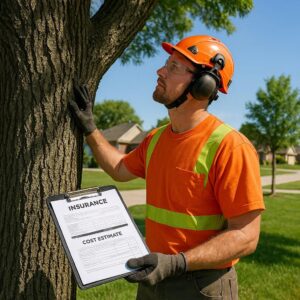
Tree Service Insurance Cost
Understanding the Basics: Why Tree Service Insurance is Expensive
Before we dive into the dollars and cents, it is important to understand why insurance for this trade costs more than, say, insurance for a freelance graphic designer.
Insurance companies calculate risk. They look at your industry and ask: “How likely is this business to have a claim, and how much will that claim cost?”
Tree services rank high on the risk scale. You are working with:
-
Gravity: Falling branches and workers.
-
Proximity: Working next to houses, power lines, and cars.
-
Equipment: Dangerous machinery that can cause catastrophic injury.
-
Height: Working on ladders and in buckets.
Because the potential for a massive claim is always there, the premiums reflect that risk. You are not just paying for a piece of paper; you are paying for the promise that a million-dollar mistake won’t bankrupt your company.
Important Note: The prices discussed in this article are average estimates based on industry data for 2023-2024. Actual costs will vary based on your specific location, business history, and the insurance carrier.
The Core Policies: A Breakdown of Tree Service Insurance Costs
To understand the total cost, we have to look at the individual building blocks. Most tree service policies are bundled together in a Business Owner’s Policy (BOP), but they can also be purchased separately.
Here are the main types of coverage and what they typically cost.
1. General Liability Insurance (The Foundation)
This is the most common type of insurance. It covers you if you cause property damage or bodily injury to a third party. For example:
-
A branch falls and damages a client’s roof.
-
A client trips over your hose and breaks their wrist.
-
You accidentally damage an underground sprinkler system.
The Cost:
For a tree service, General Liability is usually priced based on your gross annual revenue and the scope of work.
-
Small Operations / Sole Proprietors: You might pay between $75 and $150 per month ($900 – $1,800 annually) for a basic $1 million to $2 million policy.
-
Established Small Businesses: With a few employees and steady revenue, expect to pay between $200 and $400 per month.
-
Larger Companies: Premiums can easily go into the thousands per month, as they require higher limits (like $4 million or more) to satisfy commercial client contracts.
What influences this cost?
-
Revenue: More jobs mean more exposure. Insurers will ask for your estimated annual payroll and revenue.
-
Subcontractors: If you hire subcontractors who are not insured under your workers’ comp, your GL rates may go up.
2. Workers’ Compensation (The Mandatory One)
If you have employees, Workers’ Compensation is not optional in most states. It covers medical bills and lost wages for your employees if they get injured on the job. Given the danger of tree work, this is often the single biggest line item in your insurance budget.
The Cost:
Workers’ Comp is priced per $100 of payroll. The rate is determined by the job classification. For tree services, the classifications are usually very high-risk.
-
Tree Trimming/Removal (Climbers and Grounds Crew): This is the most expensive class code. You can expect to pay between $25 and $60+ per $100 of payroll.
-
Let’s do the math: If you pay a climber $50,000 per year, and your rate is $40, your premium for that one employee is $20,000 annually.
-
-
Office/Clerical Staff: If you have an administrative assistant who never goes near a job site, their rate is much lower, often $0.50 to $2.00 per $100 of payroll.
-
Truck Drivers (CDL): If you have dedicated drivers, their rates will fall somewhere in the middle.
How to lower Workers’ Comp costs:
-
Strict Safety Programs: Insurers love safety. Formal training, daily toolbox talks, and a clean safety record can lower your “modification factor” (mod rate), saving you thousands.
-
Accurate Payroll Classification: Ensure you are not mistakenly classifying office workers under the tree trimming code.
3. Commercial Auto Insurance (The Vehicle Coverage)
Your trucks, chippers, and bucket trucks are your lifeline. Personal auto insurance explicitly excludes business use. Commercial Auto insurance covers damages from accidents, theft, and vandalism.
The Cost:
This depends entirely on your fleet.
-
One Pickup Truck (non-CDL): You might pay between $150 and $300 per month per vehicle.
-
Bucket Trucks (Aerial Lifts): These are expensive to repair and replace. Insuring a bucket truck can cost $300 to $600+ per month.
-
Fleet Policies: For multiple vehicles, you can get a fleet discount, but the total premium will be significant.
Factors:
-
Driving Records: Clean driving records for all employees are essential.
-
Radius of Operation: Do you drive 10 miles from your home base or 100 miles? A wider radius usually means higher premiums.
4. Inland Marine / Tools and Equipment Coverage
Your General Liability policy does not cover your tools. If someone steals your chainsaws, ropes, and rigging gear from your truck at night, you need Inland Marine coverage (often called a “floater”) to replace them.
The Cost:
This is relatively affordable.
-
For $5,000 to $15,000 worth of tools, you might pay $150 to $400 per year.
-
The premium is usually based on the total value of the equipment you want to cover.
The Complete Picture: Annual Premium Estimates
Let’s put this all together into a realistic scenario. Remember, these are estimates, but they reflect the reality of running a tree business.
Scenario A: The Solo Operator (No Employees)
-
Profile: You work alone or hire occasional day labor (paid via 1099, though be careful with this legally). You own one truck and have about $10,000 in gear.
-
Coverage Needs: General Liability, Commercial Auto, Inland Marine.
-
Estimated Annual Cost: $2,500 – $4,500
Scenario B: The Small Crew (2-3 Employees)
-
Profile: You have one climber, one groundie, and yourself. You own a chipper, a bucket truck, and a pickup.
-
Coverage Needs: General Liability, Workers’ Comp, Commercial Auto (Fleet), Inland Marine.
-
Estimated Annual Cost: $15,000 – $25,000
Scenario C: The Established Company (5+ Employees)
-
Profile: You have multiple crews, several vehicles, and commercial contracts requiring high liability limits.
-
Coverage Needs: High-limit General Liability, Workers’ Comp, Commercial Auto, Inland Marine, plus possibly an Umbrella Policy.
-
Estimated Annual Cost: $35,000 – $60,000+
Comparative Table: Types of Coverage at a Glance
To make this easier to digest, here is a simple table summarizing the core policies.
| Coverage Type | What It Protects | Why Tree Services Need It | Average Cost Range (Annual) |
|---|---|---|---|
| General Liability | Third-party injury/property damage | A branch falls on a client’s car or house. | $900 – $4,800+ |
| Workers’ Comp | Your employees’ medical bills/lost wages | A climber falls and breaks a leg. | $10,000 – $30,000+ (This is your biggest cost) |
| Commercial Auto | Your vehicles (trucks, chippers) | A truck accident on the highway. | $1,800 – $7,200+ per vehicle |
| Inland Marine | Your tools and portable equipment | Theft of chainsaws and rigging gear from your truck. | $150 – $500 |
| Umbrella Policy | Extra liability beyond other policy limits | A major accident leads to a lawsuit exceeding your GL limit. | $500 – $1,500 |
7 Key Factors That Influence Your Insurance Rates
Why do two identical tree services get different quotes? Insurance companies are looking at the details. Here is what moves the needle on your price.
1. Safety Record and Claims History
This is the biggest factor. If you have had claims in the past, you are statistically more likely to have them again. A single large claim can double or triple your premiums for years. Conversely, a clean, multi-year record is your best negotiating tool.
2. Experience and Credentials
Are you a certified arborist? Do you have formal training? Insurers see certified arborists as professionals who understand the science and safety of tree work, which lowers their risk profile.
3. The Types of Trees You Work On
Are you only trimming small ornamental trees in a new subdivision? Or are you removing massive, dead oaks hanging over historic homes? The complexity and hazard level of your typical jobs directly impact your rate.
4. Subcontractor Usage
If you regularly hire subcontractors, the insurance company will want to see proof of their insurance. If they are not insured, the risk (and cost) falls back on you. Many insurers will include subcontracted labor in your Workers’ Comp audit if they aren’t properly covered.
5. Location, Location, Location
Rates vary by state. States with high litigation rates (like Florida or California) often have higher General Liability premiums. States with high medical costs will have higher Workers’ Comp premiums.
6. Deductibles
Choosing a higher deductible (the amount you pay out-of-pocket before insurance kicks in) can lower your monthly premium. If you have cash reserves to cover a $2,500 or $5,000 claim, raising your deductible is a smart way to save.
7. Insurance Score
Similar to your personal credit score, insurers use a business credit score to predict the likelihood of claims. Keeping your business finances in good shape can help lower your rates.
Important Note: Never lie on an insurance application. If you say you don’t use a bucket truck but then have an accident with one, the insurance company can deny your claim entirely (known as “rescission”).
Honest Advice: How to Get the Best Rate
You want to be protected, but you also don’t want to overpay. Here is a realistic approach to buying tree service insurance.
1. Bundle Your Policies
Don’t buy General Liability from one company and Auto from another. Insurers offer significant discounts (usually 10-20%) when you bundle multiple policies into a Business Owner’s Policy (BOP). It also makes managing your coverage much easier.
2. Shop Around (But Compare Apples to Apples)
Get quotes from at least three different agencies that specialize in tree care. Independent agents are your best friend here because they can quote you with multiple “A-rated” insurance companies.
When you compare quotes, look at:
-
Coverage Limits: Does each quote offer the same limits (e.g., $1M/$2M)?
-
Deductibles: Is one deductible significantly higher?
-
Exclusions: What is not covered? This is just as important as what is covered.
3. Invest in Safety
This cannot be overstated.
-
Implement a formal safety program.
-
Conduct daily pre-job briefings.
-
Provide ongoing training for your crew.
-
Keep detailed records of all your safety meetings.
Present this safety manual to your insurance agent. It shows you are a lower risk than the average tree service.
4. Pay Annually if Possible
Insurance companies often charge fees for monthly payment plans. If you can afford to pay the full annual premium upfront, you can usually avoid these fees and sometimes get a small discount.
5. Work with a Specialist
A general insurance broker who insures pizza shops and dentists may not understand the nuances of tree work. Find an agent or company that specializes in arboriculture. They will know exactly what coverage you need and where to find the best rates for your specific risk.
The Cost of NOT Having Insurance
It is tempting to look at these numbers and think, “I’ll just risk it.” This is a dangerous gamble.
-
The Cost of a Hospital Bill: One ground worker getting hit by a branch could result in a $50,000 hospital bill. Without Workers’ Comp, you are paying that out of pocket.
-
The Cost of a Lawsuit: If a branch crushes a $80,000 luxury SUV, you are on the hook for that. If the homeowner sues you for damages and their lawyer’s fees, the cost can easily exceed $100,000.
-
The Cost of Your Business: If you get caught operating without Workers’ Comp in most states, the fines can be crippling. You can also be issued a “stop work” order, halting your income completely.
-
The Cost of Lost Sleep: Knowing that one bad day could wipe out everything you’ve worked for is a heavy burden.
Paying for insurance is painful, but it is a predictable, manageable pain. A lawsuit without insurance is a catastrophic, life-changing event.
Additional Resource: Finding the Right Agent
To get started on finding the right coverage, a great resource is the International Society of Arboriculture (ISA). Their website often has resources and links to insurance providers who specialize in tree care.
[Link to ISA Website: www.isa-arbor.com]
You can also search for “tree service insurance independent agent” to find brokers who specifically market to this niche. They will be your best guide.
Frequently Asked Questions (FAQ)
Q: I just started my business. Can I get insurance, or do I need a history?
A: Yes, you can get insurance. New businesses get coverage all the time. However, you will likely pay a bit more in the first year or two because you don’t have an established loss history. As you build a clean record, your rates can go down.
Q: Is there a way to get “pay-as-you-go” Workers’ Comp insurance?
A: Yes! Many insurance carriers now offer “pay-as-you-go” Workers’ Comp. Instead of paying a large estimated premium upfront and settling up at the end of the year, the premium is calculated and paid based on your actual payroll each time you run payroll. This is excellent for cash flow.
Q: My friend is a climber. Can I just hire him as a 1099 contractor to save on Workers’ Comp?
A: This is a very risky area. In many states, if you control how, when, and where the work is done, that person is legally your employee, regardless of what tax form you use. If they get hurt and you don’t have Workers’ Comp, you face huge fines and lawsuits. If you use subs, make sure they have their own valid Workers’ Comp policy and provide you with a certificate of insurance.
Q: Does my insurance cover me if I work in a different state?
A: Not automatically. Workers’ Comp laws are state-specific. If you regularly work near a state line, you need to tell your agent. They can usually add a “foreign coverage” endorsement or ensure your policy extends to the other state.
Q: What is an “Umbrella Policy” and do I need it?
A: An Umbrella Policy provides extra liability coverage above and beyond your General Liability and Auto limits. For example, if you have a $1M policy but a judgment comes in at $1.5M, your umbrella would cover the extra $500k. If you have assets like a house or savings, or if you work for commercial properties that require high limits, an umbrella is a smart idea. It is relatively cheap for the massive amount of extra protection it provides.
Conclusion
The cost of tree service insurance is a significant line item in your budget, often ranging from a few thousand dollars for a solo operator to tens of thousands for a growing company. It is influenced heavily by your payroll, safety record, and the types of vehicles and jobs you handle. While the price can seem high, it is a direct reflection of the inherent risks in the arboriculture profession. By prioritizing safety, working with a specialized agent, and understanding exactly what drives your premiums, you can secure the coverage you need at a price that allows your business to thrive. View it not as an expense, but as the essential foundation that allows you to work with confidence and professionalism every single day.