Starting a career as a life insurance agent in Utah is a fantastic step toward financial independence and helping others secure their futures. However, before you can sell your first policy, you need a license. A common and crucial question for every aspiring agent is: “What does it really cost to get a Utah life insurance license?”
The total Utah life insurance license cost isn’t just a single fee paid to the state. It’s a combination of investments in your education, testing, and application process. Understanding each component will help you budget effectively and avoid surprises. This comprehensive guide breaks down every expected expense, provides money-saving tips, and outlines the entire process so you can embark on your new career with clarity and confidence.
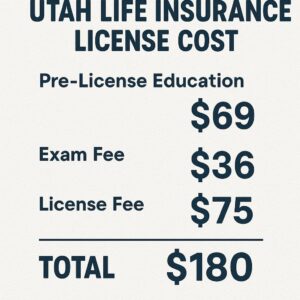
Utah Life Insurance License Cost
Breaking Down the Total Utah Life Insurance License Cost
The total investment to become licensed typically ranges from $300 to $600. This estimate covers the essential, mandatory steps. Your personal total may vary based on the pre-license education provider you choose and whether you pass the exam on your first attempt.
Let’s look at a detailed cost breakdown table:
| Cost Component | Average Cost Range | Who You Pay | Mandatory? |
|---|---|---|---|
| Pre-License Education Course | $100 – $350 | Approved Education Provider | Yes |
| State Exam Fee | $49 (per attempt) | Pearson VUE (Testing Vendor) | Yes |
| License Application Fee | $85 | Utah Insurance Department | Yes |
| Fingerprinting & Background Check | $39.25 – $50 | IdentoGO (Fieldprint) | Yes |
| Miscellaneous (Study Aids, Travel) | $0 – $100 | N/A | No |
Important Note: “These costs are an investment in your professional future. Viewing them as foundational business expenses, rather than simple fees, sets the right mindset for a successful career in insurance.” – Industry Career Advisor.
Detailed Analysis of Each Cost Component
1. Pre-License Education Course: Your Foundational Investment
Cost: $100 – $350
Before you can sit for the state exam, Utah requires you to complete a state-approved pre-license education course. This is often the most variable cost.
-
What You’re Paying For: These courses cover Utah insurance laws, rules, ethics, and core life insurance concepts. They prepare you for the licensing exam.
-
Why Costs Vary:
-
Course Format: Online, self-paced courses are typically cheaper than in-person classroom sessions.
-
Provider Reputation & Materials: Premium providers may charge more but include better study tools, practice exams, and video instruction.
-
Package Deals: Some providers offer bundles that include health insurance licensing, which costs more but provides greater value if you plan to sell multiple lines.
-
Budget Tip: Look for providers with high exam pass rates and money-back guarantees if you don’t pass. Don’t automatically choose the cheapest option; consider the quality of education as it directly impacts your exam success.
2. The Utah State Licensing Exam Fee
Cost: $49 per attempt
After completing your education, you must pass the Utah Life Insurance producer exam. You’ll schedule and pay for this exam through Pearson VUE, the state’s testing vendor.
-
What You’re Paying For: This fee covers the administration of the computer-based test at a Pearson VUE testing center.
-
Crucial Consideration: The fee is per attempt. If you do not pass on your first try, you must pay another $49 to retake the exam. Thorough preparation with your pre-license course materials is key to avoiding repeat fees.
3. License Application Fee
Cost: $85
Once you pass the exam, you must submit a formal license application through the National Insurance Producer Registry (NIPR). The application fee is paid directly to the Utah Insurance Department.
-
What You’re Paying For: This fee processes your application, activates your license, and maintains your record in the state system for the initial two-year period.
4. Fingerprinting and Background Check
Cost: $39.25 – $50
Utah requires all license applicants to submit fingerprints for a criminal background check. This is a non-negotiable part of the process.
-
Process: You must schedule an appointment with IdentoGO (operated by Fieldprint) to have your fingerprints taken digitally.
-
What You’re Paying For: The fee covers the electronic submission of your fingerprints to the Utah Department of Public Safety and the FBI.
5. Potential Additional & Ongoing Costs
Beyond the core fees, consider these potential expenses:
-
Exam Prep Supplements: Extra practice exams or flashcards ($20-$50).
-
Transportation: Costs to travel to the testing center or fingerprinting location.
-
License Renewal: Your Utah license expires every two years. Renewal requires completing continuing education (CE) courses (approx. $50-$150) and paying a renewal fee (currently $60).
-
Appointment Fees: Once licensed, insurance companies you contract with (“appoint” you) may charge a fee, though many cover this cost for new agents.
The Step-by-Step Process: Where the Costs Fit In
Understanding the sequence of events helps you plan your payments.
-
Complete Pre-License Education. (Cost: $100-$350) Choose a provider and finish the required hours.
-
Schedule and Pass the State Exam. (Cost: $49) Receive a “pass” notification at the test center.
-
Get Fingerprinted. (Cost: ~$40-$50) You can often do this before or after the exam.
-
Submit Your License Application. (Cost: $85) File via the NIPR portal within one year of passing your exam.
-
Receive Your License. The Utah Insurance Department will issue your license number, typically within a few business days if there are no issues with your background check.
How to Minimize Your Total Licensing Costs
Being strategic can keep your expenses at the lower end of the spectrum.
-
Pass the Exam on Your First Try. This is the single best way to save money. Invest time in studying to avoid the $49 retake fee and potential need for more study materials.
-
Choose an Effective Education Provider. Research providers. A slightly more expensive course with superior materials and a high pass rate may be more cost-effective than a cheap course you struggle with.
-
Look for Package Deals. If you’re certain you’ll also pursue health, accident, or other lines, a combined course can be cheaper per line.
-
Plan Your Travel. Schedule your exam and fingerprinting appointments efficiently to minimize multiple trips.
Common Misconceptions About Licensing Costs
-
Myth: “The state application fee is the only cost.” Reality: It’s just one of four mandatory payments.
-
Myth: “I can skip the pre-license course to save money.” Reality: It’s a legal requirement. You cannot sit for the exam without a certificate of completion.
-
Myth: “My future employer will pay for everything.” Reality: While many agencies offer reimbursement programs after you are licensed and contracted, you are almost always responsible for the upfront, out-of-pocket costs.
Conclusion
The total Utah life insurance license cost is a manageable investment, typically between $300 and $600, that opens the door to a rewarding profession. By budgeting for the four core components—pre-license education, the state exam, fingerprinting, and the application fee—you can navigate the process smoothly. Remember, thorough preparation is the key to controlling costs, as passing the exam on your first attempt is the most significant factor in staying within budget. View these expenses as the foundation for your new career helping Utah families build financial security.
Frequently Asked Questions (FAQ)
Q: Can I get my Utah life insurance license for free?
A: No, there are mandatory state and vendor fees that cannot be waived. However, some employers may offer reimbursement programs after you are hired and productive.
Q: How long is the pre-license course, and can I take it online?
A: Utah requires 20 hours of life insurance pre-license education. Yes, most providers offer fully online, self-paced courses that are state-approved.
Q: What if I fail the state exam?
A: You can retake it. Utah requires a 24-hour waiting period before your next attempt. You will need to pay the $49 exam fee again for each retake.
Q: How long does the entire licensing process take?
A: From starting your course to receiving your license number, it can take as little as 3-4 weeks if you study consistently, pass the exam immediately, and your background check is processed quickly.
Q: Are there any costs after I get my license?
A: Yes. You must renew your license every two years by completing continuing education (CE) and paying a renewal fee.
Additional Resource
For the most official and up-to-date information, always refer to the Utah Insurance Department website. You can find the list of approved pre-license education providers, exam outlines, and the licensing portal here: https://insurance.utah.gov/