So, you’ve fallen in love with the idea of a barndominium—the soaring ceilings, the open floor plan, the blend of rustic charm and modern living. It’s a dream home that breaks the mold. But when it comes to protecting that dream, you quickly discover that insuring a barndominium isn’t quite the same as insuring a traditional stick-built house. The big question on your mind is: What does barndominium insurance really cost, and why?
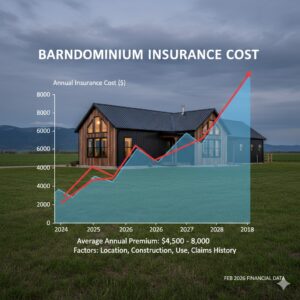
Unlike a standard home policy, barndominium insurance requires a specialized approach. The national average annual premium typically ranges from $1,500 to $3,500, but your actual cost could be as low as $1,200 or soar well past $5,000. This wide range isn’t arbitrary; it’s a direct reflection of your barndominium’s unique characteristics and the specific risks insurers consider.
In this comprehensive guide, we’ll dismantle the mystery of barndominium insurance costs piece by piece. We’ll explore the critical factors that determine your premium, provide you with realistic cost estimates, and offer actionable strategies to secure the best coverage without overpaying. Consider this your essential blueprint for navigating the world of barndominium insurance.
Barndominium Insurance Cost
Why Barndominium Insurance is Different (and Often More Complex)
Before diving into numbers, it’s crucial to understand the “why” behind the cost. Insurance companies assess risk. A barndominium, by its very hybrid nature, presents a risk profile that can confuse a standard homeowner’s insurance algorithm.
-
Non-Standard Construction: The classic post-frame construction with metal siding and roofing is fundamentally different from the wooden framing of a conventional home. Insurers need to understand the materials’ durability, wind resistance, and fire rating.
-
Mixed-Use Potential: Many barndominiums are built on larger parcels of land and may combine living space with a workshop, classic car storage, or even a small agricultural operation. This blending of residential and commercial/hobby activities creates liability and property coverage complexities.
-
Customization & High-End Finishes: A steel shell often houses luxury interiors—granite countertops, custom cabinetry, high-end appliances, and specialized systems like radiant floor heating. The cost to rebuild this “high-value inside a commercial-style shell” is unique and must be accurately appraised.
-
Perceived Risk Gaps: Some insurers may have outdated perceptions about metal buildings and their susceptibility to certain perils, leading to stricter underwriting or higher initial quotes.
As one industry expert specializing in alternative homes notes:
“The biggest mistake barndominium owners make is assuming their agent fully understands what they’ve built. You must proactively communicate the details—from the grade of the steel to the type of welding on the trusses. Documentation is your best tool for getting fair coverage and pricing.”
Key Factors That Determine Your Barndominium Insurance Cost
Your premium is a personalized calculation. Here are the primary variables insurers evaluate.
1. Location, Location, Location
This is the most significant driver of cost outside of your control.
-
Weather Risks: Is your area prone to hail, tornadoes, wildfires, or hurricanes? Locations with high wind or hail risk will see higher premiums. Metal roofs, while durable, can be rated differently for hail impact.
-
Proximity to Services: How far are you from the nearest fire hydrant and fire station? A rural location with a volunteer fire department farther than 5 miles away will increase your risk score.
-
Crime Rate: The local crime statistics for theft and vandalism play a role.
2. Construction Details & Materials
The devil is in the details. Be prepared to provide these to your agent.
-
Frame Type: Post-frame with laminated columns? All-steel I-beam construction?
-
Exterior Cladding: Paint-grip steel, stone veneer, wood siding? What is the wind uplift rating?
-
Roofing: 26-gauge metal, standing seam? What is the UL rating for fire resistance?
-
Interior Build-Out: Were standard residential building codes followed for electrical, plumbing, and HVAC?
3. Size, Value, and Rebuild Cost
This isn’t about market value, but rebuild cost (replacement cost value).
-
Square Footage: More square footage means more materials and labor to insure.
-
Custom Features: High-end kitchens, smart home systems, bespoke woodwork, and luxury flooring all increase the rebuild cost.
-
Specialty Systems: Do you have a geothermal HVAC, solar panel array, or backup generator? These need scheduled coverage.
4. Intended Use and Liability Exposures
How you use your barndominium directly impacts risk.
-
Purely Residential: This is the simplest and generally least expensive.
-
Home Business: Running a small business (e.g., woodworking, welding, online sales) from a workshop on the property requires additional liability and equipment coverage.
-
Hobby Farming/Animal Housing: Keeping livestock or storing hay introduces unique property and liability risks.
-
Vehicle Storage: Collecting classic cars or storing RVs may require scheduled personal property coverage.
5. Your Insurance Profile
Your personal history still matters.
-
Credit-Based Insurance Score: In most states, insurers use a version of your credit score to predict risk. A higher score can lead to lower premiums.
-
Claims History: A history of frequent claims will increase your cost.
-
Deductible Choice: Opting for a higher deductible (e.g., $2,500 vs. $1,000) will lower your annual premium.
Estimated Barndominium Insurance Cost Ranges
The following table provides a realistic breakdown of estimated annual premiums based on common scenarios. These are illustrative ranges; your exact quote will vary.
| Barndominium Profile | Key Characteristics | Estimated Annual Premium Range |
|---|---|---|
| Basic & Small | 1,500 sq. ft., rural but low-risk area, simple finishes, no special exposures. | $1,200 – $2,000 |
| Average & Modern | 2,400 sq. ft., suburban/rural transition, good fire protection, mid-range finishes, detached garage. | $1,800 – $3,200 |
| Large & Custom | 4,000+ sq. ft., high-value interior finishes, workshop space, located in an area with moderate hail/wind risk. | $3,000 – $5,000+ |
| High-Risk & Complex | Large square footage, high-end custom features, home business (e.g., auto restoration), located in a wildfire zone or coastal hurricane area. | $4,500 – $8,000+ |
Important Note for Readers: Never insure your barndominium for its market value or the land cost. Always ensure your dwelling coverage is based on a current, professional replacement cost appraisal. Being underinsured is the greatest financial risk you face after a total loss.
How to Save on Barndominium Insurance: 7 Proactive Strategies
Higher premiums aren’t a foregone conclusion. You can positively influence your cost.
-
Shop Specialized Carriers: Don’t stop at the first quote. Seek out insurers familiar with barndominiums, metal buildings, and farm/ranch policies. Independent insurance agents who work with multiple companies are invaluable here.
-
Bundle Your Policies: Place your auto, umbrella, and any other insurances with the same company that writes your barndominium policy. Multi-policy discounts are substantial.
-
Increase Your Deductible: If you have a healthy emergency fund, choosing a higher deductible (e.g., $2,500 or $5,000) can reduce your annual premium by 15% or more.
-
Invest in Protective Devices: Install security systems (monitored burglar/fire alarms), smoke detectors, and weather monitoring systems. Provide proof of installation to your insurer for discounts.
-
Build to Mitigate Risk: During construction, use wind-rated connectors, hail-resistant roofing materials, and fire-retardant materials where possible. Document these choices for your insurer.
-
Maintain a Strong Credit Score: Pay bills on time and manage your credit responsibly, as this affects your premium in most states.
-
Review and Update Annually: Don’t let your policy languish. Review it each year with your agent to adjust coverage, remove old items, and ensure you’re still getting all eligible discounts.
The Essential Coverage Checklist for Your Barndominium Policy
When comparing quotes, ensure your policy robustly includes these elements:
-
Dwelling Coverage: Based on 100% of rebuild cost, with extended or guaranteed replacement cost.
-
Other Structures: For detached garages, sheds, or barns on your property.
-
Personal Property: For the contents of your home, with attention to any special sub-limits for expensive items like jewelry, art, or collections. Consider “replacement cost” over “actual cash value” for contents.
-
Liability Protection: At least $500,000, preferably $1 million. This is crucial if you have guests, pets, or a home business.
-
Additional Living Expenses (ALE): Covers hotel and food costs if your barndominium is uninhabitable after a covered loss. Ensure the limit is sufficient (e.g., 20-30% of dwelling coverage).
-
Specific Endorsements:
-
Ordinance or Law Coverage: Pays for the increased cost to rebuild to current, updated building codes.
-
Equipment Breakdown: For your HVAC, generator, or well pump.
-
Scheduled Personal Property: To specifically cover high-value individual items.
-
Conclusion
Securing the right insurance for your barndominium is a critical step in safeguarding your investment. The cost is shaped by your location, construction quality, home’s value, and how you use the space. By understanding these factors, seeking specialized insurers, and proactively presenting your home’s details, you can obtain comprehensive coverage that provides true peace of mind without unnecessary expense. Remember, the goal is not merely the cheapest policy, but the right protection for the unique home you’ve built.
Frequently Asked Questions (FAQ)
Q: Is barndominium insurance more expensive than regular home insurance?
A: Often, yes, by about 15-30% on average. This is due to the custom rebuild cost, unique construction, and often rural location. However, a very basic barndominium in a low-risk area may be comparable to a standard home.
Q: Can I get insurance if I built my barndominium myself?
A: Yes, but it can be more challenging. Insurers will want proof of code compliance, quality of materials, and may require a professional inspection. Full disclosure during the quoting process is essential.
Q: Does a metal roof make insurance cheaper?
A: It can, but it’s not automatic. Metal roofs are excellent for fire resistance (a potential discount), but in hail-prone areas, some insurers may view them differently. Provide documentation of its impact rating to seek appropriate discounts.
Q: What is the single most important thing to tell my insurance agent?
A: The accurate rebuild cost and the specific construction details. Do not let them classify it as a “standard frame” home. Use the terms “post-frame construction” or “steel-frame barndominium” and provide photos and spec sheets from your build.
Additional Resources
-
For a deeper dive into replacement cost calculations and building valuation, the International Risk Management Institute (IRMI) offers excellent educational articles for consumers on property insurance fundamentals: https://www.irmi.com/articles (Note: This is a professional resource but has accessible content).