Buying a new Kia is an exciting experience. You’ve chosen a vehicle known for its value, warranty, and style. But in the rush of signing paperwork, your dealer might mention an add-on called “GAP insurance.” Suddenly, you’re faced with a decision and an extra cost. What is it? Do you really need it for your Kia? And most importantly, what is a fair Kia gap insurance cost?
This comprehensive guide is designed to demystify GAP insurance specifically for Kia owners. We’ll break down the real costs, explore where and how to buy it, and help you make an informed decision to protect your investment. Our goal is to provide you with clear, reliable information so you can drive your new Sorento, Telluride, or Sportage with total peace of mind.
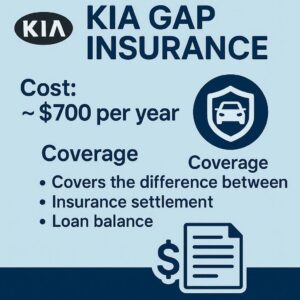
Kia Gap Insurance Cost and Coverage
What is GAP Insurance and How Does It Work with Your Kia?
Let’s start with the basics. GAP stands for Guaranteed Asset Protection. It’s a specific type of auto insurance coverage designed to cover the “gap” between what you owe on your car loan or lease and the car’s actual cash value (ACV) at the time it’s declared a total loss.
The Depreciation Problem
A new Kia begins to depreciate the moment you drive it off the lot. In the first few years, this depreciation can be steep. Your standard auto insurance policy (comprehensive and collision) will only pay out the car’s current market value if it’s totaled or stolen.
Here’s the critical issue: The insurance payout may be thousands of dollars less than the remaining balance on your loan or lease. This is especially true if you made a small down payment, have a long loan term (72 or 84 months), or rolled negative equity from a previous car into your new Kia loan.
“GAP insurance is not for the car you’re driving today; it’s for the car you might lose tomorrow. It protects you from financial catastrophe in the worst-case scenario,” explains a veteran financial advisor in the auto industry.
A Real-World Kia Example
Imagine you purchased a new 2024 Kia Sportage SX-Prestige for $38,000. You financed $36,000 after a modest down payment. Twelve months later, your loan balance is $33,500. Unfortunately, the car is totaled in an accident.
Your primary insurer assesses the Sportage’s actual cash value, considering a year of depreciation and mileage, at $29,000.
-
Insurance Payout: $29,000
-
Loan Balance Owed: $33,500
-
The GAP: $4,500
Without GAP insurance, you would have to pay that $4,500 out of pocket to settle your loan, even though your car is gone. With GAP insurance, the policy would cover the $4,500 difference, freeing you from that debt.
Key Factors That Influence Your Kia Gap Insurance Cost
The price of GAP coverage isn’t a one-size-fits-all figure. Several variables directly impact your premium. Understanding these can help you find the best value.
1. Vehicle Model and Purchase Price
While Kia is a value brand, the cost difference between a Forte and a fully-loaded Telluride is significant. Generally, the more expensive the vehicle, the higher the potential gap, which can influence the cost of the coverage. However, higher depreciation rates on some luxury models aren’t as severe with Kias, which can sometimes keep costs moderate.
2. Loan-to-Value Ratio (LTV)
This is the most crucial factor. It’s the ratio of your loan amount to the car’s value at purchase.
-
High LTV (Low or No Down Payment): You are immediately in a “negative equity” position. This represents a higher risk to the GAP insurer, so the cost will be higher.
-
Low LTV (Large Down Payment): If you put down 20% or more, you start with positive equity, reducing the risk and likely the cost of GAP coverage.
3. Loan Term Length
Longer loan terms (72, 84 months) mean you build equity slower. The risk of a significant gap remains for a more extended period, which can increase the GAP insurance cost.
4. Where You Purchase the Coverage
This is where you can save significantly. Prices vary dramatically between sources:
-
Kia Dealership (Finance and Insurance Office): Often the most expensive option, frequently bundled into your loan, which adds interest.
-
Your Primary Auto Insurer: Typically the most affordable option, adding only a small premium to your monthly or semi-annual bill.
-
Standalone GAP Providers/Banks/Credit Unions: Can be competitive, especially if offered through your lending institution.
5. Deductible and Coverage Limits
Some GAP policies may have small deductibles or coverage caps (e.g., 125% of ACV). A policy with no deductible and a high coverage limit may cost slightly more but offers more complete protection.
Average Kia Gap Insurance Cost: Breaking Down the Numbers
It’s important to frame cost in two ways: as a one-time premium (often at the dealer) or as a recurring charge on your auto insurance bill.
Cost Comparison Table
| Source of GAP Coverage | Typical Cost Range (One-Time) | Typical Cost Range (Annual) | Key Considerations |
|---|---|---|---|
| Kia Dealership (F&I) | $500 – $800 | N/A (Financed) | Most expensive. Added to loan, so you pay interest on it. Cancellable for a pro-rated refund. |
| Your Auto Insurer | N/A | $20 – $60 per year | Least expensive option. Paid monthly with premium. Easy to cancel. Coverage ends if you switch insurers. |
| Credit Union / Bank | $300 – $700 | N/A | Often a competitive one-time fee. May offer discounts to members. |
| Standalone Provider | $400 – $700 | Varies | Shop carefully. Ensure they are reputable and the coverage is robust. |
Note: These are national estimates. Your specific Kia gap insurance cost will depend on the factors listed in the previous section and your state regulations.
A Cost-Saving Insight
Adding GAP to your existing auto policy is almost always the most budget-friendly path. For example, at an average of $40 annually, over a typical 3-year coverage period, you’d pay about $120 total. Compare that to a one-time $600 fee at the dealership (which becomes ~$650 with loan interest), and the savings are clear.
Where to Buy GAP Insurance for Your Kia: Pros and Cons
1. At the Kia Dealership (F&I Office)
Pros:
-
Convenience: Handled during purchase.
-
Integrated: Often bundled seamlessly into your financing.
Cons:
-
Highest Cost: Markup is common.
-
Financed Cost: You pay interest on the premium, increasing the total cost.
-
High-Pressure Sale: F&I managers are trained to sell this profitably.
Important Note for Readers: You are under NO obligation to purchase GAP insurance from the dealer. It is always permissible to say, “I’ll arrange my own GAP coverage,” and seek alternatives.
2. Through Your Existing Auto Insurance Company
Pros:
-
Lowest Cost: Significantly cheaper than dealer options.
-
Simple Management: One bill, one company for claims.
-
Easy Cancellation: Can usually be removed with a simple phone call when the gap closes.
Cons:
-
Not Portable: If you switch auto insurers, you may need new GAP coverage.
-
May Require Full Coverage: You must maintain comprehensive and collision.
3. Through Your Bank or Credit Union
Pros:
-
Potentially Good Rates: Especially for members.
-
Trusted Source: You already have a relationship with them.
Cons:
-
Availability: Not all institutions offer it.
-
May Still Be Financed: Could be added to your loan amount.
Do You Really Need GAP Insurance for Your Kia?
This is the fundamental question. GAP insurance is not automatically necessary for every buyer. Use this checklist to see if it’s a smart purchase for your situation.
You Likely NEED GAP Insurance If You:
-
Made a down payment of less than 20%.
-
Have a loan term longer than 60 months (5 years).
-
Leased your Kia (most leases require it).
-
Rolled over negative equity from a previous trade-in.
-
Drive a high number of miles annually, accelerating depreciation.
-
Purchased a model that depreciates quicker than average.
You May NOT Need GAP Insurance If You:
-
Made a substantial down payment (25% or more).
-
Have a short-term loan (36 or 48 months).
-
Are financing a small amount relative to the car’s value.
-
Are purchasing a used Kia that is 2-3 years old, as the steepest depreciation has already occurred.
How to Save on Your Kia GAP Insurance Premium
-
Get a Quote from Your Insurer First: Before you go to the dealership, call your auto insurance agent. Get their price. This knowledge gives you powerful negotiating leverage or a cheap fallback option.
-
Negotiate the Dealer Price: If you prefer the dealer’s convenience, treat the GAP cost as negotiable. Cite the cheaper quote from your insurer and ask if they can match or beat it.
-
Consider a Larger Down Payment: This reduces the loan-to-value ratio instantly, which can lower the GAP premium or eliminate the need entirely.
-
Opt for a Shorter Loan Term: A 60-month loan builds equity faster than an 84-month loan, reducing the gap risk period.
-
Shop Around at Credit Unions: If you’re a member, get their quote. They often provide excellent financial products.
The Claims Process: Using Your GAP Insurance
If the worst happens and your Kia is totaled or stolen, follow these steps:
-
File a Claim with Your Primary Insurer: This is always step one. They will investigate, confirm coverage, and determine the actual cash value (ACV) of your Kia.
-
Receive the ACV Settlement Offer: Your insurer will send you and your lienholder (bank) a settlement check for the ACV, minus your deductible.
-
Contact Your GAP Provider: Notify them that your primary claim has been settled and provide all documentation: the primary insurer’s settlement letter, the loan/lease payoff statement, and the police report (if applicable).
-
GAP Coverage Pays the Difference: The GAP insurer will review the documents and pay the difference between the ACV settlement and your loan payoff amount directly to your lienholder. Some policies also cover your primary insurance deductible.
Conclusion
Navigating Kia gap insurance cost is about balancing risk, financial exposure, and smart shopping. While your Kia dealership offers convenient GAP coverage, it often comes at a premium. For most buyers, the most cost-effective and flexible solution is to add GAP insurance to an existing auto policy. By assessing your loan details, down payment, and personal comfort with risk, you can make a confident choice that protects your finances without overpaying. Protect your investment wisely, so you can enjoy your Kia for years to come.
Frequently Asked Questions (FAQ)
Q: Is GAP insurance required when I buy a Kia?
A: No, it is never legally required. However, if you are leasing a Kia, the leasing company will almost always require you to carry GAP coverage as part of the lease agreement.
Q: Can I cancel dealer GAP insurance if I change my mind?
A: Yes. If you purchase GAP from the dealer and later find a cheaper option or pay down your loan, you can cancel it. You will receive a pro-rated refund sent directly to your lienholder to reduce your loan balance.
Q: Does GAP insurance cover my deductible?
A: Some policies do, and some don’t. This is a key feature to ask about when shopping. “Deductible reimbursement” is a valuable benefit that can save you another $500-$1,000 out of pocket.
Q: How long do I need GAP insurance?
A: You only need it until the balance of your loan is less than the likely actual cash value of your car. This typically occurs between years 2 and 4 of a loan. You should cancel the coverage once this “gap” closes.
Q: Can I get GAP insurance for a used Kia?
A: Yes, but it’s less common and may be harder to find. Depreciation on a 2-3 year old used car is slower, so the potential gap is smaller. Your primary auto insurer is the best place to check for used car GAP coverage.
Additional Resource
For an independent tool to check your vehicle’s depreciation and estimated current value—key factors in understanding your “gap” risk—visit the Kelley Blue Book (KBB.com) “My Car’s Value” page. This resource can help you make a data-driven decision about your need for GAP coverage.