If you run a landscaping business in the United States, you know that your work is about more than just mowing lawns or planting flowers. You are a steward of your clients’ properties, an operator of heavy machinery, and often, a manager of a hard-working crew. But with this territory comes risk. A stray rock from a string trimmer can shatter a window. A sudden rainstorm can flood a half-finished hardscaping project. A team member can get injured on the job.
This is where business insurance steps in. However, for many landscaping business owners, the biggest question isn’t just “what do I need?” but “how much is this going to cost me?”
Understanding the cost of landscaping business insurance for U.S. firms can feel like navigating a maze. Premiums vary wildly based on where you are, what you do, and how you do it. This guide is designed to pull back the curtain on those numbers. We will explore the specific types of coverage you need, the factors that influence your rates, and, most importantly, realistic cost expectations for businesses just like yours.
Whether you are a solo operator with a pickup truck or a multi-million dollar firm with a fleet of vehicles, this comprehensive resource will help you budget accurately and ensure you are neither overpaying nor, worse, underinsured.
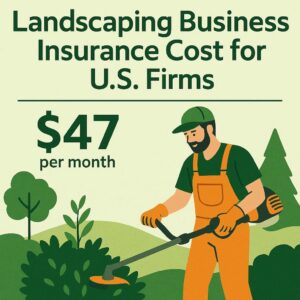
Landscaping Business Insurance Cost for U.S. Firms
The Realities of Risk: Why Landscapers Need Coverage
Before we dive into the dollars and cents, it is vital to understand the “why.” Insurance premiums are simply a reflection of risk. The insurance company is betting that something might go wrong, and you are paying them to take that financial bet for you.
The landscaping industry is considered moderately high-risk by insurers. Why? Because you regularly deal with:
-
Third-party property: You work on your client’s property. Damaging a driveway, breaking an underground sprinkler line, or cracking a window is a common occurrence.
-
Public liability: Your equipment, like aerators or edgers, can be a tripping hazard. Your trucks park on public streets.
-
Employee safety: Landscaping involves manual labor, heavy lifting, and dangerous equipment. Sprains, strains, heatstroke, and accidents are common.
-
High-value equipment: Mowers, blowers, trimmers, and excavators are expensive to repair or replace if stolen or damaged.
-
Vehicles: You likely have multiple trucks and trailers on the road.
Because of these factors, landscaping business insurance isn’t just a good idea; in many cases, it is a contractual requirement to even land a client, especially commercial accounts.
Decoding the Policy: Common Types of Landscaping Insurance
Insurance isn’t a single product. It is a collection of different coverages bundled together to protect you from specific threats. To understand the total cost, you first need to understand the components of a typical landscaping insurance package.
General Liability Insurance
This is the foundation of your business insurance. It is the most common policy and often the first one insurers ask about.
-
What it covers: Bodily injury to a third party (like a client tripping over a hose) and property damage to a third party (like a rock breaking a window).
-
Why it’s essential: It protects you from the everyday accidents that happen on the job. Without it, you could be paying for lawsuits and damages out of pocket.
-
Cost factor: This is a baseline cost for almost every landscaping firm.
Commercial Auto Insurance
If you have a vehicle that is used for business purposes, your personal auto policy will likely not cover you in the event of an accident.
-
What it covers: Damage to your business vehicles (trucks, trailers), liability for accidents you cause while driving for work, and medical payments.
-
Why it’s essential: Transporting crew, equipment, and materials to job sites is a core part of the business. A single at-fault accident can be financially devastating.
-
Cost factor: This is often one of the largest expenses in an insurance package, especially if you have multiple vehicles or drivers with imperfect records.
Workers’ Compensation Insurance
In most states, if you have employees (including yourself, depending on the state’s rules for business owners), you are legally required to carry workers’ compensation.
-
What it covers: Medical bills and a portion of lost wages for employees who are injured or become ill as a direct result of their job. It also protects your business from lawsuits related to workplace injuries.
-
Why it’s essential: It is the law. Failing to carry it can result in massive fines, stop-work orders, and even criminal charges. It ensures your crew can get care without bankrupting your company.
-
Cost factor: This is calculated based on your payroll and your specific “class code.” Landscaping has a higher workers’ comp rate than, say, an accounting firm because the work is more dangerous.
Tools and Equipment Coverage (Inland Marine)
Your tools are your livelihood. Standard general liability policies usually do not cover your equipment if it is stolen from your truck or damaged on site.
-
What it covers: Repair or replacement of your mowers, trimmers, blowers, and other equipment due to theft, vandalism, fire, or accidental damage.
-
Why it’s essential: Replacing a fleet of stolen equipment can cost tens of thousands of dollars. This coverage ensures you can get back to work quickly.
-
Cost factor: The cost is directly related to the total value of the equipment you need to insure.
Excess Liability (Umbrella Insurance)
This is an extra layer of protection that kicks in when the limits of your general liability, auto liability, or employer’s liability have been exhausted.
-
What it covers: Large, catastrophic claims that exceed your primary policy limits. For example, a serious auto accident or a major property damage claim.
-
Why it’s essential: It provides peace of mind. A single lawsuit can easily exceed a standard $1 million or $2 million policy limit. Umbrella insurance protects your business assets and your future.
-
Cost factor: Relatively inexpensive for the amount of coverage it provides, as the primary policies handle the smaller claims.
Additional Coverages to Consider
Depending on your specific niche, you may also need:
-
Hired/Non-owned Auto Liability: Covers you if an employee uses their personal vehicle for business tasks (like running to get gas or parts) and gets into an accident.
-
Pollution Liability: Important if you apply fertilizers, herbicides, or pesticides. A spill or misapplication could contaminate soil or water.
-
Surety Bonds: Often required for public projects or to guarantee you will complete a job as contracted. This is a guarantee, not insurance, but it is a common business requirement.
Landscaping Business Insurance Cost: The Real Numbers
Let’s get to the heart of the matter. What does this actually cost? It is impossible to give a one-size-fits-all price, but we can provide realistic ranges based on common business profiles.
Important Note: These are estimated annual premiums for U.S. firms. Actual costs will vary by state, carrier, and specific risk profile.
Cost Table: By Business Type
| Business Profile | General Liability (Annual Est.) | Workers’ Comp (Per $100 of Payroll) | Commercial Auto (Annual Est. per Vehicle) | Tools & Equipment (Annual Est.) | Typical Total Package (Annual Est.) |
|---|---|---|---|---|---|
| Solo Operator (No Employees) | $400 – $800 | N/A (if no employees & exempt in state) | $1,200 – $2,500 | $150 – $400 | $1,750 – $3,700 |
| Small Firm (2-5 Employees) | $800 – $1,500 | $15 – $30 | $1,500 – $3,000 (per truck) | $300 – $800 | $5,000 – $15,000+ |
| Midsize Firm (6-20 Employees) | $1,500 – $4,000 | $15 – $30 | $1,200 – $2,800 (per truck) | $800 – $2,500 | $15,000 – $45,000+ |
| Large Firm (20+ Employees / Heavy Civil) | $4,000 – $10,000+ | $10 – $25 (potential for lower rates with strong safety) | $1,000 – $2,500 (per vehicle in fleet) | $2,500 – $10,000+ | $50,000 – $150,000+ |
Cost Table: By Primary Service
The type of work you do has a massive impact on your General Liability and Workers’ Comp rates. Mowing is considered lower risk than tree removal.
| Primary Service | Risk Level | Impact on GL Cost | Impact on WC Cost | Reasoning |
|---|---|---|---|---|
| Lawn Maintenance / Mowing | Low-Moderate | Baseline | Baseline | Standard property damage and injury risks. |
| Landscape Installation | Moderate | +10-20% | +10-20% | Higher potential for property damage (digging) and employee injuries (lifting, using tools). |
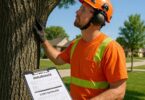
| Tree Care / Removal | High | +25-50% | +50-100%+ | Extreme risk of property damage (falling limbs) and severe employee injury (falls, chainsaws, chippers). Very high WC rates. |
| Hardscaping (Pavers, Walls) | Moderate | +15-25% | +15-25% | Use of heavy materials and equipment increases injury and damage risk. |
| Snow Removal | High (Seasonal) | +15-25% | +25-50% | High risk of property damage (plows hitting curbs, driveways) and auto accidents. Slip-and-fall risks for crew. |
A Note from the Author: Don’t just look at the lowest price. A cheap policy with poor coverage or a fly-by-night insurer is worse than no insurance at all because it gives you a false sense of security. Always check the financial rating of the insurance company (like an A.M. Best rating) to ensure they will be around to pay a claim.
The Price is Right? 10 Factors That Influence Your Premium
Why do two similar landscaping companies sometimes pay vastly different rates? Insurers use a complex formula to determine your specific risk. Here are the primary levers they pull:
1. Your Location
Insurance is regulated at the state level, and costs vary dramatically. A landscaper in Miami, Florida (high hurricane risk, dense population) will pay more for auto and property coverage than a landscaper in rural Iowa. Lawsuit trends in specific states (“litigation-prone” states) also drive up general liability costs.
2. Your Revenue and Payroll
For General Liability, your premium is often based on your gross annual revenue. The logic is simple: more revenue usually means more jobs, more clients, and more exposure to risk. For Workers’ Comp, your premium is based on your total payroll. The more employees you have and the more hours they work, the higher your potential for a payroll-related claim.
3. Your Claims History
This is a big one. If you or your company have filed insurance claims in the past three to five years, you will be viewed as a higher risk. Insurers will check your history through a database called the Comprehensive Loss Underwriting Exchange (CLUE). A history of claims can significantly increase your premiums or make it harder to find coverage.
4. The Scope of Your Services
As highlighted in the table above, a company that only cuts grass is less risky than one that climbs trees with chainsaws or operates heavy excavators for hardscaping. Be specific with your insurer about all the services you offer. If you add tree work later and don’t tell them, a claim related to that work could be denied.
5. Your Safety Protocols
Insurers love businesses that prioritize safety. Do you have a formal safety program? Do you conduct regular toolbox talks? Do you provide safety gear and enforce its use? Do you have a return-to-work program for injured employees? A strong safety record can lead to lower “experience modification factors” (for workers’ comp) and better rates.
6. Your Deductible
The deductible is the amount you pay out of pocket before your insurance kicks in. Choosing a higher deductible (e.g., moving from $500 to $1,000 or $2,500) will lower your annual premium. Just make sure you have the cash on hand to cover that deductible if you have a claim.
7. The Value of Your Equipment
If you insure $50,000 worth of mowers and equipment, your premium will be much higher than if you only insure $10,000. You only need to insure equipment that would be financially painful to replace. Consider depreciation, but remember that a newer machine is more expensive to replace than an older one.
8. Your Fleet and Driving Records
Commercial auto insurance is heavily influenced by the number of vehicles, the type of vehicles, and the driving records of your employees. A fleet of large diesel trucks with trailers will cost more to insure than a couple of small work vans. Regular Motor Vehicle Record (MVR) checks and a strict policy against distracted driving can help keep these costs down.
9. Contractual Requirements
Sometimes, your clients dictate your coverage limits. A large commercial client or a homeowner’s association (HOA) might require you to have $1 million, $2 million, or even higher in general liability coverage. They may also require you to list them as an “additional insured” on your policy. Meeting these higher requirements will increase your cost, but it is the price of landing those bigger accounts.
10. Years in Business
A brand-new startup is statistically more likely to have a claim than a company that has been operating safely for 10 years. New businesses often pay slightly higher rates until they establish a track record. This is known as the “seasoning” factor in underwriting.
The Regional Factor: How Location Shapes Your Bill
To give you an even more realistic picture, let’s look at how costs can differ across the U.S. These are broad generalizations, but they illustrate the point.
| Region | General Trend | Why? |
|---|---|---|
| Northeast (NY, NJ, CT, MA) | Higher than average | High cost of living, dense populations increase accident likelihood, and a more litigious environment can drive up liability costs. Snow removal is a major factor here, adding seasonal risk. |
| Southeast (FL, GA, NC) | Average to High | Florida has high auto insurance rates due to fraud and weather risks. The long growing season means more work, but also more exposure to risk year-round. Hurricane exposure can affect equipment and auto rates. |
| Midwest (OH, IL, MI, WI) | Average | A strong mix of agricultural and suburban work. Costs are generally stable, but winter weather (snow/ice) adds a distinct seasonal risk that insurers price for. |
| Southwest (TX, AZ, NM) | Average | Fast-growing population means lots of construction and new development work. Heat-related illness (a major workers’ comp risk) is a significant concern for insurers in this region. |
| West Coast (CA, WA, OR) | Higher than average | California has some of the highest workers’ compensation costs in the nation due to the state’s benefit structure and legal environment. Auto insurance is also expensive in major metro areas. |
How to Lower Your Landscaping Business Insurance Costs
While you can’t control everything (like your location), you have significant power to manage your insurance costs. Insurance companies reward businesses that are proactive about risk.
A Checklist for Lower Premiums
-
[ ] Implement a Formal Safety Program: Write down your safety rules. Hold monthly safety meetings. Document everything. This shows insurers you are a professional operation.
-
[ ] Train Your Employees: Ensure everyone is trained on proper equipment use. Untrained employees are a huge liability.
-
[ ] Vet Your Drivers: Run MVR checks on every employee who will drive for your business. Avoid hiring drivers with recent DUIs or multiple moving violations.
-
[ ] Secure Your Equipment: Park trucks and trailers in a locked yard or well-lit area overnight. Install GPS trackers and alarm systems on your most valuable equipment. This can reduce theft-related premiums.
-
[ ] Bundle Your Policies (Package Policy): Buying General Liability, Auto, and Equipment coverage from the same insurer often comes with a significant discount (usually 10-20%) compared to buying them separately. This is often called a Business Owner’s Policy (BOP), though a standard BOP may need to be tailored for landscaping risks.
-
[ ] Pay Premiums Annually: If you can afford the lump sum, paying your entire annual premium upfront saves you from installment fees and finance charges that come with monthly payment plans.
-
[ ] Ask About Associations: Are you a member of a professional landscaping association (like NALP – National Association of Landscape Professionals)? Many associations have partnerships with insurers, offering discounted rates to their members.
-
[ ] Review Your Coverage Annually: Don’t just auto-renew. Sit down with your agent every year. Has your revenue changed? Did you sell an old truck? Are you doing less of a high-risk service? Adjusting your coverage to match your current reality prevents you from overpaying.
The Quote Process: What to Expect
Getting an accurate insurance quote is not like buying a book online. It requires providing detailed information. Here is what a good insurance agent will ask you for:
-
Business Details: Legal structure (LLC, Corp, Sole Prop), years in operation, and FEIN or Social Security Number.
-
Description of Operations: A detailed list of every service you provide, from mowing to fertilization to holiday light installation.
-
Payroll Estimates: Breakdown of payroll by job role (e.g., $40,000 for laborers, $60,000 for supervisors). This is crucial for workers’ comp.
-
Revenue Projections: Your expected gross annual revenue for the coming year.
-
Vehicle Information: List of all business vehicles, including VINs, usage, and garaging location.
-
Equipment Schedule: A detailed list of your tools and equipment, including serial numbers and estimated replacement values.
-
Loss Runs: Documents from your current or previous insurer showing any claims filed in the last 3-5 years.
-
Subcontractor Information: If you use subs, you need to provide their insurance certificates and track their payroll, as you may still need to cover them under your workers’ comp in some states.
An Important Note on Subcontractors: Many states require general contractors (that’s you) to provide workers’ compensation coverage for uninsured subcontractors. Always get a certificate of insurance from your subs before they start a job, and make sure their coverage is current. If they don’t have it, your policy and your premium could be on the hook for their injuries.
Conclusion
Understanding landscaping business insurance cost for U.S. firms is about more than just finding a monthly payment you can afford. It is about making an informed decision that protects the life’s work you are building. For a solo operator, a solid insurance package might start around $1,750 per year, while a growing firm with employees and trucks should budget $5,000 to $15,000 or more. These costs are a direct reflection of the risks you manage every day. By implementing strong safety practices, working with a knowledgeable independent agent, and understanding the factors that drive your premiums, you can secure the right coverage at a fair price, allowing you to focus on what you do best: creating and maintaining beautiful outdoor spaces.
Frequently Asked Questions (FAQ)
Q: Is landscaping business insurance required by law?
A: Some types are, some aren’t. Workers’ Compensation is required by law in almost every state once you have employees. Commercial Auto insurance is required if you use vehicles for business. General Liability is not typically required by law, but it is almost always required by your clients and contracts.
Q: Can I insure my landscaping business if I have a bad driving record?
A: Yes, but it will be more expensive. You may need to seek out “non-standard” insurance carriers that specialize in higher-risk drivers. Working with an independent agent is crucial in this situation.
Q: Does my insurance cover damage to underground utilities?
A: General liability might cover it if you accidentally hit a line you weren’t aware of. However, many policies have exclusions for damage to underground utilities if you didn’t call 811 to have them located first. Always call before you dig. You may also want to look into “inland marine” coverage that specifically includes “utilities damage.”
Q: What is an “additional insured”?
A: This is a status you can add to your liability policy that extends coverage to another party (like a property manager or HOA) for claims arising out of your work for them. It does not cover their general negligence, but it protects them if they are sued because of something you did. It is a very common contract requirement.
Q: How often should I review my insurance policy?
A: At least once a year, during your renewal. Also, call your agent immediately if you have a major change, such as hiring your first employee, buying a new truck, or starting a new high-risk service like tree removal.