If you work in construction or run a business that requires surety bonds, you have probably heard of SureTec Insurance Company. They are a well-known name in the surety world. But what happens when something goes wrong? What if you need to file a claim against a bond they issued?
The truth is that bond claims can feel confusing and stressful. You might worry about money, deadlines, or legal trouble. That is normal. But here is the good news: with the right information, you can handle a SureTec insurance company bond claim without panic.
This guide walks you through everything you need to know. We will cover what a bond claim actually means, why SureTec is different from regular insurers, how to start the claim process, what documents to gather, and how to avoid common mistakes. We will also look at your rights, the timeline, and what happens after you file.
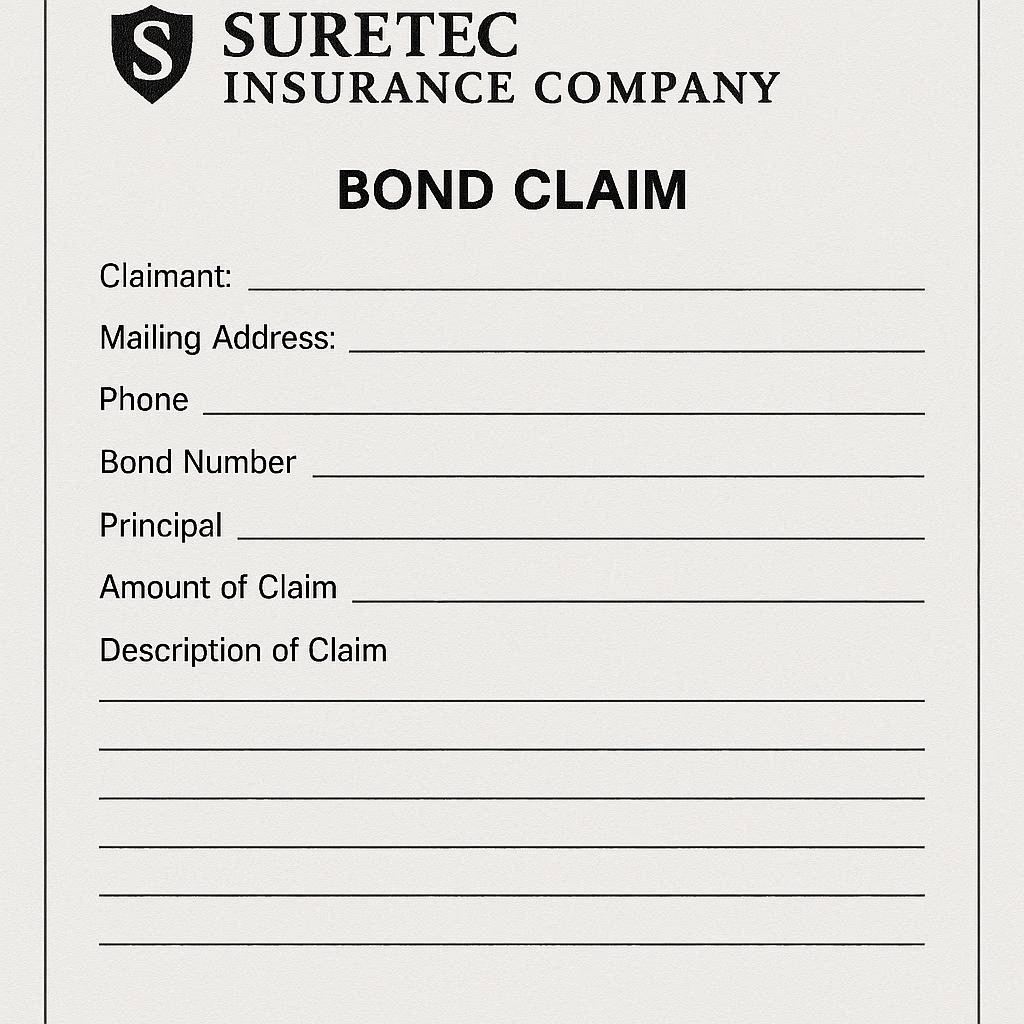
What Is a SureTec Insurance Company Bond? A Quick Refresher
Before we talk about claims, we need to understand the bond itself. SureTec Insurance Company specializes in surety bonds. These are not the same as regular insurance policies.
| Feature | Surety Bond | Regular Insurance |
|---|---|---|
| Number of parties | Three (principal, obligee, surety) | Two (policyholder, insurer) |
| Purpose | Guarantees performance or payment | Protects against unexpected losses |
| Who pays claims | Principal repays the surety | No repayment required |
| Risk assessment | Focus on principal’s finances and reputation | Focus on statistical risk |
A SureTec bond involves:
- The Principal – That is you, the contractor or business owner who needs the bond.
- The Obligee – The party requiring the bond, such as a government agency, project owner, or licensing board.
- The Surety – SureTec Insurance Company, which guarantees that you will fulfill your obligations.
Common types of bonds from SureTec include:
- Contract bonds (bid bonds, performance bonds, payment bonds)
- Commercial bonds (license and permit bonds, court bonds, fiduciary bonds)
- Miscellaneous bonds (lost instrument bonds, utility bonds)
When someone files a SureTec insurance company bond claim, they are essentially saying: “The principal did not meet their obligations. Now we need the surety to step in.”
Why Would Someone File a Bond Claim Against You?
Let us be honest. No one wants to deal with a bond claim. But understanding why claims happen can help you prevent them.
Here are the most common reasons a claim is filed against a SureTec bond:
1. You failed to complete a project on time or within specifications.
This is the classic performance bond claim. The project owner says your work is late, incomplete, or defective.
2. You did not pay subcontractors or suppliers.
Under a payment bond, workers or material suppliers can file a claim directly against your bond if you leave them unpaid.
3. You violated a license requirement.
For license and permit bonds, a government agency can file a claim if you break the rules of your profession.
4. You mishandled funds or property.
Fiduciary bonds, probate bonds, and court bonds protect against theft, fraud, or mismanagement of assets.
5. You failed to pay required taxes or fees.
Some bonds guarantee that you will meet tax obligations. A claim can arise if you do not.
Note for readers: Not every dispute leads to a valid claim. The obligee must prove that your actions (or inactions) directly violated the bond’s terms. SureTec investigates every claim carefully before paying.
The Exact Steps to Handle a SureTec Insurance Company Bond Claim
If you receive a claim notice, do not ignore it. Ignoring a claim makes everything worse. Instead, follow these steps in order.
Step 1: Do Not Panic – Read the Claim Notice Carefully
Your first task is simple. Take a deep breath. Then read every word of the notice you received.
The claim notice should tell you:
- Who filed the claim (the obligee or a third party)
- Which bond the claim applies to (bond number and type)
- What specific obligation you allegedly failed to meet
- How much money the claimant is demanding
- The deadline to respond (this is critical)
Put this document in a safe place. Make a digital copy too.
Step 2: Notify SureTec Immediately
Your bond agreement almost certainly requires you to notify SureTec as soon as you know about a potential claim. Do not wait.
Call SureTec’s surety claims department. You can also send an email or use their online claim reporting portal if available. Provide them with:
- The bond number
- The date you received the claim
- The name and contact information of the claimant
- A brief summary of the dispute
Why this matters: If you delay notification, SureTec could deny coverage. They might also refuse to cover legal defense costs or settlement amounts.
Step 3: Gather Your Evidence
Now it is time to build your side of the story. Do not just react to the claim. Build a strong, factual response.
Here is a checklist of documents to collect:
- The original bond agreement
- Your contract with the obligee
- All project emails, texts, or written communications
- Invoices, receipts, and proof of payment
- Photos or videos of the work (if applicable)
- Inspection reports or third-party evaluations
- Change orders or scope modifications
- Timeline logs or daily reports
- Correspondence with subcontractors or suppliers
Organize these documents by date. Create a simple timeline of events from the start of the project or obligation until today.
Step 4: Consult a Surety Bond Attorney (Yes, You Probably Need One)
Here is a hard truth. Many business owners try to handle bond claims alone. That is a mistake.
Surety bond law is specialized. Regular lawyers may not understand the nuances of indemnity agreements, subrogation rights, or the Texas Surety Bond Act (where SureTec is based). A surety bond attorney can:
- Review the claim for legal weaknesses
- Negotiate with the claimant on your behalf
- Communicate with SureTec properly
- Protect your personal assets if you signed an indemnity agreement
Quotation from a surety professional:
“The biggest mistake I see is contractors trying to settle a bond claim directly with the obligee. They almost always make things worse. Let the surety and your attorney handle it.” – Mark R., surety bond agent with 18 years of experience.
Step 5: Respond to the Claimant Within the Deadline
Most bond claims have strict deadlines. These can be as short as 30 days or as long as one year, depending on the bond type and state law.
Your response does not need to be long. But it must be clear. State whether you:
- Accept responsibility for the claim (rare, but possible)
- Dispute the claim in full or in part
- Propose a resolution (e.g., completing remaining work, paying a reduced amount)
Send your response by certified mail or another trackable method. Keep proof of delivery.
Step 6: Cooperate Fully with SureTec’s Investigation
Once you notify SureTec, they will open an investigation. This is normal. Do not see it as an accusation.
SureTec may:
- Ask you detailed questions about the project
- Request copies of all documents you gathered
- Send an adjuster or third-party expert to inspect the work
- Interview subcontractors or witnesses
- Request a recorded statement (you can have your attorney present)
Be honest. Be prompt. Do not hide information. If SureTec finds that you tried to deceive them, they can deny the claim and demand that you reimburse them for investigation costs.
What Happens If SureTec Pays the Bond Claim?
This is the part many people misunderstand. If SureTec pays a claim, the story does not end there.
Under your indemnity agreement, you are legally required to repay SureTec for:
- The full amount of the claim they paid
- Their legal fees and investigation costs
- Any other expenses related to the claim
Think of SureTec as a co-signer, not an insurer. They front the money, but you must pay them back.
If you cannot repay immediately, SureTec may:
- Put a lien on your assets
- Seize collateral you pledged (property, equipment, cash)
- Sue you personally if you signed a personal indemnity
- Report the default to surety databases, making it hard to get future bonds
Important note: Do not ignore post-claim repayment obligations. Many business owners think “the bond paid, so I am free.” That is not true. You owe that money back plus interest and fees.
How to Avoid a SureTec Bond Claim in the First Place
Prevention is always better than handling a claim. Here are practical steps to protect yourself.
Communicate Early and Often
Most claims happen because of misunderstanding, not malice. If you are falling behind schedule, tell the obligee immediately. If you cannot pay a supplier, talk to them before they file a claim.
Put Everything in Writing
Verbal promises are dangerous. Always confirm changes, approvals, and agreements in writing. An email is fine. A text message can work. But get proof.
Keep Your Bond Active and Renewed
A lapsed bond is a huge red flag. SureTec will send renewal reminders. Do not ignore them. Set up automatic payments if possible.
Maintain a Financial Cushion
Bond claims often arise from cash flow problems. Keep a reserve fund for unexpected costs. Pay subcontractors quickly. Do not borrow from job A to pay for job B.
Review Your Indemnity Agreement Before Signing
Many people sign surety indemnity agreements without reading them. Do not do that. Understand what assets you are putting at risk. Ask SureTec or your attorney to explain any clause you do not understand.
Realistic Timeline for a SureTec Bond Claim
Let us be realistic. Bond claims are rarely resolved in a few days. Here is a typical timeline based on actual cases.
| Stage | Typical Duration |
|---|---|
| Claim filed by obligee | Day 0 |
| You notify SureTec | 1-5 days |
| SureTec acknowledges claim | 3-10 days |
| Investigation period | 2-8 weeks |
| SureTec approves or denies claim | 1-3 months |
| Payment (if approved) | 30-60 days after approval |
| Repayment by principal (you) | Negotiated over months or years |
Simple claims with clear liability may resolve in 6–8 weeks. Complex claims involving defective work, multiple subcontractors, or legal disputes can take 6 months to a year or more.
SureTec Insurance Company Bond Claim: Do’s and Don’ts
Here is a quick reference list. Print this out and keep it with your bond documents.
DO’S:
- ✓ Read the claim notice immediately.
- ✓ Notify SureTec within 24 hours.
- ✓ Hire a surety bond attorney.
- ✓ Preserve all documents and emails.
- ✓ Respond to deadlines promptly.
- ✓ Keep a log of every conversation.
DON’TS:
- ✗ Ignore the claim or hope it goes away.
- ✗ Destroy or delete any records.
- ✗ Admit fault without legal advice.
- ✗ Pay the claimant directly without SureTec’s approval.
- ✗ Discuss the claim on social media.
- ✗ Miss a single deadline.
What If SureTec Denies Your Bond Claim?
Sometimes SureTec denies a claim. This can happen for several valid reasons:
- The claim does not fall under the bond’s specific terms
- The claimant missed the legal deadline
- The principal (you) fulfilled your obligations properly
- The claimant failed to provide sufficient evidence
If SureTec denies the claim, the claimant may still sue you directly. Your bond does not protect you from lawsuits. It only guarantees that money is available if the claim is valid.
If you are the principal and the claimant sues you after a denial, your general liability insurance might help with defense costs. But review your policy carefully. Many exclude bond-related claims.
Understanding Your Indemnity Obligations with SureTec
This section is so important that we need to repeat it. When you sign a surety bond application with SureTec, you almost always sign a General Indemnity Agreement (GIA) .
A GIA says:
- You will repay SureTec for any claim they pay on your behalf
- You will pay their legal fees, investigation costs, and expenses
- You waive certain defenses that you might have in court
- SureTec can pursue your personal assets if you signed personally
For small business owners, the personal indemnity clause is the most dangerous. It means SureTec can come after your house, savings, and other personal property if your business cannot repay the claim.
Quotation from a small business owner:
“I didn’t read the indemnity agreement. I just wanted the bond to get my license. Two years later, a claim wiped out my personal savings. Please learn from my mistake.” – David T., former electrical contractor.
Filing a Claim Against SureTec as a Principal
Most of this article focuses on claims against your bond. But what if you have a dispute with SureTec itself?
For example, suppose you believe SureTec mishandled a claim investigation, refused a legitimate defense, or acted in bad faith. You can file a complaint or legal action against SureTec.
Steps to take:
- Document everything – every call, email, and letter.
- Contact your state’s Department of Insurance. SureTec is licensed in all 50 states.
- Consult an attorney who handles surety bad faith claims. These are rare but possible.
- Consider arbitration if your bond agreement includes an arbitration clause.
Realistically, disputes against SureTec are uncommon. The company is generally well-regarded in the surety industry. But no company is perfect, and you have rights.
Key Deadlines You Must Know
Deadlines are the single most important practical detail in bond claims. Miss one, and you can lose your rights forever.
Here are common deadlines (but verify your specific bond and state law):
| Bond Type | Typical Claim Deadline |
|---|---|
| Payment bond (federal project) | 90 days from last work or supply |
| Payment bond (state project) | Varies by state (30 to 180 days) |
| Performance bond | Within 1-2 years of contract completion |
| License & permit bond | Usually within 1 year of violation |
| Court or fiduciary bond | Within bond term or as court orders |
Do not rely on generalizations. Read your bond document. Look for the “statute of limitations” or “notice of claim” section. When in doubt, file early.
Additional Resource: Where to Get Free or Low-Cost Help
You do not have to navigate a SureTec bond claim alone. Here is a trusted external resource:
🔗 National Association of Surety Bond Producers (NASBP) – Consumer Resources
Visit: www.nasbp.org/for-consumers
NASBP offers plain-language guides, a directory of qualified surety agents, and educational videos about bond claims. This is a legitimate, non-commercial resource from the industry’s leading professional association.
Final Checklist Before Filing or Responding to a Claim
Use this checklist whether you are filing a claim against someone else’s SureTec bond or responding to a claim against your own.
- I have identified the correct bond number and type.
- I have proof of the underlying obligation (contract, license requirement, court order).
- I have documented the alleged violation with dates, amounts, and evidence.
- I have notified the surety (SureTec) in writing.
- I have not missed any deadline.
- I have consulted an attorney (for complex or high-value claims).
- I have a clear record of all communications.
- I understand that repayment may be required if I am the principal.
- I have read my indemnity agreement (if I am the principal).
- I have made copies of everything.
Conclusion
Handling a SureTec insurance company bond claim does not have to ruin your business. Act quickly, notify SureTec immediately, gather your evidence, and get professional legal help. Remember that SureTec expects repayment if they pay a claim on your behalf, so prevention and clear communication are your best defenses.
Frequently Asked Questions (FAQ)
1. How long does SureTec have to respond to a bond claim?
SureTec typically acknowledges a claim within 5 to 10 business days. Full investigation and approval or denial usually take 30 to 90 days, depending on complexity.
2. Can I file a claim against a SureTec bond without a lawyer?
Yes, you can. However, for claims over $5,000 or any legally complex situation, an attorney is strongly recommended. One mistake in paperwork or deadlines can void your claim.
3. Does SureTec pay bond claims quickly?
If the claim is valid and well-documented, SureTec generally pays within 30 to 60 days after approval. Delays happen when documentation is missing or when the principal disputes the claim.
4. Will a bond claim affect my credit score?
Not directly. Bond claims do not appear on personal credit reports. However, they do appear on surety industry databases (like SIR or NBC), which affects your ability to get future bonds. Unpaid repayments to SureTec could lead to collections and credit damage.
5. Can SureTec cancel my bond after a claim?
Yes. SureTec can cancel or refuse to renew your bond after a claim. Most surety bonds require advance notice of cancellation (typically 30–60 days). Check your bond terms.
6. What is the difference between a bond claim and a lawsuit?
A bond claim is a demand for payment against the bond itself. A lawsuit is a separate legal action. The claimant can do both in many cases. A bond claim does not stop someone from suing you personally.
7. How do I find out if a claim has already been filed against my bond?
SureTec will mail or email you a notice. You can also call SureTec’s claims department directly and ask using your bond number. Do this regularly if you suspect a dispute.
8. Can I dispute a bond claim after SureTec pays it?
Yes, but it is harder. Once SureTec pays, you are generally required to repay them under the indemnity agreement. You can then pursue the claimant separately to recover your money. This is a complex process requiring an attorney.
Disclaimer: This article is for educational and informational purposes only. It does not constitute legal advice or an attorney-client relationship. Surety bond laws vary by state and circumstance. Always consult a qualified surety bond attorney for advice specific to your situation.