A dripping ceiling. A brown stain spreading across your bedroom drywall. The smell of damp insulation.
Few things ruin your day faster than discovering your roof is leaking. The immediate stress is bad enough. But the real headache often starts when you file an insurance claim.
You expect your homeowner’s insurance to cover the damage. You pay your premiums on time, every month. So when the adjuster from your insurance company shows up, you assume they are on your side.
Unfortunately, that is not always true.
The truth is, the adjuster who works for your insurance company has a job. Their job is to save their employer money. That is not necessarily the same as giving you a fair settlement for your roof leak.
This is exactly where a public adjuster for roof leak insurance claim becomes your best ally.
In this guide, we will walk you through everything you need to know. You will learn what a public adjuster does, when to hire one, how much they cost, and why they often get you a much higher payout than going it alone.
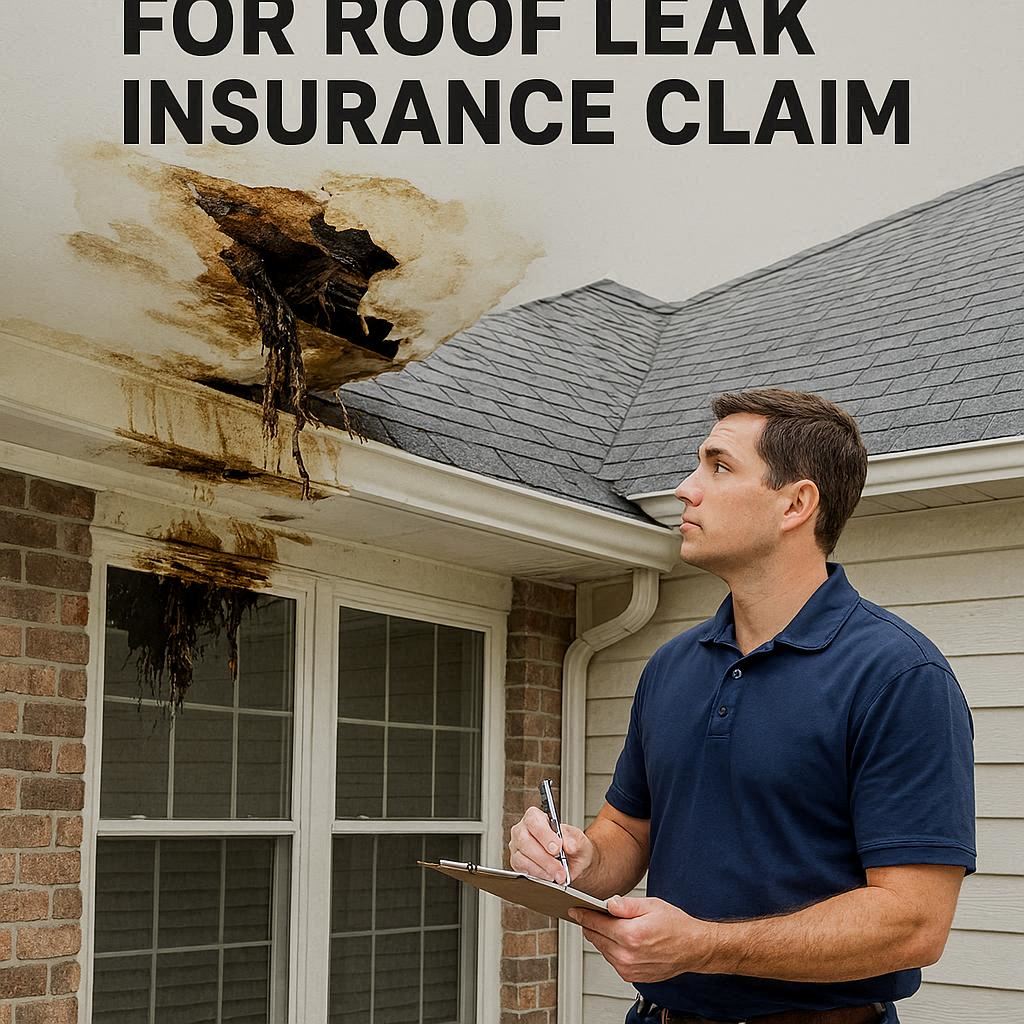
What Is a Public Adjuster? (And Why They Are Different)
Most homeowners have never heard of a public adjuster. That is normal. But once you face a complex roof leak claim, they become the most valuable person in your corner.
The Three Types of Adjusters
To understand the value of a public adjuster, you first need to see the full picture. There are three types of insurance adjusters.
| Type of Adjuster | Who They Work For | Whose Interest They Protect |
|---|---|---|
| Company (Staff) Adjuster | Your insurance company | The insurance company |
| Independent Adjuster | Hired by your insurance company | The insurance company (despite the name) |
| Public Adjuster | You, the homeowner | You and only you |
The first two are paid by your insurer. Their loyalty is to the company that signs their paycheck. A public adjuster, on the other hand, works exclusively for you.
Important Note: A public adjuster is a licensed professional. They are regulated by state insurance departments. They cannot work for an insurance company. By law, they must represent the policyholder’s best interests.
What a Public Adjuster Does Specifically for a Roof Leak Claim
Roof leaks are uniquely tricky. Damage is often hidden. The source of the leak might be far from the water stain on your ceiling. A public adjuster brings specialized knowledge to:
- Document the leak source – They use moisture meters, thermal imaging, and careful inspection to trace the water entry point.
- Calculate true repair costs – Not just patching the drywall, but replacing soaked insulation, treating mold, and addressing structural wood rot.
- Read your policy correctly – Insurance policies are dense legal documents. Public adjusters know exactly which coverages apply to your loss.
- Negotiate with the insurance company – They handle all calls, emails, and paperwork. You do not have to argue with anyone.
In short, they level the playing field. Without one, you are a homeowner arguing against a large insurance company with lawyers, adjusters, and data on their side. With one, you have an expert fighting for you.
Signs You Need a Public Adjuster for Your Roof Leak Claim
Not every small roof leak requires a public adjuster. If you have a minor leak and your insurer sends a fair check quickly, you can probably handle it yourself.
But in many situations, hiring a public adjuster is the smartest financial decision you will make.
Your Claim Was Denied
This is the most obvious sign. You file a claim for your roof leak. Weeks later, you receive a denial letter. Common reasons include:
- “Wear and tear” or “lack of maintenance”
- “Gradual deterioration”
- “Previous damage excluded”
A public adjuster can review your policy and the denial reason. Often, denials are based on misinterpretations of your coverage. A public adjuster knows how to challenge those decisions.
The Settlement Offer Is Suspiciously Low
You receive a check. The amount seems reasonable at first glance. But when you get actual contractor bids, you realize the insurance payment covers less than half the real cost.
This happens constantly. Insurance company adjusters may:
- Use cheaper material costs than what is standard in your area
- Leave out hidden damage like mold remediation or structural drying
- Exclude code upgrades (bringing old wiring or plumbing up to current code)
A public adjuster will perform their own estimate. If it is significantly higher, they will negotiate on your behalf.
You Notice Water Damage But Cannot Find the Source
Roof leaks are deceptive. Water travels. It can run down a rafter, across a ceiling joist, and drip six feet away from the actual breach.
Your insurance company’s adjuster might say, “We cannot find any damage, so we are denying the claim.”
A public adjuster will bring tools. They will inspect the attic, the roof decking, the flashing, and the underlayment. They will find the source. And they will document it properly.
You Feel Intimidated or Overwhelmed
Insurance claims involve jargon filled letters, strict deadlines, and complex paperwork. If you feel lost, that is by design (to some extent). The insurance company deals with claims every day. You deal with one claim every few years, if ever.
Hiring a public adjuster removes the burden. You focus on protecting your home and your family. They focus on getting you paid.
Quotation from a homeowner: “I tried to handle my roof leak claim alone for two months. The insurance company kept asking for more documents and delaying responses. Two weeks after hiring a public adjuster, I had a settlement offer for three times the original amount.” – David R., Florida
How a Public Adjuster Handles a Roof Leak Insurance Claim Step by Step
You might be wondering: what exactly does the process look like? Let me walk you through it.
Step 1: Free Initial Consultation and Policy Review
Most public adjusters offer a free consultation. They will ask you basic questions about your leak, review your insurance policy, and give you an honest opinion.
If they believe you have a valid claim, they will explain how they can help. No pressure. No obligation.
Step 2: Thorough Damage Inspection and Documentation
This is where the magic happens.
The public adjuster will visit your home and conduct a complete inspection. They will:
- Examine your roof from the exterior (and interior if accessible)
- Use moisture detection equipment to find hidden water damage
- Take hundreds of photos and videos
- Create a detailed scope of loss
- Identify code upgrades your policy may cover
Their goal is to leave no stone unturned. Every piece of damage gets documented and included in the claim.
Step 3: Claim Preparation and Submission
The public adjuster prepares a professional estimate. This is not a handwritten note on a napkin. It is a detailed, line-by-line breakdown using industry standard estimating software (like Xactimate).
They will also prepare the necessary forms and correspondence. Then they submit everything to your insurance company.
Step 4: Negotiation with the Insurance Company
Here is where the public adjuster earns their fee.
The insurance company may send out their own adjuster. They may dispute the scope of damage. They may argue about material costs.
Your public adjuster handles all of it. They respond to every objection. They provide additional evidence. They request reinspections if needed.
And you? You do not have to argue with anyone.
Step 5: Settlement and Claim Closure
Once both parties agree on a number, the insurance company issues payment. The public adjuster reviews the final paperwork to ensure everything is correct.
If new damage is discovered later (for example, mold growth that was not visible initially), the public adjuster can reopen the claim or supplement it.
Public Adjuster Fees: How Much Does It Cost?
This is the question everyone asks. And the answer is reassuring.
Public Adjusters Work on Contingency
Almost all public adjusters charge a percentage of your final settlement. You pay nothing upfront. If they do not get you paid, you owe them nothing.
Typical fees range from 5% to 20%, depending on:
| Factor | Impact on Fee |
|---|---|
| State regulations | Some states cap public adjuster fees (e.g., 10% in Texas for storm claims) |
| Claim complexity | More complex claims with hidden damage may have higher percentages |
| Claim size | Larger claims sometimes have lower percentages (e.g., 5-10%) |
Most roof leak claims fall in the 10% to 15% range.
Is the Fee Worth It?
Consider this example.
You handle your claim alone. The insurance company offers you $5,000. You accept because you do not know how to fight back.
You hire a public adjuster. Their fee is 15%. They negotiate your settlement up to $15,000.
- After their fee (2,250),youreceive:∗∗12,750**
- Compared to going alone: $5,000
You walk away with $7,750 more in your pocket. And you did not have to argue, lose sleep, or chase paperwork.
Important Note: Always review your contract carefully. Understand exactly what percentage the public adjuster charges and on what amount (total settlement, or only the amount they recover above the original offer). Reputable public adjusters will explain this clearly.
Common Roof Leak Claim Scenarios Where a Public Adjuster Helps Most
Not every claim is the same. Some roof leaks are straightforward. Others are messy, complicated, and expensive.
| Scenario | Can You Handle Alone? | Will a Public Adjuster Help? |
|---|---|---|
| Single small leak, quick approval, full payout | Yes | Probably not needed |
| Leak with mold growth in attic | Risky | Very helpful |
| Denied claim due to “wear and tear” | Unlikely | Extremely helpful |
| Leak from storm damage (wind, hail) | Potentially | Very helpful (complex policy language) |
| Hidden leak that damaged walls and floors | Difficult | Highly recommended |
| Claim where insurer uses low cost materials in estimate | No | Yes – they fight for fair pricing |
Realistic Example: The Slow Leak No One Saw
Imagine this. A small leak develops around a vent pipe boot on your roof. Over six months, water seeps into your attic insulation, then down an interior wall.
You notice a musty smell. Then a soft spot in your drywall. Then mold on the baseboard.
You file a claim. The insurance adjuster says: “This is gradual deterioration. Not covered.”
But your policy likely covers “sudden and accidental” water damage. A public adjuster will argue that while the leak developed slowly, the damage became apparent suddenly. They will cite case law and policy language to support your claim.
This is not manipulation. This is fair advocacy.
What to Look for When Hiring a Public Adjuster
Not all public adjusters are created equal. Here is how to find a great one.
Licensing and Credentials
Every state (except a few) licenses public adjusters. Before hiring anyone, verify their license through your state’s Department of Insurance website.
Ask for references. Call past clients. Read online reviews, but take overly perfect ones with a grain of salt.
Experience with Roof Leak Claims Specifically
A public adjuster who handles commercial warehouse fires may not understand residential roof leaks. Ask directly:
- “How many roof leak claims have you handled in the past year?”
- “Do you have experience with [your specific type of roof material]?”
Transparency About Fees
A trustworthy public adjuster will put their fee in writing, clearly and plainly. They will not pressure you to sign on the spot. They will give you time to read the contract.
Communication Style
You will be working with this person for weeks or even months. They should return calls promptly, explain things in plain English, and show genuine care for your situation.
Red flags to avoid:
- Pressuring you to inflate damages
- Guaranteeing a specific dollar amount before inspecting your property
- Asking for payment upfront
- No physical office or verifiable track record
Frequently Asked Questions (FAQ)
1. Can I hire a public adjuster if my claim is already in progress?
Yes. You can hire a public adjuster at any stage of the claims process, even if the insurance company has already issued a denial or a low settlement offer.
2. Will my insurance company drop me for hiring a public adjuster?
No. That would be illegal retaliation in most states. Insurance companies cannot cancel your policy simply because you hired professional representation.
3. How long does the process take with a public adjuster?
Typical roof leak claims take 4 to 12 weeks from inspection to settlement. Complex claims with hidden damage or mold may take longer. The public adjuster will give you a realistic timeline.
4. Do I still need to pay my deductible?
Yes. The deductible is your responsibility. Your settlement check will be reduced by your deductible amount. Do not ask contractors to “hide” your deductible – that is insurance fraud.
5. What if my roof leak was caused by poor maintenance?
This is tricky. Insurance policies exclude damage from neglect or lack of maintenance. However, the cause of the leak is not always clear. A public adjuster can review your specific situation and give you honest advice. If the claim is not valid, they will tell you upfront.
6. Can a public adjuster help with a denied claim?
Absolutely. This is one of their most valuable roles. They will review the denial letter, analyze your policy, and determine if the denial was incorrect. If they believe you have a case, they will help you appeal or reopen the claim.
Additional Resources You Can Trust
For more information on insurance claims and protecting your home, visit the National Association of Public Insurance Adjusters (NAPIA) at www.napia.com.
NAPIA is the leading professional organization for public adjusters. Their website offers:
- A “Find an Adjuster” tool by state
- Educational resources for homeowners
- Code of ethics and professional standards
External link: National Association of Public Insurance Adjusters – Consumer Resources
Conclusion:
A roof leak can turn into a financial nightmare, but it does not have to. Hiring a public adjuster for roof leak insurance claim situations puts an expert on your side. They handle the paperwork, the negotiations, and the stress so you can focus on repairing your home. Most importantly, they consistently secure larger settlements that truly cover the cost of damage.