Nobody likes to think about what happens after a big storm passes through. You wake up, make your coffee, and then you see it: a few shingles scattered across the lawn, a dented gutter, or worse—a dark stain spreading across your bedroom ceiling. Wind damage to your roof is stressful. But filing a roof damage from wind insurance claim does not have to be a nightmare.
In this guide, I will walk you through exactly what you need to know. We will talk about what kind of wind damage insurance actually covers, how to document everything like a pro, and how to talk to your adjuster so you get a fair settlement. No confusing jargon. No unrealistic promises. Just honest, practical advice.
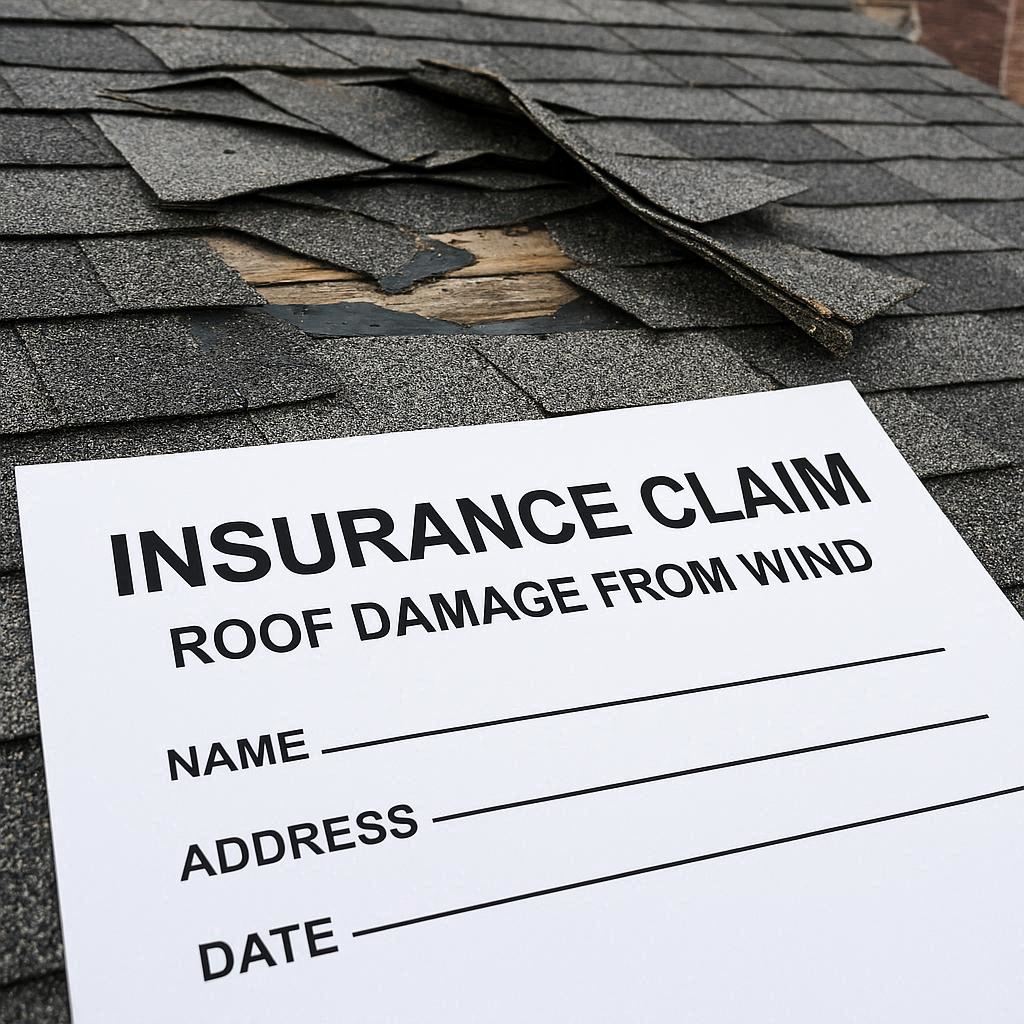
What Is Considered Wind Damage to a Roof?
Not every missing shingle means you have a valid claim. Insurance policies are specific about what they cover and what they exclude. Understanding this distinction saves you time and frustration.
Wind damage to a roof usually falls into three categories:
- Missing shingles or tiles. Strong winds lift the edges of shingles and tear them off entirely.
- Curling or lifted shingles. The wind does not always rip shingles away. Sometimes it just breaks the adhesive seal, leaving shingles loose and vulnerable.
- Granule loss. This looks like sand or small pebbles in your gutters. While some granule loss is normal over time, sudden heavy loss after a storm indicates wind damage.
Hail damage is different. Many policies treat hail and wind separately. If a storm had both wind and hail, make sure you mention both when you call your insurance company.
What Insurance Typically Covers
Most standard homeowners insurance policies cover wind damage. This includes:
- Repair or replacement of the damaged roof area
- Temporary tarping or emergency repairs to prevent further damage
- Damage to interior ceilings, walls, and personal property if wind created an opening in the roof
What Insurance Does NOT Cover
Be aware of these common exclusions:
- Wear and tear. Old, brittle shingles that crack in a minor storm may be denied.
- Poor maintenance. If your roof was already deteriorating, the insurance company may argue the wind just finished off an already-failing roof.
- Flood damage. Wind that pushes water into your home is usually covered, but rising water from a storm surge is flood damage, which requires separate flood insurance.
- Cosmetic damage. Some policies exclude purely cosmetic issues, like a few missing granules that do not affect the roof’s function.
Important note: Some coastal areas have separate windstorm or hurricane deductibles. These are often higher than your standard deductible. Check your policy documents or call your agent to confirm.
Immediate Steps After You Suspect Wind Roof Damage
Time is not on your side after a storm. The longer you wait, the harder it becomes to prove that wind—not neglect—caused the damage. Here is what to do right away.
1. Ensure Your Safety First
Do not climb onto a wet or steep roof after a storm. Wind-damaged roofs can be unstable. Walk around your property on the ground. Look for:
- Shingles in your yard or garden
- Granules clogging downspouts
- Visible dips or sags in the roofline from a safe distance
If you see something concerning, call a professional roofer for an inspection.
2. Make Temporary Repairs to Prevent Further Damage
Your insurance policy requires you to take reasonable steps to protect your home. This is called your duty to mitigate damages. Failing to do so can reduce your claim.
Examples of reasonable temporary fixes:
- Covering a hole with a tarp
- Placing a bucket under a leak
- Moving furniture away from water stains
Save all receipts for materials like tarps, plywood, or nails. Your policy may reimburse these costs.
3. Document Everything Before Touching Anything
Here is where most homeowners make a mistake. They clean up debris or toss damaged shingles before taking pictures. Stop. Grab your phone first.
Take photos and videos of:
- The roof from multiple angles (use binoculars or a zoom lens if needed)
- Close-ups of lifted, curled, or missing shingles
- Granule deposits in gutters and downspouts
- Any water stains or leaks inside your home
- Debris scattered around your yard
Pro tip: Take a video walking around your home, narrating what you see. Say the date and time out loud. This creates a timestamped record.
4. Find Your Insurance Policy Documents
You will need:
- Your policy number
- Your declarations page (shows your deductible and coverage limits)
- Information on your wind or hurricane deductible (if applicable)
If you cannot find paper copies, log into your insurance company’s online portal or call your agent.
5. Call Your Insurance Company to Start a Claim
Be calm and factual. Tell them:
- The date of the storm
- What you observed (missing shingles, leaks, etc.)
- What temporary repairs you have made
They will give you a claim number and usually assign an adjuster within a few days.
The Insurance Claim Process for Wind Roof Damage
Understanding the timeline and steps helps you stay in control. Most claims follow this pattern.
Step 1: Initial Claim Review
Once you file, the insurance company confirms that wind damage is a covered peril under your policy. They check if you have paid your premiums and whether your policy is active.
Step 2: Adjuster Inspection
An insurance adjuster will schedule a visit to inspect your roof. This person works for the insurance company. Their job is to assess damage and determine a payout amount.
You can be present during the inspection. I strongly recommend that you do.
Step 3: Scope of Damage Report
The adjuster creates a report detailing:
- What type of damage they found
- Whether they attribute it to wind or another cause
- Estimated repair or replacement cost
- Actual Cash Value (ACV) versus Replacement Cost Value (RCV)
Do not be surprised if the adjuster’s assessment is lower than a roofer’s estimate. That is common.
Step 4: Insurance Company Decision
The insurer sends you a Claims Summary or Estimate. This document explains:
- Approved repairs
- The amount they will pay
- Your deductible amount
- Depreciation withheld (if you have an ACV policy)
- Next steps for receiving payment
Step 5: Payment and Repairs
You typically receive two checks:
- First check: The Actual Cash Value after deductible (for ACV policies) or an initial payment (for RCV policies)
- Second check (RCV only): Recoverable depreciation paid after you complete repairs
You then hire a roofer, complete the work, and submit final invoices to your insurer for any remaining recoverable depreciation.
Actual Cash Value vs. Replacement Cost Value
This distinction makes a massive difference in your out-of-pocket costs. Here is a simple breakdown.
| Feature | Actual Cash Value (ACV) | Replacement Cost Value (RCV) |
|---|---|---|
| What you are paid | Replacement cost minus depreciation | Full cost to replace with new materials |
| Out-of-pocket gap | Larger, especially for older roofs | Smaller or zero (minus deductible) |
| Premium cost | Lower | Higher |
| Best for | Older roofs you plan to replace yourself | Homeowners who want full protection |
Example: Your 15-year-old asphalt shingle roof costs 12,000toreplacenew.Depreciationis6,000. With ACV, you get 6,000minusdeductible.WithRCV,youget12,000 minus deductible (after completing repairs).
Check your declarations page to see which coverage you have. If you are unsure, call your agent.
How to Work With Your Insurance Adjuster
The adjuster is not your enemy. But they also do not work for you. They work for the insurance company. Your goal is to be professional, prepared, and factual.
Do These Things
- Be present during the inspection. Walk the roof with them if safe, or follow along from the ground.
- Share your own photos and videos. Offer to send them to the adjuster.
- Point out damage you noticed. Say things like, “I saw granules in all four downspouts,” or “These three shingles were flat before the storm.”
- Ask questions. If they say something is not covered, politely ask why. Request a policy reference.
Avoid These Things
- Do not exaggerate. Never claim damage you did not see yourself.
- Do not sign anything without reading it. Read every form carefully.
- Do not accept a verbal settlement. Get everything in writing.
- Do not rush to hire a roofer before the adjuster sees the damage. Some policies require the adjuster to inspect before any repairs.
What If You Disagree with the Adjuster?
Disagreements happen. You have options:
- Request a reinspection. Sometimes a different adjuster sees things differently.
- Hire a public adjuster. This professional works for you, not the insurer. They take a percentage of your final payout (typically 5–15%).
- Get a second opinion from a licensed roofer. Their estimate can serve as evidence.
- File an appeal or complaint with your state’s department of insurance.
Common Mistakes Homeowners Make with Wind Damage Claims
I have seen homeowners lose thousands of dollars simply because they did not know what not to do. Learn from their mistakes.
Mistake #1: Waiting Too Long to File
Most policies have a time limit for filing claims—often one year, but sometimes as little as six months. The bigger issue is evidence. Rain, snow, and time make wind damage harder to prove. File as soon as it is safe.
Mistake #2: Making Permanent Repairs Before the Adjuster Sees Damage
I understand wanting to fix a leak quickly. But if you replace damaged shingles before the adjuster arrives, you remove the evidence. Tarp the roof. Patch the hole. Do not replace entire sections.
Mistake #3: Tossing Debris Before Taking Photos
Those broken shingles on the ground are proof of wind speed and direction. Photograph them where they landed before cleaning up.
Mistake #4: Using an Unlicensed Roofer
A fly-by-night roofer may give you a low estimate, disappear with your deposit, or do substandard work. When your insurance company asks for invoices and permits, you will have nothing to show.
Always verify:
- State license
- General liability insurance
- Workers’ compensation coverage
- Local references
Mistake #5: Cashing the First Check Without Reading It
That check might say “Final Payment” or include a release of claims. Cashing it can waive your right to ask for more money later. Read every document first.
Working With a Roofing Contractor on an Insurance Claim
A good roofer does more than nail shingles. They become your partner in navigating the insurance process. Here is how to find the right one.
What a Roofer Can Do for Your Claim
- Provide a detailed, line-item estimate that matches insurance estimating software (like Xactimate)
- Inspect for hidden damage the adjuster may miss
- Meet the adjuster on-site to discuss findings
- Help you understand your policy coverage
- Complete repairs that meet code and manufacturer standards
Questions to Ask Before Hiring
“Have you worked with [my insurance company] before?”
“Will you provide a written estimate that separates materials, labor, and permit costs?”
“Can you meet my adjuster during their inspection?”
“Do you offer a workmanship warranty?”
Red Flags to Watch For
- A roofer who offers to “waive your deductible.” That is illegal in many states.
- High-pressure sales tactics like “sign today for a discount.”
- No local address or phone number.
- Requests for full payment upfront.
The Smart Way to Choose a Contractor
- Get at least three written estimates.
- Check online reviews on Google, Better Business Bureau, and local forums.
- Ask for recent references—and actually call them.
- Confirm licensing and insurance directly with state boards.
- Read the contract carefully before signing.
What to Do If Your Claim Is Denied or Underpaid
A denial does not always mean the end. Sometimes it means you need to provide better evidence or ask the right questions.
Common Reasons for Denial of Wind Damage Claims
| Reason for Denial | What You Can Do |
|---|---|
| Wear and tear, not wind | Provide photos showing debris scatter or lifted shingle seals |
| Missing maintenance records | Show that you kept gutters clean and trimmed trees |
| No visible signs of wind | Request a reinspection on a sunny day—some damage is subtle |
| Storm happened outside policy period | Check weather records (NOAA) to confirm the storm date |
Steps to Appeal a Denied Claim
- Review the denial letter. It must state the specific policy reason.
- Collect contradicting evidence. Roofing inspection reports, weather data, photos.
- Write a formal appeal letter. Keep it professional. Attach evidence.
- Escalate to a supervisor. Sometimes a manager overrules an adjuster.
- Hire a public adjuster or attorney. For large claims, professional help pays off.
When to Contact Your State’s Insurance Department
If you believe the insurance company is acting in bad faith—unreasonably delaying, denying without explanation, or ignoring evidence—file a complaint with your state department of insurance. They investigate and can force the insurer to respond.
Preventing Future Wind Damage to Your Roof
You cannot stop the wind from blowing. But you can make your roof more resistant. Prevention saves you claim headaches later.
Roofing Materials with Higher Wind Resistance
- Class 3 or Class 4 shingles: Rated to withstand higher wind speeds (tested at 110–150 mph)
- Metal roofing: Excellent wind resistance when properly fastened
- Synthetic underlayment: Better tear strength than traditional felt
Installation Details That Matter
Even the best shingles fail if installed poorly. Make sure your roofer:
- Uses the correct number of nails per shingle (4–6 depending on wind zone)
- Follows manufacturer nailing patterns
- Installs starter strips at eaves and rakes
- Seals shingles properly in warm weather
Regular Maintenance Checklist
- Trim tree branches within 6 feet of your roof
- Clean gutters twice a year
- Inspect after every major storm (from the ground or with binoculars)
- Replace missing shingles promptly
Consider a Wind Mitigation Inspection
Some insurers offer discounts for homes with wind-resistant features. A wind mitigation report documents:
- Roof shape and geometry
- Shingle attachment method
- Roof-to-wall connections
- Secondary water barriers
Even a small discount adds up over years.
Realistic Expectations for Your Payout
Let me be honest with you. Your check will not arrive the day after the storm. Adjusters handle hundreds of claims after major weather events. Delays happen.
Typical Timeline
- Claim filed: Day 1
- Adjuster contact: 2–7 days
- Inspection: 3–14 days after contact
- Claim decision: 1–4 weeks after inspection
- First check received: 1–2 weeks after decision
- Repairs completed: Varies by roofer availability
Factors That Lower Your Payout
- Your deductible (you pay this amount first)
- Depreciation if you have an ACV policy
- Coverage limits on your policy
- Separate wind/hurricane deductibles (often 1–5% of home value)
Example Payout Calculation
- Roof replacement cost: $15,000
- Your deductible: $1,500
- Depreciation (ACV policy): $4,000
- Your net payment: 15,000–1,500 – 4,000=9,500
On an RCV policy, you receive 13,500afterdeductible,thentheremaining4,000 after repairs.
What If the Estimate Is Too Low?
You can negotiate. Gather competing estimates from licensed roofers. Share them with the adjuster. Point out missing line items like:
- Code upgrades (newer building codes require better underlayment)
- Permit fees
- Dumpster rental
- Tear-off of multiple layers
Many insurers accept supplement requests. A supplement is additional documentation asking for more money based on new findings.
State-Specific Rules About Wind Damage Claims
Insurance is regulated at the state level. Your rights and deadlines vary dramatically depending on where you live.
States with High Wind Risk
- Florida: Hurricane deductibles. One-year statute of limitations on claims.
- Texas: No statewide deadline, but courts enforce prompt filing. Severe weather is common.
- Louisiana: Replacement cost endorsements are common. Strict proof-of-loss requirements.
- North Carolina: Beach plans and wind pools for coastal areas.
- Oklahoma and Kansas: Frequent hailstorms and straight-line winds (derechos).
Important Laws to Know
- Bad faith statutes: Most states allow you to sue if an insurer unreasonably denies or delays payment.
- Statute of limitations: Deadlines range from 1–6 years to file a lawsuit over a denied claim. Check your state.
- Appraisal clause: Many policies include a clause allowing either party to demand an independent appraisal if you cannot agree on the damage amount.
Quick tip: Search online for your state’s “insurance department consumer guide to wind damage claims.” These guides are free and written in plain language.
Sample Dialogue: Calling Your Insurance Company
If you are nervous about that first call, here is exactly how it can go.
You: “Hi, my name is [Name]. My policy number is [Number]. I need to report potential wind damage from a storm on [Date].”
Rep: “Can you describe the damage?”
You: “From the ground, I see at least six missing shingles on the west slope of my roof. I also found granule debris in my gutters and a small water stain on my ceiling.”
Rep: “Have you made any temporary repairs?”
You: “Yes, I tarped the exposed area and placed buckets under the leak. I have receipts for the tarp and nails.”
Rep: “We will assign an adjuster. They will contact you within 48 hours. Your claim number is [Number].”
You: “Thank you. Please email me a copy of my policy’s wind damage section and my deductible amounts.”
Write down the claim number. Write down the representative’s name. Keep a log of every call.
Frequently Asked Questions (FAQ)
1. Will my insurance premium go up if I file a wind damage claim?
Not always. Many states prohibit rate increases for weather-related claims that are beyond your control. However, multiple claims in a few years can affect your rates or eligibility. One claim for major storm damage is usually safe.
2. Is wind damage covered on all homeowners policies?
Most standard policies cover wind. But basic “named peril” policies may exclude wind in certain coastal counties. Always read your exclusions page.
3. What is the difference between a windstorm deductible and my regular deductible?
A windstorm (or hurricane) deductible is often a percentage of your home’s insured value (1–5%), not a flat dollar amount. A regular deductible is typically 500–2,500.
4. How long do I have to file a roof damage from wind insurance claim?
It depends on your policy. Most policies require filing within one year. Some are as short as 180 days. Do not delay.
5. Can I choose my own roofer or does insurance pick one?
You choose your own roofer. The insurance company may recommend contractors, but you are never forced to use them. Check any recommended roofer’s reputation independently.
6. What if my roof leaks before the adjuster arrives?
Tarp it temporarily. Document your efforts. As long as you take reasonable steps, coverage remains intact. Save tarps and repair receipts.
7. Will insurance cover the entire roof or just the damaged part?
Many policies have a “matching” provision. If the damaged shingle style is discontinued, some insurers cover replacement of the entire slope or roof to maintain a uniform appearance. Others only pay for the damaged area. Check your policy.
8. My claim was approved but the check is made out to me and my mortgage company. What now?
Your mortgage company has an interest in the property. You will need to endorse the check and possibly provide proof that repairs were completed before the mortgage company releases its portion.
Additional Resources
For more help navigating wind damage claims, visit the National Association of Insurance Commissioners (NAIC) consumer education page.
Resource link: www.naic.org/consumers
This site offers state-specific insurance guides, complaint forms, and plain-language explanations of deductibles and coverage.
Conclusion
Filing a roof damage from wind insurance claim does not have to overwhelm you. The key steps are simple: document damage thoroughly, make only temporary repairs, file promptly, and work professionally with both your adjuster and a licensed roofer. Stay realistic about what your policy covers, and do not panic if the first estimate seems low—you have options to appeal or supplement.
Remember, insurance exists to restore you to where you were before the storm. It is not a windfall, but it is a safety net. Protect that net by following this guide, asking questions, and keeping written records.
Conclusion in three lines:
Wind damage roof claims are manageable when you document thoroughly, file promptly, and work with reliable professionals. Know your policy type (ACV vs. RCV) and never accept a settlement without reviewing it carefully. Protect your home and your financial future by staying organized, realistic, and persistent throughout the process.