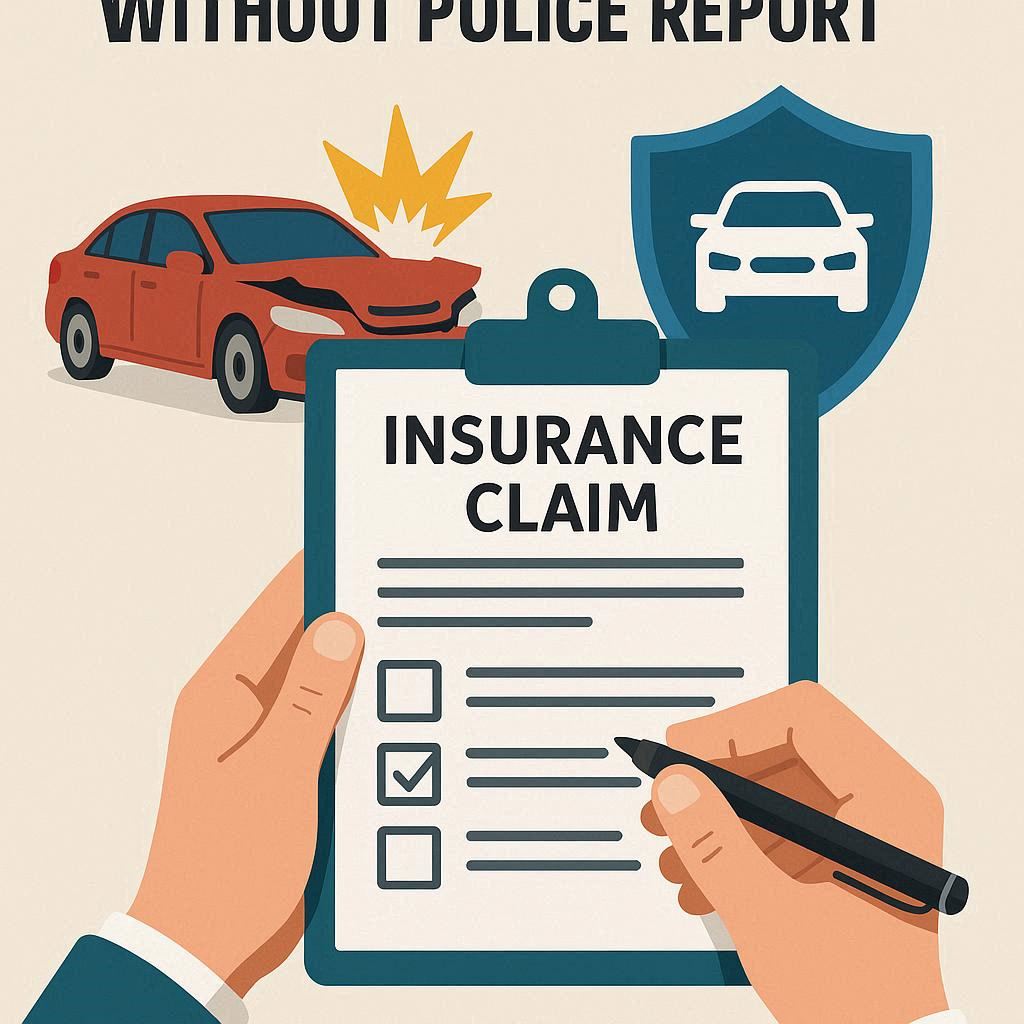
You just walked back to your car in a parking lot. A new dent sits on the rear bumper. No note on the windshield. No witnesses. No police car in sight.
Your first thought is simple: Can I still file a claim?
The short answer is yes. You can often file a car insurance claim without a police report. But here is the honest truth. It makes your job harder. It can delay your payout. And in some cases, it might even get your claim denied.
This guide walks you through exactly what happens when you skip the police report. You will learn when insurers require one, how to build a strong case without it, and what pitfalls to avoid. No fluff. No fake promises. Just realistic advice to help you make smart decisions.
Understanding the Role of a Police Report in Car Insurance Claims
Most drivers believe a police report is mandatory for any accident claim. That is not entirely accurate. But to understand why, you need to know what a police report actually does for your insurer.
Why Insurers Ask for Police Reports
Insurance companies love documentation. The more official the source, the better. A police report serves as a neutral, third-party account of what happened. It answers three critical questions:
- When and where did the accident occur?
- Who was involved (drivers, passengers, witnesses)?
- Did any traffic violations or criminal activity take place?
When you submit a police report, the claims adjuster does not have to take your word for it. They have an independent record. This speeds up their investigation and reduces the risk of fraud.
That is the key point. Insurers are constantly on guard against false claims. A police report is their strongest shield against paying for damage that never happened.
What a Police Report Does NOT Do
Many drivers overestimate the power of a police report. It does not automatically guarantee a payout. It does not determine fault on its own. And it does not replace your own evidence.
Police officers arrive after the fact. They did not see the crash happen (unless they were right there). Their report relies on interviews, skid marks, vehicle positions, and witness statements. It is an informed opinion, not a court judgment.
You can still win your claim without one. You just need to provide the same information through other means.
Legal Requirements vs. Insurance Requirements
Here is where confusion starts. Some states legally require you to report an accident to the police if someone got hurt or if property damage exceeds a certain amount (often $1,000 or more). That is a legal duty. Failing to do so could bring fines or even license suspension.
But that is separate from your insurance contract. Your policy might not demand a police report. It will, however, demand proof of what happened.
So you can face two different problems:
- A legal penalty for not reporting a serious accident.
- A denied insurance claim for lack of evidence.
Always check your state laws first. If the law says you must report, then you report. No shortcuts.
When You Can File a Car Insurance Claim Without a Police Report
Good news. Many everyday situations do not require a police report. Insurers understand that not every fender bender needs a patrol car.
Minor Parking Lot Incidents
Parking lots are chaos. Cars back out, doors swing open, carts roll into bumpers. Most of these incidents cause small dents and scratches. Repair costs often stay under your deductible anyway.
If you return to your car and find new damage with no note, you have a few options. You can file a claim using only photos and a written statement. You can also pay out of pocket and avoid premium increases.
Collision coverage typically handles these cases. Just be honest. If you hit a pole while parking, say so. Do not invent a hit-and-run story. That is fraud.
Single-Vehicle Accidents on Private Property
You backed into your own mailbox. You scraped a gate post. You drove over a large rock in a friend’s driveway. No other vehicle involved. No injuries. No traffic laws broken.
These accidents almost never require a police report. You simply contact your insurer, explain what happened, and provide photos of the damage and the object you hit.
The only exception is if you damaged someone else’s property (a neighbor’s wall, a storefront). In that case, you should still notify the property owner. But a police report remains optional unless local laws say otherwise.
Hit-and-Runs With No Witnesses or Evidence
This one hurts. You park legally. You come back. Your side mirror is gone. No one saw a thing. No security cameras. No note.
Filing a claim without a police report is possible here, but tricky. Without an official report, the insurer treats this as an unverified hit-and-run. That means two things:
- You will likely pay your collision deductible.
- Your premiums might still increase (contrary to popular belief).
Some policies include uninsured motorist property damage coverage. That coverage sometimes has a lower deductible for hit-and-runs. But again, without a police report, the insurer may question whether a hit-and-run actually happened or if you simply hit something yourself.
Animal Collisions
You hit a deer. A dog ran into the road. A raccoon appeared out of nowhere. Animal collisions fall under comprehensive coverage, not collision.
Police rarely respond to animal accidents unless the animal is large enough to block traffic or someone got hurt. You can absolutely file this claim without a police report.
Take photos of the animal (if safe), the damage, and the location. That is usually enough.
Weather-Related Damage
Hail, falling branches, floods. These are comprehensive claims. No police report needed. The weather does not leave a note, but it does leave evidence. Photos of the storm damage in your neighborhood help your case significantly.
When You Absolutely Need a Police Report
Let us be clear. Some situations make a police report non-negotiable. Filing a claim without one in these cases is a fast path to rejection.
Injury Accidents
If anyone suffered an injury, even a minor one, you must call the police. Insurance companies require a police report for injury claims. No exceptions from major carriers.
Why? Because injury claims involve medical bills, pain and suffering, and potential lawsuits. Insurers need an independent record to verify that injuries actually resulted from the accident and not from something else.
Without a police report, the adjuster will likely deny the entire claim. They will also question why you failed to report an injury accident to law enforcement.
Disputed Fault or Conflicting Stories
You say the other driver ran a red light. They say you did. No witnesses. No cameras.
This is a classic word-against-word situation. A police report will not magically solve it, but it gives the officer’s professional assessment based on vehicle damage, skid marks, and road conditions. That assessment carries weight.
Without a report, insurers often assign partial fault to both parties or deny both claims until more evidence appears. Your word alone rarely wins against another driver’s word.
Major Property Damage
Most states set a legal threshold for reporting accidents. Common thresholds include $1,000, $1,500, or $2,500 in property damage. If the damage exceeds that amount, you must report it to the police.
Here is the practical reality. Modern cars get expensive fast. A cracked bumper cover with parking sensors can cost $1,200 to replace. A side mirror with blind-spot detection runs $800. You might think the damage is minor, but repair estimates often surprise people.
When in doubt, call the non-emergency line. Ask if a report is required based on estimated damage. Better to have a report you do not need than to need one you do not have.
Suspected DUI or Criminal Activity
If you suspect the other driver was drunk, on drugs, or committed a crime (stolen vehicle, no license, hit-and-run), call 911 immediately. Do not negotiate. Do not exchange information. Just call.
Your insurance claim will absolutely require a police report in these cases. The report serves as official documentation of the criminal element. Without it, the insurer treats the incident as a standard accident with no aggravating factors.
Out-of-State Accidents
Accidents far from home add layers of complexity. Different laws. Different police procedures. Different insurance regulations.
Filing a claim without a police report for an out-of-state accident raises red flags. The adjuster wonders: why did you not call local police? Were you trying to hide something? Did the accident even happen where you say it did?
Always get a police report for out-of-state accidents. It protects you against false accusations and provides a clear record for your insurer.
Step-by-Step Guide: Filing a Claim Without a Police Report
You have decided to move forward without a police report. Maybe the accident was minor. Maybe the other driver left. Maybe you are within your legal rights to skip it.
Follow this process to maximize your chances of approval.
Step 1: Document Everything Immediately
Time is your enemy. Evidence disappears fast. Rain washes away skid marks. Parking lots get repaved. Witnesses forget details.
Start documenting before you do anything else.
Photographs you need:
- Overall scene from multiple angles
- Damage to your vehicle (close-ups and distance shots)
- Damage to any other vehicle or property
- License plates of all involved vehicles
- Street signs, landmarks, or business addresses
- Weather conditions
- Tire marks on the road surface
Written notes to take:
- Exact date and time of the accident
- Street address or intersection
- Direction each vehicle was traveling
- Estimated speed of each vehicle
- What you were doing immediately before impact
- What happened after impact
- Any statements from witnesses or other drivers
Do not trust your memory. Write it down or record a voice memo on your phone.
Step 2: Find Witnesses Before They Leave
People leave accident scenes quickly. A helpful witness today is gone tomorrow.
Look around immediately. Did anyone stop to watch? Are there pedestrians, store employees, or other drivers who saw what happened?
Ask for their name and phone number. That is all you need. Do not ask them to assign fault or write a statement on the spot. Your insurer will contact them later.
If no one stopped, check nearby businesses for security cameras. Act fast. Many systems overwrite footage every 48 to 72 hours.
Step 3: File a Police Report After the Fact (If Possible)
Many police departments allow you to file a report after leaving the scene. This is often called a “counter report” or “after-the-fact report.”
You visit the local precinct (or file online in some cities) and provide all your evidence. The officer creates a report based on your statement and any supporting documents.
This report carries less weight than one filed at the scene. But it is infinitely better than nothing. It shows you made a good-faith effort to involve law enforcement.
Call the non-emergency number for the jurisdiction where the accident happened. Ask about their after-the-fact reporting process.
Step 4: Contact Your Insurer Within 24 Hours
Insurance policies require prompt notice of accidents. “Prompt” usually means within 24 to 48 hours. Delaying gives the adjuster reason to suspect you are hiding something or that the damage came from another event.
When you call, be factual. Do not exaggerate. Do not guess. Do not admit fault (especially if the other driver was involved).
What to say:
- “I was involved in an accident on [date] at [time] at [location].”
- “No police responded to the scene.”
- “Here is what I believe happened.”
- “I have photos, notes, and witness contact information.”
What not to say:
- “It was totally my fault.”
- “I think the damage is about $500.” (Let the adjuster estimate)
- “I did not call the police because I was in a hurry.”
Your insurer will open a claim and assign an adjuster. The adjuster will ask for all your evidence. Provide it quickly and completely.
Step 5: Get a Repair Estimate From a Shop
Do not rely on your own guess. Take the vehicle to a body shop recommended by your insurer or to a shop you trust. Get a written estimate.
The estimate serves as objective proof of damage. It also helps the adjuster determine if the repair cost exceeds your deductible. If the estimate is $700 and your deductible is $1,000, you should probably pay out of pocket and close the claim.
Step 6: Prepare for a Statement
The adjuster will ask for a recorded statement. This is normal. Answer honestly but concisely. Stick to the facts you documented at the scene.
If the accident happened days or weeks ago, review your notes before the call. Inconsistencies damage credibility.
You have the right to decline a recorded statement, but doing so often delays or complicates the process. In most cases, it is better to cooperate.
Common Reasons Insurers Deny Claims Without Police Reports
Let us be realistic. Many claims without police reports face denial. Understanding why helps you avoid the same mistakes.
Inconsistent or Missing Evidence
You took two photos. One is blurry. The other shows only the damage but not the scene. You have no witness information. Your written statement says “I think it happened on Tuesday or Wednesday.”
This is not enough. The adjuster cannot verify that the damage came from an accident and not from normal wear, a previous incident, or intentional action.
Without a police report, your evidence must be impeccable. Blurry photos and vague memories lead to denial.
Disputes With Another Driver
The other driver calls their insurer and tells a different story. Maybe they claim you were speeding. Maybe they say you hit them while they were stopped.
No police report means no third-party account. Each insurer believes their own driver. The result is often a stalemate where neither party gets paid.
Suspected Fraud
Adjusters see thousands of claims per year. They know common fraud patterns. Filing a claim without a police report for a “hit-and-run” that happened in a deserted lot at 2 AM raises eyebrows.
If anything about your story seems off, the adjuster will dig deeper. They may request vehicle telematics data, cell phone location history, or social media posts. If they find proof of fraud, they will deny your claim and likely cancel your policy.
Late Reporting
You wait two weeks to file. The damage could have happened anywhere at any time. Maybe you hit something else in the meantime. Maybe a family member borrowed the car.
Late reporting without a police report is a huge red flag. Insurers expect immediate documentation. Without it, they assume the worst.
Policy Exclusions
Some policies have specific exclusions for claims without police reports. Read your declarations page carefully. If your policy says “proof of police notification required for uninsured motorist claims,” then you have no coverage without that report.
These exclusions are legal and enforceable. You cannot argue your way around them.
Evidence You Need to Strengthen a Claim Without a Police Report
Think of your claim as a courtroom case. The adjuster is the judge. Your evidence is your argument. No police report means you need more of everything else.
High-Quality Photography
Do not rely on a single wide-angle shot. Take systematic photos that tell the complete story.
The scene:
- Four directions from the vehicle (north, south, east, west)
- Nearby intersections or landmarks
- Road conditions (potholes, gravel, wet pavement)
- Traffic signs or signals
The damage:
- Each damaged panel from three feet away
- Close-ups of scratches, dents, or cracks
- Angles showing depth and severity
- Photos with a ruler for scale (important for legal disputes)
The context:
- Your vehicle’s license plate
- Time-stamped photos if your camera allows
- Screenshots of weather data for that date and time
Witness Statements in Writing
A verbal witness is better than nothing. A written witness statement is better still.
Ask witnesses to write down:
- What they saw
- Where they were standing or sitting
- The time they witnessed the accident
- Their full name and phone number
If they hesitate to write, offer to email them a summary for confirmation. Most people agree to that.
Security and Dashcam Footage
This is your strongest evidence after a police report. Footage does not lie. It does not forget.
Where to find footage:
- Nearby homes with Ring or Nest doorbells
- Businesses with exterior cameras
- Traffic cameras (harder to access but possible through public records requests)
- City or county surveillance cameras
Act immediately. Many systems keep footage for only 48 hours. Some businesses delete after 24 hours unless someone asks to preserve it.
If you do not already own a dashcam, consider buying one. A $100 dashcam saves thousands in disputes.
Repair Shop Documentation
The body shop is your ally. Ask them to document:
- Pre-existing damage (they always note this before starting work)
- The mechanical cause of each dent or scratch (e.g., “impact from a pole-shaped object”)
- Photographs during the repair process
This documentation helps prove that the damage came from a single incident, not accumulated wear.
Cell Phone Location Data
Your phone tracks your location constantly. That data proves you were at the accident scene at the claimed time.
Go to Google Maps Timeline (if you use Android) or Significant Locations (iPhone). Screenshot your location history for the accident date. This is powerful evidence that your car was actually there.
How Different Coverage Types Affect Claims Without Police Reports
Not all insurance coverage is equal. Some types handle missing police reports better than others.
Collision Coverage
| Aspect | Details |
|---|---|
| Requires police report? | Usually no |
| Impact of no report | Minimal to moderate |
| Typical outcome | Claim paid if evidence is reasonable |
| Deductible applies? | Yes |
| Premium impact | Likely increase |
Collision coverage is the most forgiving when you lack a police report. The policy exists specifically to cover accidents you cause or that happen without another identifiable driver. Insurers expect many collision claims to occur without law enforcement involvement.
You still need evidence. But the bar is lower.
Comprehensive Coverage
| Aspect | Details |
|---|---|
| Requires police report? | Almost never |
| Impact of no report | Very low |
| Typical outcome | Claim paid with basic evidence |
| Deductible applies? | Yes |
| Premium impact | Minimal or none |
Comprehensive claims (theft, vandalism, weather, animal strikes) rarely involve police reports. Insurers process thousands of these claims every day with only photos and a written statement.
The exception is theft. Some insurers require a police report for stolen vehicle claims to verify you actually reported the crime.
Liability Coverage
| Aspect | Details |
|---|---|
| Requires police report? | Strongly recommended |
| Impact of no report | High |
| Typical outcome | Disputes common, denials possible |
| Deductible applies? | No (covers others, not you) |
| Premium impact | Major increase |
Liability claims involve another party. The other driver may dispute fault. Their insurer may refuse to pay. Without a police report, you lack neutral documentation.
Filing a liability claim without a police report is risky. If the other driver cooperates and accepts fault, you might be fine. If they argue, you face an uphill battle.
Uninsured/Underinsured Motorist (UM/UIM)
| Aspect | Details |
|---|---|
| Requires police report? | Often yes (policy dependent) |
| Impact of no report | Very high |
| Typical outcome | Denial without report |
| Deductible applies? | Sometimes lower deductible |
| Premium impact | Unlikely |
UM/UIM coverage is the trickiest. Many policies explicitly require proof that the other driver was uninsured and that you reported the accident to police within a reasonable time.
Read your policy. If the language says “must” or “shall” regarding police notification, you have no coverage without that report.
Hit-and-Run Claims: Special Considerations
Hit-and-run claims deserve their own section. They are the most common reason drivers file claims without police reports. They are also the most frequently denied.
What Insurers Look For in Hit-and-Run Claims
The adjuster wants to believe you. But their job is to verify, not trust.
Red flags that trigger investigation:
- Damage pattern inconsistent with another vehicle (e.g., damage to the roof or undercarriage)
- Accident occurred in an area with no other cars (empty warehouse district at midnight)
- You waited more than 24 hours to report
- You have no witness information or security footage
- Similar claim filed recently
Green flags that help approval:
- Damage shows paint transfer from another vehicle (different color)
- You filed a delayed police report after the fact
- A witness or camera exists, even if you cannot access footage immediately
- You have a clean claims history
Steps Specific to Hit-and-Run Claims
If the other driver fled, add these steps to your process:
- Do not chase them. Ever. It turns you into a reckless driver and endangers everyone.
- Write down everything you remember. License plate (even partial), make and model, color, direction of flight, number of occupants.
- Check all nearby businesses. Gas stations, fast food restaurants, banks, and hotels have excellent camera coverage. Ask for footage immediately.
- File an after-the-fact police report. Give the officer every detail you recorded. This creates an official record even if police did not respond at the time.
- Contact your insurer within hours, not days. Hit-and-run claims decay quickly. The longer you wait, the less believable your story becomes.
Uninsured Motorist Property Damage (UMPD) and Police Reports
UMPD is a specific coverage that some states offer. It pays for hit-and-run damage without requiring you to identify the other driver.
Here is the catch. Many UMPD policies require a police report filed within a specific time (often 24 to 72 hours). If you miss that window, you lose UMPD coverage and must use your collision coverage instead.
Check your state and your policy. California, for example, allows UMPD for hit-and-runs only if you report the accident to police within a reasonable time. “Reasonable” is vague enough to cause denials.
How Your Deductible Affects the Decision to File
Many drivers fixate on the police report question while ignoring a more important financial question: should you file at all?
Running the Numbers
Your deductible is the amount you pay before insurance covers the rest. If your deductible is $1,000 and repairs cost $1,200, insurance pays $200. That is before your premiums potentially increase.
Add it up:
- $1,200 repair cost
- $1,000 deductible
- = $200 from insurance
- higher premiums for 3-5 years
That $200 check could cost you $600 in premium increases over three years. The math does not work.
When to file anyway:
- Damage exceeds $3,000 to $5,000
- Another driver is clearly at fault with valid insurance
- You have accident forgiveness on your policy
When to pay out of pocket:
- Damage is slightly above your deductible
- You have filed another claim recently
- Your driving record already has incidents
- The accident was your fault
How to Get a Real Repair Estimate
Do not guess. Do not trust online calculators. Take the car to two different shops for estimates.
Shops provide free estimates because they want your business. Tell them you are paying out of pocket (even if you might file a claim). That gives you the real price, not the inflated insurance price.
Once you have estimates, compare to your deductible. Decide whether filing makes financial sense.
State-by-State Differences in Police Reporting Requirements
Insurance is regulated at the state level. What works in Texas might fail in New York.
States With Strict Reporting Laws
| State | Reporting Threshold | Time Limit |
|---|---|---|
| California | $1,000 damage or injury | Immediately |
| Texas | $1,000 damage or injury | Immediately |
| Florida | $500 damage or injury | Within 10 days |
| New York | $1,000 damage or injury | Within 10 days |
| Pennsylvania | $1,000 damage or injury | Within 5 days |
In these states, failing to report an accident that meets the threshold is a legal violation. You could face fines, points on your license, or even suspension.
More importantly, your insurer will ask if the accident met the reporting threshold. If you say yes but have no report, they may deny the claim for non-compliance with state law.
States With No Mandatory Reporting for Minor Accidents
Some states only require reporting if someone is injured or killed. Property damage alone does not trigger a legal duty.
In these states, filing a claim without a police report is much easier. The insurer cannot penalize you for following the law.
Examples include:
- Alabama
- Arizona
- Arkansas
- Colorado (only injury requires report)
- Connecticut (injury or death only)
How to Find Your State’s Law
Search for “[Your State] accident reporting requirements DMV.” Look for official .gov websites. The language is usually straightforward.
If you cannot find the answer, call your local police non-emergency number. They can tell you whether a report is legally required for your specific accident.
What to Do If Your Claim Is Denied
Denial hurts. You expect insurance to protect you. When they say no, it feels personal. But denial is not always final.
Request a Written Explanation
Ask the adjuster for a formal denial letter. This letter must state the specific reason for denial under your policy.
Common denial reasons include:
- Lack of evidence proving the accident occurred
- Failure to report to police as required by policy
- Dispute with another driver over fault
- Suspected fraud or misrepresentation
Review Your Policy Language
Get your policy out. Find the section the insurer claims you violated. Read it carefully.
Sometimes adjusters misinterpret policy language. Sometimes they apply the wrong exclusion. If the policy does not explicitly require a police report for your type of claim, you have grounds to appeal.
File an Internal Appeal
Most insurers have an appeals process. You submit your denial letter plus additional evidence. A different adjuster (often a supervisor) reviews the case.
File this appeal in writing. Email is fine. Keep it professional and factual. Attach all your evidence again, organized and labeled.
Contact Your State Insurance Commissioner
State insurance commissioners regulate insurers. They cannot force a payout, but they can investigate unfair claim denials.
File a complaint online through your state’s department of insurance website. Include:
- Your policy number
- The claim number
- The denial letter
- Your evidence
Commissioners track complaint patterns. If they see an insurer denying valid claims without justification, they take action. Sometimes that action leads to the insurer offering a settlement rather than facing a formal investigation.
Consider Small Claims Court
For smaller claims ($5,000 or less in most states), small claims court is an option. You do not need a lawyer. You simply present your evidence to a judge.
This works best for clear disputes. For example, you have photos, witness statements, and a repair estimate. The insurer says “not enough evidence.” A judge might disagree.
Check your policy first. Some policies require arbitration instead of court. Others prohibit lawsuits until you exhaust the appeals process.
When to Hire a Public Adjuster or Attorney
Most claims without police reports are small. Hiring a professional does not make financial sense.
But sometimes the stakes are high.
Public Adjusters
Public adjusters work for you, not the insurer. They file and negotiate claims on your behalf. They take a percentage of the payout (often 10-20%).
Hire a public adjuster when:
- The claim is worth over $10,000
- The insurer has already denied your claim
- You do not have time to manage the process yourself
- The accident involved complex factors (multiple vehicles, unclear fault)
Do not hire one for:
- Small claims under $5,000
- Simple hit-and-runs with clear evidence
- Claims where you have strong documentation already
Attorneys
Attorneys are expensive. They cost $200 to $500 per hour or take 30-40% of your settlement. Only hire one for serious claims.
Hire an attorney when:
- Someone suffered significant injuries
- The other driver is suing you personally
- Your insurer denied a claim worth over $25,000
- You face accusations of fraud
For a simple dent from a parking lot incident, an attorney is overkill. Save your money.
Preventing Future Headaches: Best Practices
The best way to file a claim without a police report is to never need to. You can dramatically reduce your risk with a few smart habits.
Install a Dashcam
A $100 dashcam pays for itself the first time someone lies about an accident. Front-facing cameras are standard. Front and rear cameras are better.
Look for these features:
- 1080p resolution minimum
- Loop recording (automatically overwrites old footage)
- G-sensor (locks footage when it detects impact)
- Easy video export to your phone
Keep an Accident Kit in Your Glove Box
You will not have your phone charged? Your memory will not be perfect? Prepare now.
Your kit should include:
- Disposable camera (batteries included)
- Pen and small notebook
- Disposable gloves (for touching debris)
- Flashlight
- Emergency contact card
When an accident happens, you grab the kit. You have everything you need to document the scene properly.
Know Your Policy Before You Need It
Read your insurance policy on a calm Saturday morning. Do not wait until after an accident.
Highlight sections about:
- Reporting deadlines (usually 24-48 hours)
- Police report requirements
- Hit-and-run procedures
- Uninsured motorist coverage terms
If anything confuses you, call your agent. Ask specific questions: “Does my policy require a police report for a minor parking lot accident?” Get their answer in writing (email is fine).
Review Your State Laws
Write down your state’s accident reporting threshold. Keep it with your insurance card.
When an accident happens, you will know immediately whether the law requires a police report. No guessing. No stress.
Frequently Asked Questions (FAQ)
Can I file a claim without a police report if the other driver left the scene?
Yes, but act fast. Document everything, look for witnesses and cameras, and file an after-the-fact police report. Without evidence, your claim may be denied.
Will my insurance rates go up if I file a claim without a police report?
Probably yes, if you are at fault. The lack of a police report does not directly increase rates. But a paid claim for an at-fault accident will, regardless of documentation. Hit-and-run claims (not at fault) may also increase rates depending on your state and insurer.
How long do I have to file a police report after an accident?
It varies. Some states require immediate reporting. Others allow up to 10 days. For insurance purposes, file as soon as possible. Anything beyond 24 hours weakens your claim.
What if the police refuse to come to a minor accident?
This happens often. Many departments no longer respond to minor property damage accidents. Ask the dispatcher for a report number over the phone. Some departments let you file online after the fact. Document that you attempted to call.
Can I use photos instead of a police report?
Yes, for minor claims. Photos plus witness statements plus location data create a strong case. But for injury accidents or major disputes, photos rarely replace an official report.
Does a police report determine fault for insurance?
No. Insurers determine fault based on all available evidence. The police report is one piece of evidence. It carries weight but does not override other evidence.
What happens if I lie about having a police report?
Do not do this. Insurers verify reports with the responding agency. Lying is fraud. It leads to claim denial, policy cancellation, and potential criminal charges.
Can I file a claim for a hit-and-run without any evidence?
You can file. You will likely be denied. Without a police report, witnesses, or footage, the insurer has no way to verify your story. Paying out of pocket is usually the better option.
Additional Resource
For state-specific accident reporting laws and downloadable police report forms, visit the Insurance Information Institute at www.iii.org. Their “Hot Topics” section includes regularly updated guides on hit-and-run claims, state reporting thresholds, and consumer rights after an accident.
Direct link for accident reporting: https://www.iii.org/article/do-you-need-file-police-report-after-car-accident
Conclusion
Filing a car insurance claim without a police report is entirely possible for minor accidents, single-vehicle incidents, and hit-and-runs with supporting evidence. However, you must document everything immediately—photos, witnesses, location data, and a written statement—while understanding that injury accidents and major disputes almost always require an official report. When in doubt, call the police non-emergency line, and always read your policy before assuming you have coverage without documentation.
Disclaimer: This article provides general information and should not be considered legal or insurance advice. Insurance policies, state laws, and claim procedures vary widely. Always consult your insurance agent, your policy documents, and legal counsel for guidance specific to your situation.