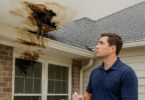
If you are a homeowner in Texas, you know the weather does not play nice. One afternoon, the sky turns green. The next, golf-ball-sized hail is hammering your shingles, or straight-line winds are peeling back entire sections of your roof.
Suddenly, you are not just worried about leaks. You are worried about how to pay for a repair or a full replacement.
The good news is that your homeowner’s insurance policy likely covers sudden, accidental damage from wind and hail. The bad news? Navigating the roof insurance claim process in Texas can feel like learning a new language while arguing with a giant corporation.
But do not worry. This guide is your friendly, detailed roadmap. We will walk through every single step, from the moment the storm passes to the day you cash your final check. We will look at deadlines unique to Texas law, common tricks used by less-reputable contractors, and how to make sure you get a roof that lasts.

Why Texas Is Different (And Why You Need to Pay Attention)
Before we dive into the claim steps, it helps to understand why Texas stands out. This is not Florida, where hurricanes dominate the conversation. Texas has its own unique combination of risks.
The Hail Belt
Texas is part of “Hail Alley.” Cities like Dallas-Fort Worth, San Antonio, and Austin see multiple severe hailstorms every spring. Hail damages the granules on asphalt shingles, which exposes the underlying material to the sun. Within a few years, a roof that looked “fine” after a storm can start to crack and leak.
Wind Versus Wear and Tear
Insurance policies cover “sudden and accidental” damage. They do not cover normal aging. In Texas, the debate often becomes: Did the wind cause the shingles to curl, or did they curl because they were 20 years old? Adjusters are trained to spot the difference.
The Matching Problem (A Big Deal in Texas)
Here is a huge detail most people miss. Texas law does not guarantee a full roof replacement just because one slope is damaged. If your insurer can find matching shingles, they might only repair one side. If they cannot match the color or style, Texas courts and the Texas Department of Insurance (TDI) have rules about “matching.” We will discuss that later, but know this is the number one point of argument between homeowners and insurance companies in Texas.
The Statute of Limitations
You have limited time to file a lawsuit if the insurance company denies your claim. In Texas, the statute of limitations for a breach of contract claim on an insurance policy is generally four years from the date the loss occurred. However, do not wait. Most policies require you to file a claim “promptly.”
Step 1: Immediate Post-Storm Assessment (Safety First)
The storm has just passed. The wind is still howling, but the rain has stopped. What do you do?
Do Not Go Up on a Wet Ladder
Never climb onto a wet or damaged roof yourself. Slipping on wet shingles or stepping on a weak spot can send you to the hospital. Your health is worth more than any roof.
Look from the Ground (Or Use Binoculars)
Walk around your property. Look for:
- Shingle granules in your gutters (they look like coarse black sand).
- Dented metal objects (your air conditioning condenser, grill, or mailbox).
- Visible missing shingles on the lawn.
- Curled or lifted shingle tabs.
- Sunlight coming through the attic (go inside, turn off the lights, and look up).
Temporary Repairs Are Required
Your insurance policy requires you to take reasonable steps to prevent further damage. If you have a hole, put a tarp over it. Nail it down securely. Keep all receipts for tarps, plywood, nails, and even the hotel if you had to leave. The insurance company will reimburse you for these “emergency mitigation” costs.
Note: Do not sign a contract with a “storm chaser” who knocks on your door 20 minutes after the rain stops. They often offer to “handle the claim for you.” That is a red flag. You will see why below.
Step 2: Reading Your Texas Homeowner’s Policy (The Boring but Necessary Part)
I know. Reading an insurance policy is about as fun as watching paint dry. But you need to know two specific things before you call.
Your Deductible
In Texas, roof deductibles are often a specific dollar amount (e.g., 1,000or2,500) or a percentage of your dwelling coverage (e.g., 1% of 300,000=3,000). If your roof repair costs 8,000andyourdeductibleis2,000, the insurance company will write a check for $6,000 (minus depreciation—we will get to that).
Important: It is fraud for a contractor to waive your deductible. Texas law (and every honest contractor) requires you to pay your deductible. If a contractor offers to “eat the deductible,” run away. They will do shoddy work to make up the difference.
Actual Cash Value (ACV) vs. Replacement Cost Value (RCV)
This is the most critical financial concept.
- RCV (Replacement Cost Value): The amount it costs to replace your roof with new, similar materials today.
- ACV (Actual Cash Value): RCV minus depreciation (the value the roof lost due to age).
Let us say your 15-year-old roof (expected lifespan 25 years) costs 10,000toreplacenew.Theinsurancecompanysaysitis604,000 ACV now. Then, after you actually replace the roof, they send you the remaining $6,000 (the “depreciation holdback”).
Most good policies in Texas are RCV policies for roofs, but older policies or “discount” policies might pay ACV only. If you have ACV only, you are going to pay a lot out of pocket.
Step 3: Filing the Initial Roof Insurance Claim
Alright. You have assessed the damage, reviewed your policy, and you know your deductible. Time to file.
How to File
Call your insurance agent or the company’s 24/7 claims hotline. Most major carriers (State Farm, Allstate, USAA, Farmers, Liberty Mutual) also allow you to file online or via a mobile app.
What to Say (And What Not to Say)
Be factual. Do not exaggerate.
- Say: “A hailstorm on March 15th caused visible dents on my AC unit and I see granules in the gutters. I need an inspection for potential roof damage.”
- Do not say: “My roof is totally destroyed and it is leaking everywhere” (if it is not). Do not say “I think the roof is old and weak.” Never admit the roof was already failing before the storm.
Get a Claim Number
Write this down. Every single time you call the insurance company from now on, you will give them this number. It will look something like: TX-WIND-2026-004782.
What Happens Next
An adjuster—someone who works for the insurance company—will call you within 24 to 48 hours. They will schedule a time to come inspect your roof. In Texas, after a major storm, adjusters get overwhelmed. It might take a week or two. Be patient, but be persistent if they do not call.
Step 4: The Adjuster’s Inspection (Be There or Be Square)
The insurance adjuster is not your enemy. They are also not your friend. They are a professional trying to assess the loss for their employer. You need to be present for this inspection.
Why You Must Be There
If you are not home, the adjuster will write a report based only on what they see. They might miss damage on the back slope. They might misidentify a shingle type. You need to walk the property with them.
What to Show Them
- Point to collateral damage: Show them the dented gutters, the smashed fence, the bent AC coils. Why? Because if your roof is borderline, evidence of hail on other items proves a storm came through with enough force to damage your roof.
- Let them do their job: Do not hover over their shoulder while they are measuring. But ask respectful questions: “Can you show me the hail strikes you see?” “Are you measuring for a repair or a full replacement?”
The Three Outcomes
After the adjuster finishes, they will give you a general idea (though not the final numbers yet):
- No damage covered: The damage is old, or wear and tear. You get nothing (except a denial letter).
- Repair: The damage is isolated to one slope or a small area. They will pay to fix that section.
- Full replacement: The damage is widespread, or the shingles are no longer manufactured (obsolete), or repairing would leave a mismatched, ugly roof.
The Report Timeline
In Texas, insurance companies are required by law (TDI rules) to acknowledge your claim within 15 days and accept or deny it within 15 business days after you provide all requested information. However, after a catastrophe (like a statewide hailstorm), these deadlines can be extended. Expect a written report within 2 to 4 weeks.
Step 5: Understanding the Paperwork (The Scope of Loss)
You will receive a document called a “Scope of Loss” or “Estimate.” It is often 10 to 30 pages long. It looks like a contractor’s invoice but with strange codes (Xactimate line items).
What You Are Looking For
- Labor and materials: Lines like “T&O Shingles – 30 SQ” (30 squares = 3,000 square feet of shingles).
- O&P (Overhead and Profit): In Texas, if your roof requires more than one trade (e.g., roofing + gutters + siding), or if the repair is very large, the insurance company should include Overhead and Profit (usually 10% and 10%). If they do not, your contractor will charge you for it.
- Depreciation holdback: Look for a line that says “RCV” and “ACV.” The difference is depreciation.
- Deductible: It will show the deductible subtracted from the first check.
The Two Checks (Usually)
You will not get one big check. Typically:
- Check #1 (ACV payment): This is the Actual Cash Value minus your deductible. You get this immediately.
- Check #2 (Depreciation holdback): You get this after you prove the roof is replaced. You send the insurance company a “Certificate of Completion” or a final invoice from your roofer showing you paid for the work. Then they release the rest.
Pro tip: If you have a mortgage, the first check might be made out to you and your mortgage lender. You will need to get the lender’s endorsement (signature) to cash it. The lender wants to make sure the work is done, so they often put the money in an escrow account and release draws to the contractor.
Step 6: Choosing a Roofer in Texas (Critical Decision)
You have the estimate. Now you need someone to do the work. Do not simply call the first name on a flyer stuck to your door.
The “Storm Chaser” Problem
After a big Texas hailstorm, out-of-state contractors swarm in. They offer low prices, promise to “work with your insurance,” and then disappear in six months when your roof starts leaking. They have no local reputation to protect.
The Red Flags
- Out-of-state license plates: A legitimate Texas roofer has a Texas address.
- High-pressure sales: “Sign today, or we cannot offer this price.”
- No written contract: Everything needs to be in writing.
- Request for a large deposit: Texas law does not prohibit deposits, but a reputable roofer might ask for 10-30% upon delivery of materials. If they ask for 50% upfront just to “start paperwork,” say no.
What a Good Texas Roofer Looks Like
- Texas Department of Insurance (TDI) License: As of 2026, Texas does not have a state-wide roofing license, but many cities (Houston, Dallas, Fort Worth, San Antonio) have local requirements. Look for a “Registered Roofing Contractor” if applicable.
- General Liability Insurance and Workers’ Comp: Ask for certificates. If a roofer falls off your roof and has no workers’ comp, you could be sued.
- Local references: They can give you three addresses of jobs done in your neighborhood.
- They work with your insurance, not instead of you: A good roofer will review the adjuster’s estimate, point out missing items (like ice and water shield or drip edge), and help you file a supplement. But they will not ask you to sign an “Assignment of Benefits” (AOB) unless you fully understand it. In Texas, AOBs have been abused. Be very careful signing one.
The Matching Clause Conversation
Ask your roofer: “Can you find matching shingles for my roof?” If the answer is no, your roofer should help you argue with the insurance company for a full replacement based on mismatched appearance. This is a negotiation point.
Step 7: The Supplement Process (When the Adjuster Missed Something)
This happens. A lot. The adjuster wrote a scope for 30 squares of shingles, but your roof actually has 32 squares. Or they forgot to include the starter strips or the ridge vent.
Your roofer (or you) can file a supplement.
How to File a Supplement
- Take photos of the missing item (e.g., a tape measure showing the actual roof square footage).
- Send the photos, a written explanation, and a revised estimate to the insurance company.
- Ask for a reinspection if necessary.
Insurance companies in Texas are required to consider supplements. However, they often deny them the first time. Be persistent. Most roofers will handle supplements for you as part of their service.
Quotation from a Texas public adjuster:
“Supplements are not an attack on the adjuster. They are a normal part of the process. The initial adjuster saw your roof for 20 minutes. Your roofer sees it for three days. Of course the roofer will find things the adjuster missed.”
Step 8: Navigating Non-Renewal and Rate Hikes
A common fear: “If I file a claim, will my insurance company drop me?”
Texas Law on Non-Renewal
In Texas, an insurer cannot non-renew your policy solely because you filed one weather-related claim (wind or hail) unless:
- You have filed two or more weather-related claims within 10 years, or
- You have filed three or more claims of any kind within three years.
However, they can raise your rates at renewal. Does it make sense to file a 5,000claimifyourdeductibleis2,500 and you only get 2,500?Probablynot.Doesitmakesensetofilea25,000 claim? Yes.
The “Ivory Rule”
Do not file small claims. If the repair cost is less than 1.5 times your deductible, pay out of pocket. Save your insurance for catastrophic losses.
Step 9: Disputes and the Texas Department of Insurance
What if the insurance company denies your claim entirely? Or they only offer 8,000butyourroofersaystherealpriceis15,000?
Step A: Internal Appeal
Ask for a second opinion. Many carriers have a “team lead” or “manager review” process. Write a polite letter explaining why you disagree.
Step B: Independent Adjuster (Public Adjuster)
You can hire a public adjuster. This is a professional who works for you, not the insurance company. They take a percentage of the final settlement (usually 5-15%). In Texas, public adjusters must be licensed by TDI. They are excellent for very large, complex claims, but for a simple roof, you might not need them.
Step C: TDI Complaint
File a complaint with the Texas Department of Insurance. TDI does not settle claims, but they can investigate if the insurer violated state laws (e.g., unreasonable delay, bad faith). Go to www.tdi.texas.gov and search for “file a complaint.”
Step D: Appraisal Clause
This is a secret weapon most homeowners don’t know about. Your insurance policy has an appraisal clause. You and the insurance company each hire an appraiser. Those two appraisers pick an umpire. The appraisers try to agree on the dollar amount of the loss. If they cannot, the umpire decides. The decision is binding. Appraisal is faster and cheaper than a lawsuit.
Step E: Lawsuit
As a last resort, you can sue. Remember the four-year statute of limitations. Texas is a “fairly” homeowner-friendly state, but litigation is expensive. Only go this route for very large claims ($50,000+).
Comparative Table: ACV vs. RCV Roof Policies in Texas
| Feature | Actual Cash Value (ACV) Policy | Replacement Cost Value (RCV) Policy |
|---|---|---|
| Initial Payout | Low (replacement cost minus age depreciation) | Higher (RCV minus deductible, but depreciation held back) |
| Out-of-Pocket Cost | High. You pay the depreciation + deductible | Low. You pay only the deductible |
| Best For | Older homes with low-value roofs, or very tight budgets | Most Texas homeowners |
| Worst For | A 20-year-old roof after a hailstorm (you get almost nothing) | Nobody (it costs more in premiums, but it is worth it) |
| Common in Texas | Yes, especially with “discount” carriers or older policies | Yes, the standard for good homeowner policies |
Helpful List: Documents You Must Keep During the Process
You need a dedicated folder (physical or digital) for these:
- Your full homeowner’s insurance policy (PDF is fine)
- Photos of the roof damage taken from the ground (before any repairs)
- Photos of collateral damage (gutters, AC, fences, cars)
- The date and time of the storm (use weather underground or local news archives)
- All receipts for temporary repairs (tarps, plywood, nails, hotels)
- The adjuster’s name, phone number, and email
- A copy of the Scope of Loss / Estimate
- All checks and explanations of benefits (EOBs)
- Your roofer’s contract, license, and insurance certificates
- Any correspondence with your mortgage lender
Realistic Timelines for the Roof Insurance Claim Process in Texas
| Step | Typical Duration | Notes |
|---|---|---|
| Storm occurs | Day 0 | Take photos immediately |
| Emergency tarping | 1-2 days | Do it yourself or hire a local handyman. Keep receipts. |
| File claim | 3-7 days after storm | Do not delay. |
| Adjuster inspection | 1-3 weeks | Faster if no catastrophe; slower after a big storm. |
| Receive initial estimate | 2-4 weeks | ACV check often arrives within this window. |
| Hire roofer & sign contract | 1-3 weeks | Get at least three quotes. |
| Roof replacement | 1-3 days | For an average Texas home (2,000 sq ft). |
| Submit final invoice for depreciation | Immediately after completion | Send via email to your adjuster. |
| Receive final depreciation check | 2-6 weeks | Slowest part of the process. |
| Total time from storm to final check | 2 to 4 months | In normal conditions. After a major storm, expect 4-6 months. |
The #1 Biggest Mistake Texas Homeowners Make
They trust the “storm chaser” contractor who says, “Sign this Assignment of Benefits (AOB), and we will handle everything. You don’t have to do a thing.”
Why This Is Dangerous
An AOB gives the contractor the legal right to talk to your insurance company and collect payments directly. Sounds convenient, right? But here is what happens next:
- The contractor does shoddy work or uses cheap materials.
- You complain.
- The contractor says, “Too bad. We already cashed the insurance check.”
- You have no leverage because you already signed away your rights.
The Safer Way: Have the insurance company issue the check to you (and your mortgage lender). You pay the contractor directly in draws (e.g., 30% upfront for materials, 40% mid-job, 30% after final inspection and city permit sign-off).
Additional Resource
For the most authoritative, up-to-date information on homeowner claims, roof depreciation, and storm damage rules, visit the Texas Department of Insurance – Homeowner Claims Guide.
👉 Click here for the official TDI guide to filing a claim in Texas (Opens new window)
This is a .gov resource, so the information is legally accurate and trustworthy.
FAQ: Roof Insurance Claim Process in Texas
1. Does Texas law require my insurance company to replace the entire roof if they cannot match the shingles?
No automatic requirement exists, but the Texas Department of Insurance says the insurer must provide “like kind and quality.” If matching shingles are not available, you have a strong argument for a full replacement. Many homeowners successfully negotiate this.
2. Can my insurance company deny my claim because my roof was old?
Yes, if the damage is from wear and tear, deterioration, or lack of maintenance. But if a hailstorm hit an old roof that was otherwise functional, they should still cover the storm damage (at ACV, not RCV, if the policy says so).
3. How long does the insurance company have to pay my claim in Texas?
Once they agree to pay, they must issue payment within 5 business days for an emergency advance, or within 10 business days after the claim is settled. However, “settled” is the key word—they can take weeks or months to settle.
4. What is a “deductible” and can a roofer waive it in Texas?
A deductible is your share of the loss. It is illegal for a contractor to waive your deductible in Texas. This is considered insurance fraud because it misrepresents the actual cost of the repair to the insurer.
5. Do I have to use the insurance company’s preferred roofer?
No. Never. You have the legal right to choose any licensed, insured roofer you want. The insurance company cannot force you to use their “network” contractors.
6. Will my premium go up if I file a roof claim in Texas?
It might. Insurers use your claim history to determine risk. One weather-related claim will not automatically cancel you (see Texas law above), but it could trigger a surcharge at renewal, especially if you have other claims on your record.
7. What if my roof starts leaking during the claim process?
Document the leak. Take photos. Perform or hire someone to perform emergency mitigation (tarp, bucket, etc.). Keep all receipts. Call your adjuster and tell them the situation is urgent. They may authorize emergency funds.
8. Can I repair my roof myself and still get the insurance money?
Technically, yes. You own the home. But you must be able to provide a detailed list of materials and proof of purchase to claim the depreciation holdback. Also, if you do a bad job and another storm hits, the insurance company might deny the next claim due to improper workmanship.
Conclusion
Filing a roof insurance claim in Texas requires patience, documentation, and a clear understanding of your policy’s RCV/ACV terms. Always be present for the adjuster’s inspection, hire a reputable local roofer, and never sign an Assignment of Benefits without legal advice. With the right preparation, you can successfully replace your roof without going broke or losing your coverage.
Disclaimer: This article is for informational and educational purposes only. It does not constitute legal advice or professional insurance advice. Insurance policies, Texas state laws, and court rulings change over time. You should consult with a licensed insurance professional or an attorney for advice regarding your specific situation. The author and publisher disclaim any liability for any actions taken based on the contents of this article.